
Drumcree parade dispute reopens Northern Ireland's sectarian divisions
This digest was compiled by AI from multiple sources — links to the originals are below.
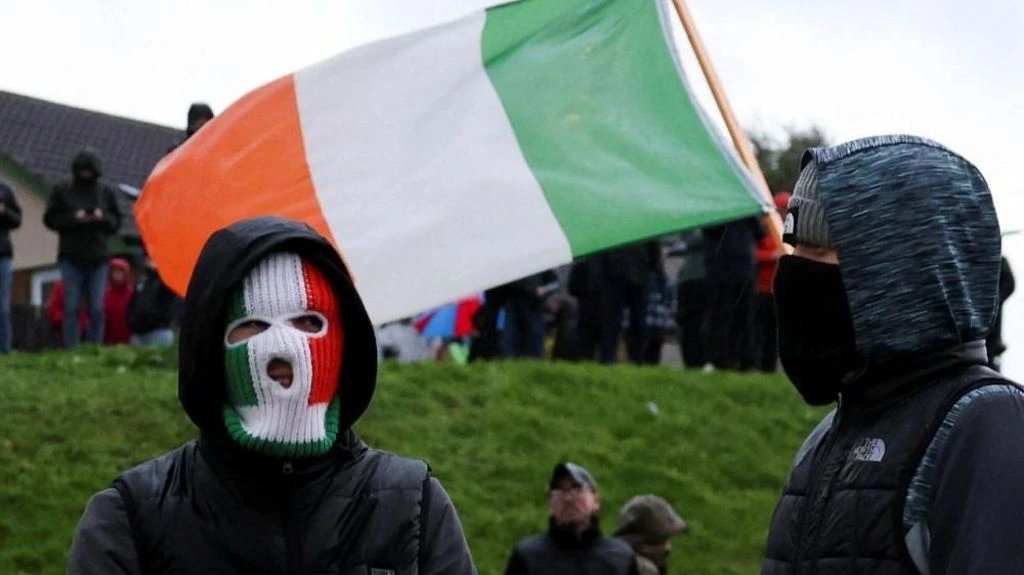
The Orange Order's first permitted Drumcree parade in almost 30 years drew hundreds of nationalist protesters to Portadown's Garvaghy Road on Sunday. The march, scaled back to 35 participants, proceeded after a legal challenge overturned a Parades Commission ruling. The dispute has reignited tensions between Sinn Féin and the DUP, partners in Northern Ireland's power-sharing government.
Key Facts
- The Orange Order has been refused permission to complete its Drumcree march more than 1,000 times over the past three decades.
- The legal challenge that succeeded on procedural grounds was brought early this summer against a Parades Commission ruling from June.
- The scaled-back parade involved 35 participants rather than the usual 400.
- Sinn Féin supports the nationalist residents of Garvaghy Road, while the DUP fully backs the Orange Order.
The Parade Dispute
The Orange Order regards the Drumcree march as unfinished business after being banned from completing the route in 1998. The order says it is being denied a traditional walk dating back to the early 1800s. A Parades Commission set up in the late 1990s has consistently ruled against the route until now. The Orange Order's legal challenge to a June ruling succeeded on procedural grounds, leading to the scaled-back parade.
Political Divisions
Sinn Féin and the DUP, partners in the devolved government at Stormont, are on opposite sides of the Drumcree argument. Sinn Féin firmly backs the residents, while the DUP fully supports the Orange Order. The dispute has the potential to affect other parts of Northern Ireland and the power-sharing arrangements at Stormont. A retired politician said, 'What happens at Drumcree never stays at Drumcree.'
Community Reaction
Nationalist residents on Garvaghy Road were left shocked and angry by the parade's approval. For them, the parade is triumphalist and unwelcome, seen as an act of supremacy that re-opens old community wounds. Hundreds of protesters blocked the parade route after it was given clearance for the first time in almost 30 years.
1 source
Time · lag behind first