
Ceuta migrant crisis deepens as thousands remain stranded in Spanish enclave
This digest was compiled by AI from multiple sources — links to the originals are below.
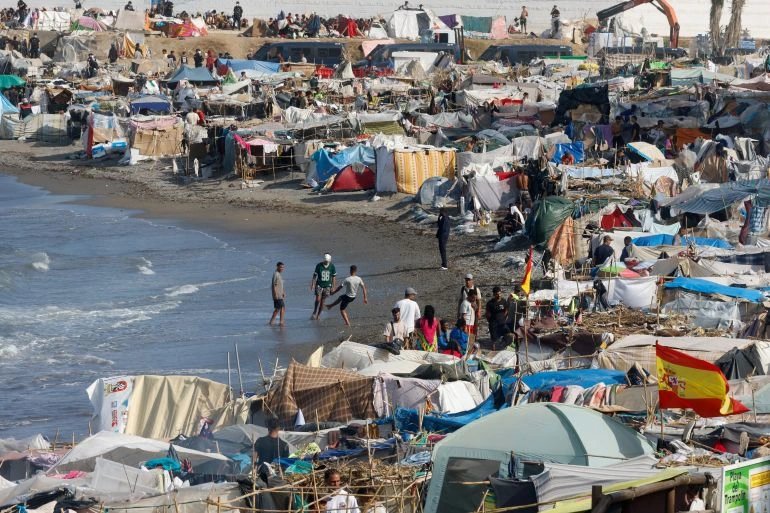
More than a month after about 70,000 people crossed from Morocco into the Spanish enclave of Ceuta, between 6,000 and 13,000 remain stranded in harsh conditions. Many sleep in makeshift shelters on Trampolin Beach and queue for hours at Red Cross food centres. The enclave's population nearly doubled at the outset, and a new temporary shelter for 1,700 people reached capacity within hours.
Key Facts
- The Spanish government estimates between 6,000 and 10,000 people who crossed into Ceuta remain stranded, while Ceuta officials put the figure closer to 13,000.
- About 5,000 people, mostly women and children, have been given temporary accommodation by the authorities; the rest sleep outside.
- More than 100 people died during the crossing from Morocco to Ceuta.
- A new temporary shelter in Ceuta with space for about 1,700 people reached capacity within hours of opening.
- Ceuta's usual population of about 84,000 nearly doubled at the outset of the crisis.
Stranded Migrants
Anis Fadi, a 21-year-old university graduate and qualified accountant, crossed from Morocco to Ceuta at the end of July along with about 70,000 others. He has been sleeping in a makeshift shelter on Trampolin Beach for more than a month and queues for hours each day for food at a Red Cross centre. Fadi said he does not even have a tent and builds shelter from old pieces of wood, sticks from broken branches, and whatever else he finds. He said life was harder in Morocco and he saw no future for himself there, adding that men like him who have skills do not get the chance.
Conditions and Response
Police officers with batons shout orders at crowds waiting for food in the heat, according to Fadi. Right-wing European politicians have framed the Ceuta crossing as a threatening invasion, and protests have erupted in Spain against the government's handling of the crisis. Fadi said in response to anti-migration rhetoric that the migrants are not criminals and just want to work. Ceuta is usually home to about 84,000 people, and its population almost doubled at the outset of the crisis.
1 source
Time · lag behind first