
Europe drafts contingency plans as Russia escalates hybrid attacks
This digest was compiled by AI from multiple sources — links to the originals are below.
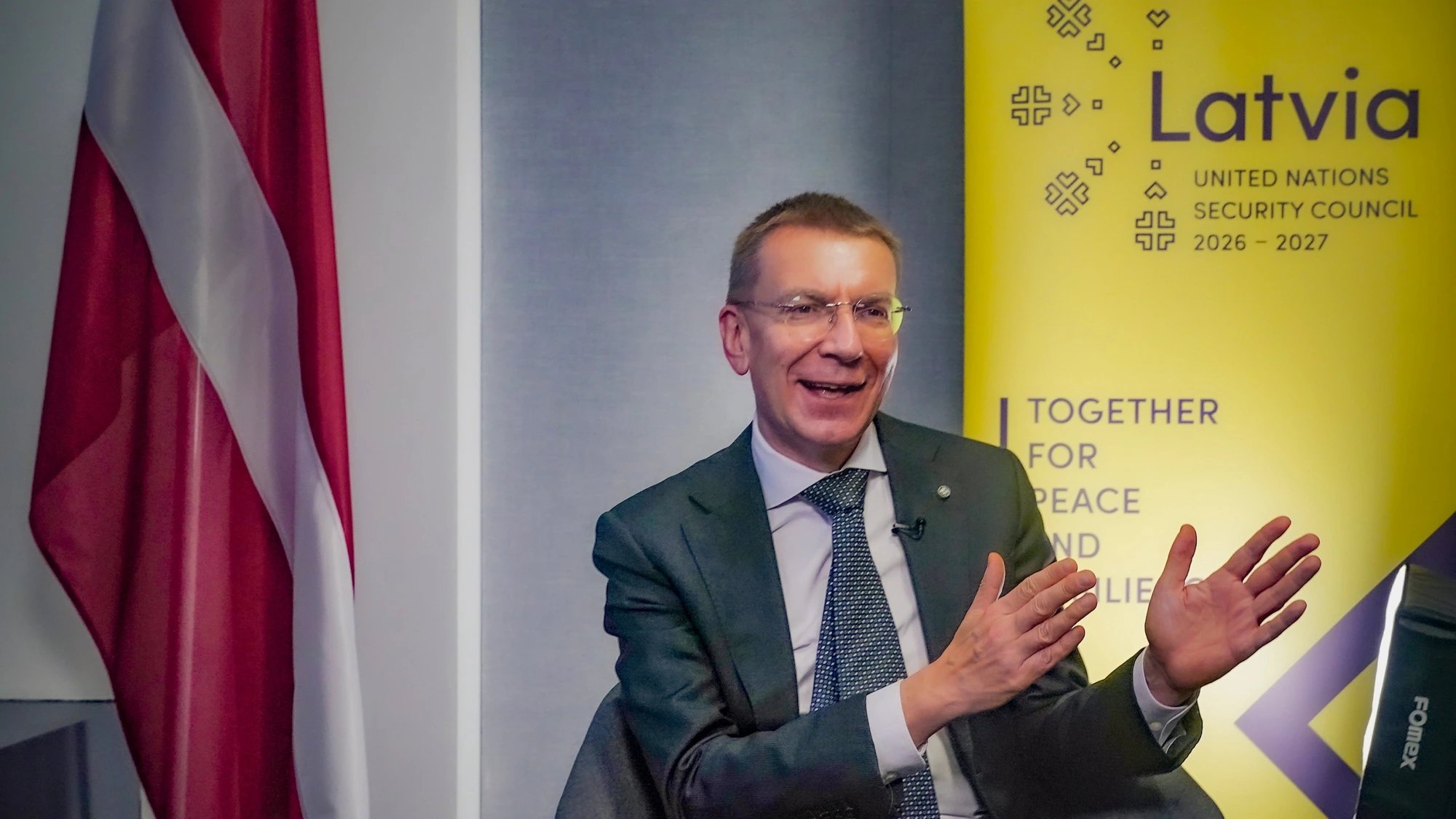
European officials are drafting contingency plans in response to a wave of Russian hybrid attacks, including arson, sabotage, and assassination plots. Latvian President Edgars Rinkevics said on September 21 that such provocations are already underway, while Estonian Foreign Minister Margus Tsahkna warned of growing threats across Europe.
Key Facts
- Latvian President Edgars Rinkevics said on September 21 that Russia has already begun provocations, sabotage, and tests against NATO and EU members.
- European intelligence officials, the CIA, French President Emmanuel Macron, and Polish Prime Minister Donald Tusk have warned that Moscow may launch an air attack on NATO territory in the coming months.
- The Institute for the Study of War describes recent Russian actions as a "coordinated series of kinetic campaigns" including arson, assassination plans, and infrastructure sabotage.
- Estonian Foreign Minister Margus Tsahkna said Estonian intelligence sees no serious military movements on the other side of its borders because Russia is stuck in Ukraine.
- NATO and EU officials have ramped up efforts to draw up contingency plans, but diplomats declined to give concrete examples, citing classification.
Hybrid Attacks
Recent months have seen a series of attacks attributed to Russia, including arson, assassination plans, and sabotage of infrastructure such as railway vandalism and electronic interference. The Institute for the Study of War calls these a "coordinated series of kinetic campaigns." Moscow consistently denies any involvement in the sabotage operations attributed to it by European governments. Latvian President Edgars Rinkevics told RFE/RL on September 21 that "we are not talking about a conventional war" but rather provocations, sabotage, and tests that are already happening.
Contingency Planning
Officials from NATO and EU capitals have ramped up efforts to draw up contingency plans and countermeasures. One scenario under discussion is the so-called Narva scenario, which describes a hypothetical Russian attack on a NATO country using hybrid warfare tactics similar to the initial phase of the 2014 invasion of Crimea. Narva is a small city with a sizeable Russian population on the Estonian side of the border with Russia. Analysts have said such a move could test NATO's willingness to risk direct confrontation over strategically insignificant territory. RFE/RL contacted several diplomats with knowledge of EU and NATO preparedness planning, but none would give concrete examples, saying the information was classified.
Intelligence Assessments
European intelligence officials, the CIA, French President Emmanuel Macron, and Polish Prime Minister Donald Tusk have all warned in recent days of assessments that Moscow may launch an air attack in some form on NATO territory in the coming months. The aim would be to show that the alliance's Article 5 common defense pledge is little more than words on paper. Estonian Foreign Minister Margus Tsahkna said there are many rumors that Putin is going to wage a full-scale military operation against the Baltic states or Poland. However, he added that "our intelligence doesn’t see any serious military movements on the other side of our borders because Russia is stuck in Ukraine." Analysts at the Institute for the Study of War said on September 21 that scenarios for Russian action have not received the detailed analysis they deserve and require.
1 source
Time · lag behind first