
Xi-Trump talks test fragile truce as US-China trade war persists
This digest was compiled by AI from multiple sources — links to the originals are below.
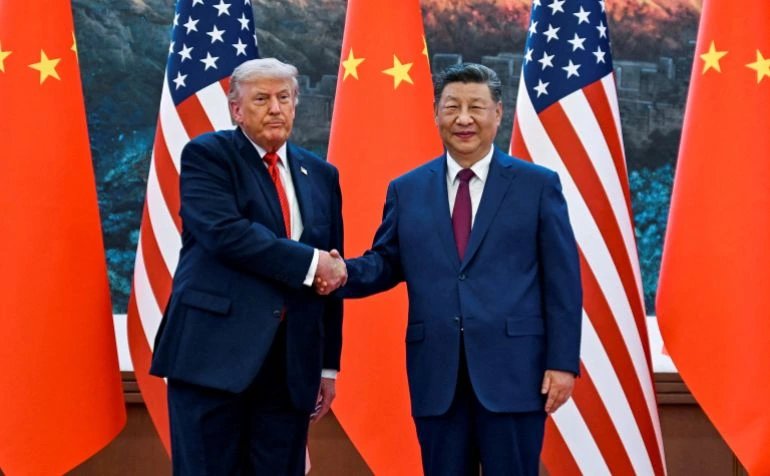
Chinese President Xi Jinping is scheduled to hold talks with US President Donald Trump at the White House during a three-day state visit, the first by a Chinese leader in more than a decade. The meeting comes as the world's two largest economies remain locked in a trade and AI dispute, with a tariff truce set to expire on November 10. US trade with China fell nearly 30 percent in 2025, while China's global trade surplus reached $1.2 trillion.
Key Facts
- As of July 2026, Chinese goods in the US faced an average tariff rate of 36.5 percent, while US goods entering China were taxed at 31 percent.
- The US-China tariff truce, struck after talks in South Korea, is due to expire on November 10.
- US trade with China fell nearly 30 percent in 2025 compared with the year before, while China registered a $1.2 trillion global trade surplus last year.
- Trump imposed a 10 percent duty on Chinese goods over fentanyl and immigration concerns soon after resuming office in January 2025, and by April 2025 Chinese goods attracted 145 percent tariffs while Beijing imposed a 125 percent levy on US imports.
Tariff Levels
A Congressional Research Service report noted that as of July 2026, Chinese goods in the US faced a tariff rate of 36.5 percent, while US goods entering China were taxed at 31 percent. The rate varies sharply by product: Chinese copper and its products faced an effective rate of 73.6 percent in June 2026, while aluminium and its products faced 65.2 percent, iron and steel items about 50 to 58 percent, and vehicles and auto parts 44.4 percent. China maintains a 10 percent additional tariff on US imports on top of its normal tariffs and product-specific duties, with US crude oil facing 20 percent, LNG 25 percent, soya beans 13 percent, and US beef up to 77 percent.
Escalation and Truce
Soon after resuming office in January 2025, Trump imposed a 10 percent duty on Chinese goods over fentanyl and immigration concerns, leading to the ongoing trade war. Beijing responded with levies on US coal, LNG, crude oil, and autos, as well as additional curbs on exports of five metals key to defence and clean energy. By April 2025, the trade war escalated, with Chinese goods attracting 145 percent tariffs while Beijing imposed a 125 percent levy on US imports, in addition to curbs on rare-earth exports. The rivals struck a tariff truce after talks in South Korea, which is due to expire on November 10, but the truce has not prevented Washington and Beijing from engaging in trade curbs.
1 source
Time · lag behind first