
Quebec amateur astronomer's satellite find confirmed as 25-km impact crater
This digest was compiled by AI from multiple sources — links to the originals are below.
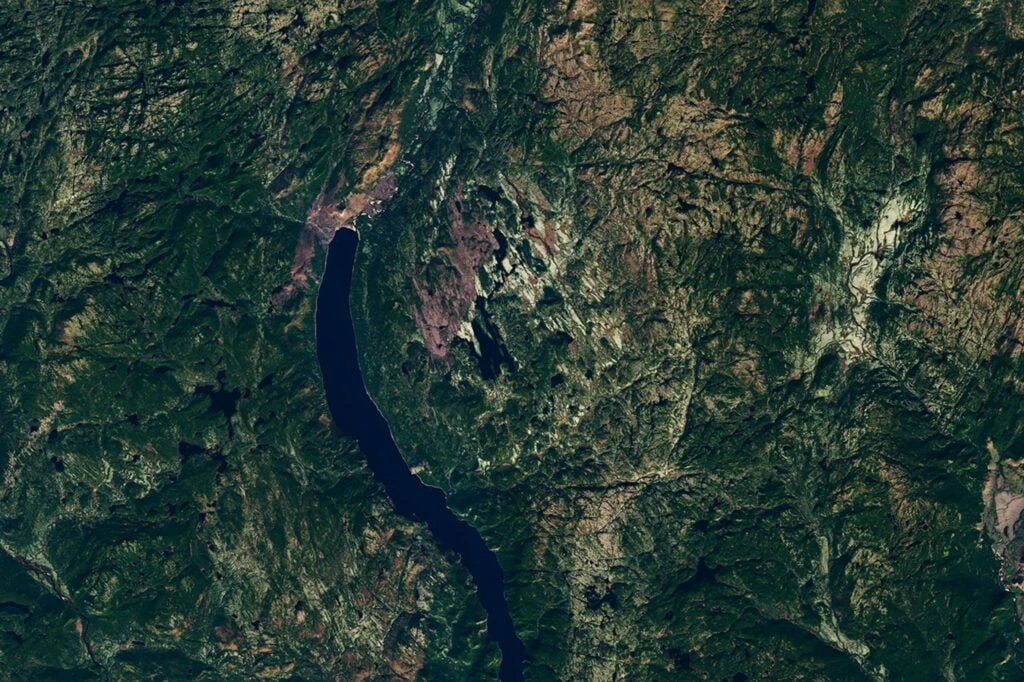
A circular 25-kilometre feature spotted by Quebec amateur astronomer Joël Lapointe on satellite imagery in 2024 has been confirmed as an impact crater. A team led by Western University planetary geologist Gordon Osinski reached the remote Côte-Nord site by floatplane in October 2025 and found shatter cones, the definitive shockwave signature. The discovery adds a rare confirmed complex crater to the global impact database.
Key Facts
- The circular feature spans roughly 25 kilometres and surrounds Lake Marsal in Quebec's Côte-Nord region.
- A four-person team including Gordon Osinski and French geophysicist Pierre Rochette reached the site by floatplane in October 2025.
- Researchers waded through about 50 metres of water carrying equipment because the aircraft could not get close enough to shore.
- The team found shatter cones — cone-shaped fracture patterns that form only under extreme shockwave pressure and are considered near-definitive evidence of an impact.
- Lapointe submitted the find through Impact Earth, a public reporting channel run by Western University's Department of Earth Sciences.
Discovery and Initial Screening
Joël Lapointe noticed the nearly circular ridge pattern in 2024 while scrolling satellite imagery to plan a camping trip in Quebec's Côte-Nord region. The feature surrounds Lake Marsal and measures about 25 kilometres across, yet it did not match any catalogued geological structure. Lapointe submitted the observation through Impact Earth, a public reporting channel operated by Western University's Department of Earth Sciences. Planetary geologist Gordon Osinski, who maintains the associated impact-crater database, said most public submissions turn out not to be craters, but Lapointe's ring survived the initial filter.
Field Expedition and Confirmation
A four-person team including Osinski and French geophysicist Pierre Rochette flew to the site by floatplane in October 2025. The aircraft could not reach the shore, so the researchers waded through roughly 50 metres of water while carrying their equipment. Osinski, who has led expeditions across six continents and the Arctic, described the trip as one of the most arduous he has done. On the ground, the team found a ring of raised, structurally deformed rock consistent with a complex impact crater featuring a central uplift. The decisive evidence was shatter cones — branching, cone-shaped fractures etched into rock by an extremely high-pressure shockwave that no volcanic, erosional, or glacial process can produce.
1 source
Time · lag behind first