
Toxic algae bloom kills 1,524 weedy seadragons off South Australia
This digest was compiled by AI from multiple sources — links to the originals are below.
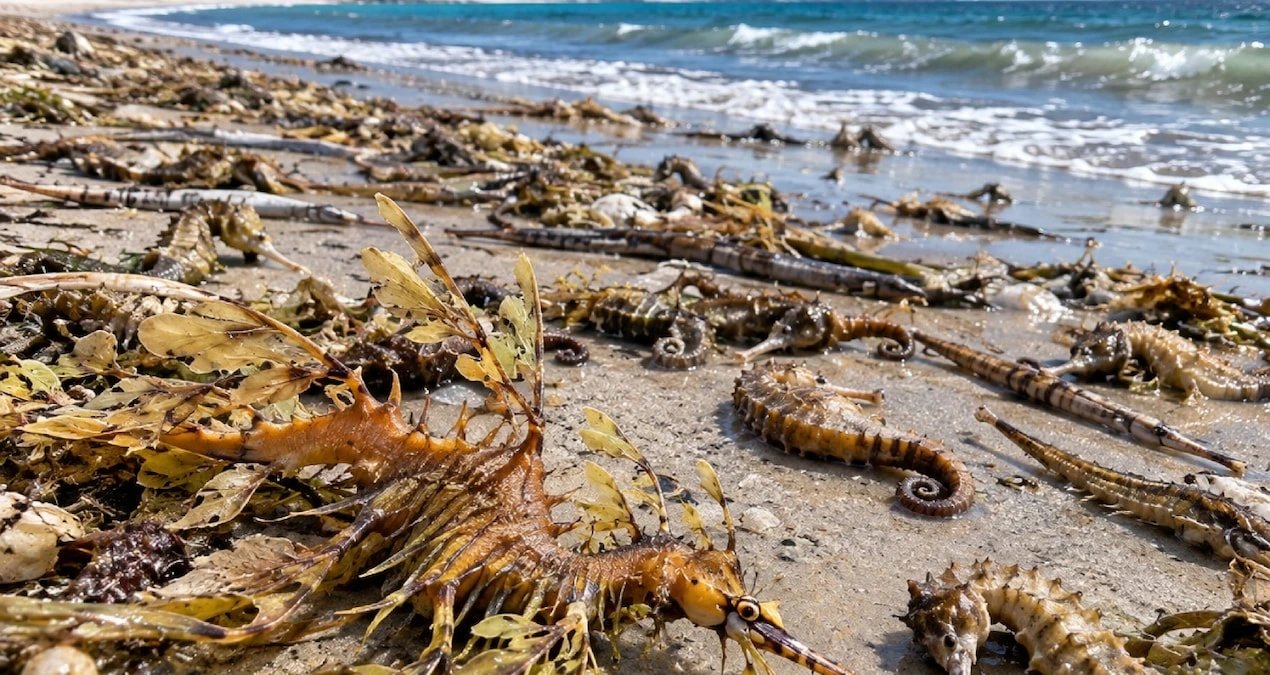
A toxic algae bloom off South Australia's coast killed 1,524 weedy seadragons, more than 1,400 pipefish and 160 seahorses. The bloom, caused by the rare Karenia cristata species, began in March 2025 and damaged kelp, seagrass and sponge habitats. Researchers are now exploring habitat restoration and captive breeding to help marine life recover.
Key Facts
- The bloom killed 1,524 weedy seadragons, more than 1,400 pipefish and 160 seahorses.
- The toxic algae species Karenia cristata began spreading along the coast in March 2025.
- More than 800 marine species in the region were affected by the bloom.
- Dead seadragons washed ashore for more than a year after the bloom began.
- Researchers are considering captive breeding of seadragon juveniles and artificial habitats for pipefish.
The Bloom
The algae bloom off South Australia's coast began in March 2025. The rare and toxic algae species Karenia cristata spread rapidly along the coastline. The bloom degraded seawater conditions and damaged kelp, seagrass and sponge habitats used by marine life. Pipefish and seahorses began washing ashore in the early period, while seadragon deaths continued longer. Records show dead seadragons washed ashore for more than a year.
Documenting the Losses
Local residents and divers played a key role in recording the scale of deaths. Many stranded animals were carried back to sea by waves within hours, so citizen photos and records provided crucial data. The records revealed 1,524 weedy seadragons, more than 1,400 pipefish and 160 seahorses died. The weedy seadragon, found only in Australia, suffered one of the largest losses. More than 800 marine species in the region were affected by the bloom.
Recovery Efforts
The damage to kelp and seagrass beds reduced available shelter for seadragons. Experts say recovery of marine life may take time even after the bloom ends. Researchers are exploring ways to rebuild damaged habitats. Options include raising seadragon juveniles in controlled environments and creating artificial habitats for pipefish. The leafy seadragon, South Australia's marine emblem, is being reassessed due to the losses.
1 source
Time · lag behind first