
US urges Americans to reconsider Middle East travel as Iran tensions rise
This digest was compiled by AI from multiple sources — links to the originals are below.
The U.S. State Department warned Americans to reconsider travel to the Middle East, citing potential for rapid escalation in the Iran conflict. The warning follows Houthi claims of missile and drone attacks on Riyadh and ongoing tensions over the Strait of Hormuz.
Key Facts
- The U.S. State Department warned Americans to reconsider travel to the Middle East, stating the military conflict could escalate rapidly.
- Iran-backed Houthi rebels claimed attacks on sensitive sites in Riyadh with missiles and drones on Saturday.
- President Donald Trump said he is in constant communication with the Houthis and in a deciding mode regarding war with Iran.
- Iranian parliament speaker Mohammad Bagher Ghalibaf said the Strait of Hormuz would not open until all Iranian conditions are met.
- The Trump administration approved a potential $24.3 billion sale of nearly 50 F-35 warplanes to Saudi Arabia last week.
Travel Advisory
The State Department issued the warning late Saturday in a post on X, urging Americans outside the Middle East to seriously reconsider travel to and through the region. Americans currently in the Middle East were advised to exercise heightened vigilance and be aware of potential flight cancellations, airspace closures, and travel disruptions. U.S. embassies in the region issued security alerts for American nationals due to heightened tensions and the potential for unforeseen escalation.
Houthi Attacks and Response
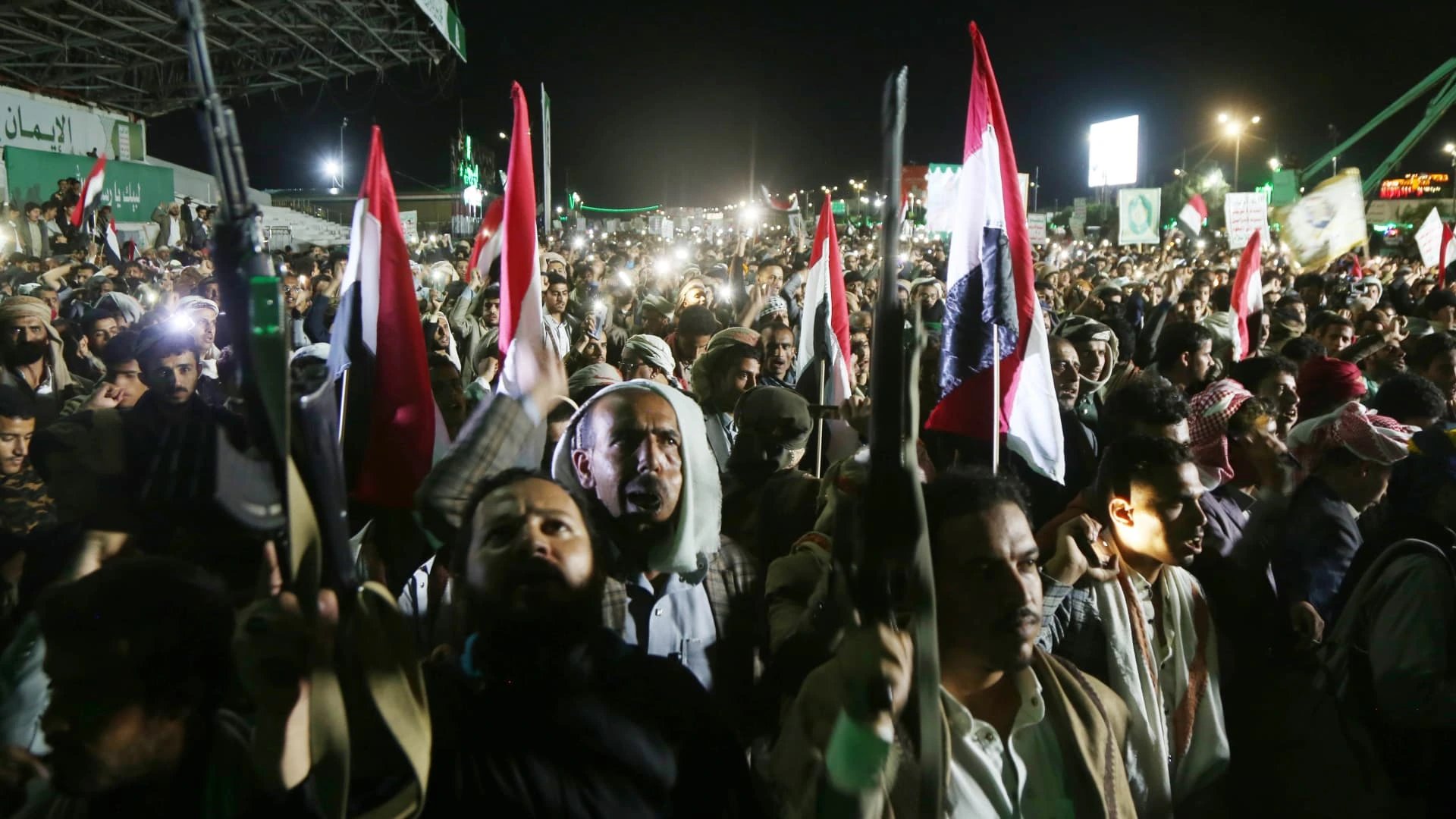
Houthi rebels claimed they attacked sensitive sites in Riyadh with missiles and drones on Saturday, hours after flames and a large plume of smoke were seen near the city's main airport. Local authorities have not cited the cause of the smoke near the airport. President Trump told Fox News on Sunday that he is in constant communication with the Houthis and claimed the group has agreed not to attack the United States. Trump added that he is in a deciding mode regarding the war with Iran, determining whether or not to blow up their nation depending on how the country behaves.
Strait of Hormuz Standoff
Iranian parliament speaker Mohammad Bagher Ghalibaf said on Sunday that the Strait of Hormuz would not open until all of Iran's conditions are met. Former secretary of Iran's Supreme National Security Council Mohammad Bagher Zolghadr said last month that reopening the strait would require Washington to lift its naval blockade and sanctions, withdraw U.S. military forces, pay war reparations, and release frozen Iranian assets. The council also called for an end to U.S. military presence in the region.
1 source
Time · lag behind first