
Russia's Starlink rival Rassvet-3 faces orbit and ground threats
This digest was compiled by AI from multiple sources — links to the originals are below.
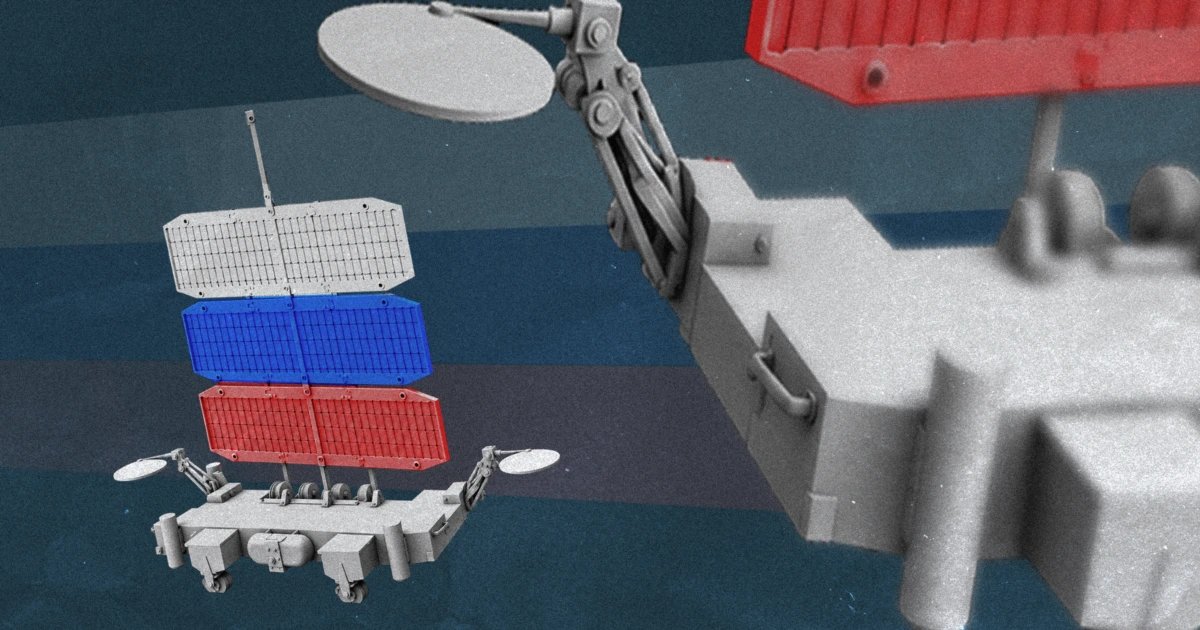
Russia's Rassvet-3 satellite constellation, developed by Bureau 1440, is facing problems in orbit and threats on the ground. The loss of Starlink access in Ukraine has degraded Russian battlefield communications, according to a Pentagon report. The constellation currently operates at approximately 500 kilometers altitude, below its planned 800 kilometers.
Key Facts
- In February, Starlink cut off access for terminals in Ukraine, except for a whitelist approved by Ukraine's Defense Ministry.
- A Pentagon report linked Russia's loss of satellite communications to Ukraine recapturing hundreds of square kilometers of territory earlier this year.
- Russia's Rassvet-3 constellation, developed by Bureau 1440, is currently in orbit at approximately 500 kilometers above Earth, although its planned altitude is 800 kilometers.
- A prominent pro-invasion Telegram channel said the loss of Starlink sets Russian battlefield communications back to wired Internet, Wi-Fi, and radio.
Battlefield Communications Impact
Russia's battlefield performance suffered immediately after Starlink cut off access for terminals in Ukraine in February. The number of assaults launched by Moscow's forces declined, according to a Pentagon report. A prominent pro-invasion Telegram channel said the loss of Starlink sets communications and battlefield command-and-control in the Russian Armed Forces back a couple of years. Jakub Janovsky, an analyst at Oryx, said traditional military communications systems are designed primarily for voice and are ill-suited for large volumes of data such as drone video feeds.
Satellite Constellation Limitations
Russia's Rassvet-3 constellation, developed by Bureau 1440, is currently in orbit at approximately 500 kilometers above Earth, although its planned altitude is 800 kilometers. Lower-flying satellites do not match the speed of Earth's rotation and do not stay fixed above the same point on the ground. For the constellation to provide constant communications, it needs enough satellites so that one or more are always above a given point. Television satellites are often in geostationary orbit at around 36,000 kilometers from the surface, but they have high latency unsuitable for real-time drone operations.
1 source
Time · lag behind first