
UK air traffic failure caused by software defect, Nats says
This digest was compiled by AI from multiple sources — links to the originals are below.
The UK's national air traffic service Nats said a software defect caused the system failure that disrupted flights earlier this month. The outage led to more than 2,000 flight cancellations and affected hundreds of thousands of passengers. The incident prompted questions over Nats' resilience and its chief executive Martin Rolfe.
Key Facts
- The failure led to more than 2,000 flight cancellations and affected hundreds of thousands of passengers.
- Flights at Heathrow, Gatwick, Luton and Glasgow airports were affected.
- Nats said the defect occurred in the system that underpins UK airspace management and produced corrupted data in a millisecond.
- The government ruled out a cyber attack, and the Ministry of Defence denied a report that a military aircraft was to blame.
- Nats chief executive Martin Rolfe apologised and said safety was never in question.
Software Defect
Nats said the defect occurred in the system that underpins the management of UK airspace. The problem happened in the space of a millisecond, leading the system to produce corrupted data. The government had previously ruled out a cyber attack. Last week the Ministry of Defence denied a report that a military aircraft was to blame.
Impact and Reaction
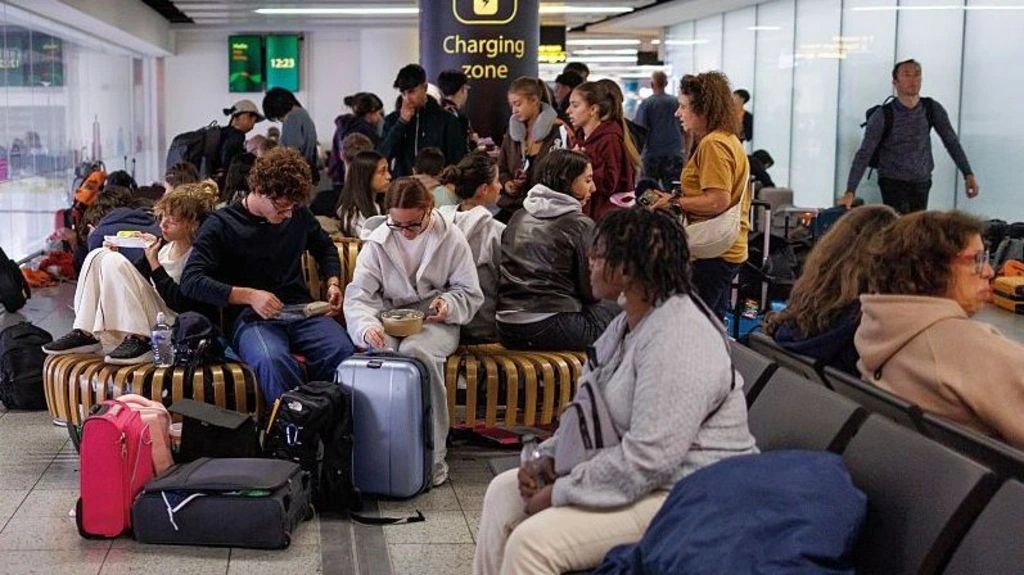
The failure led to more than 2,000 flight cancellations and affected hundreds of thousands of passengers. Some passengers slept on airport floors or were stuck overseas. Flights in and out of Heathrow, Gatwick, Luton and Glasgow were affected. Some airlines questioned the position of Nats chief executive Martin Rolfe. Passengers expressed anger over the level of support they received from airlines.
Nats Response
Martin Rolfe said: "I would like to apologise again, very sincerely, to everyone who was affected last week." He said Nats' primary role is to keep skies safe and that safety was never in question. Rolfe added that Nats is "devastated" when travel is disrupted.
3 sources
Time · lag behind first