
Indian, Pakistani Naval Vessels Collide in Arabian Sea, Prompting Diplomatic Tensions
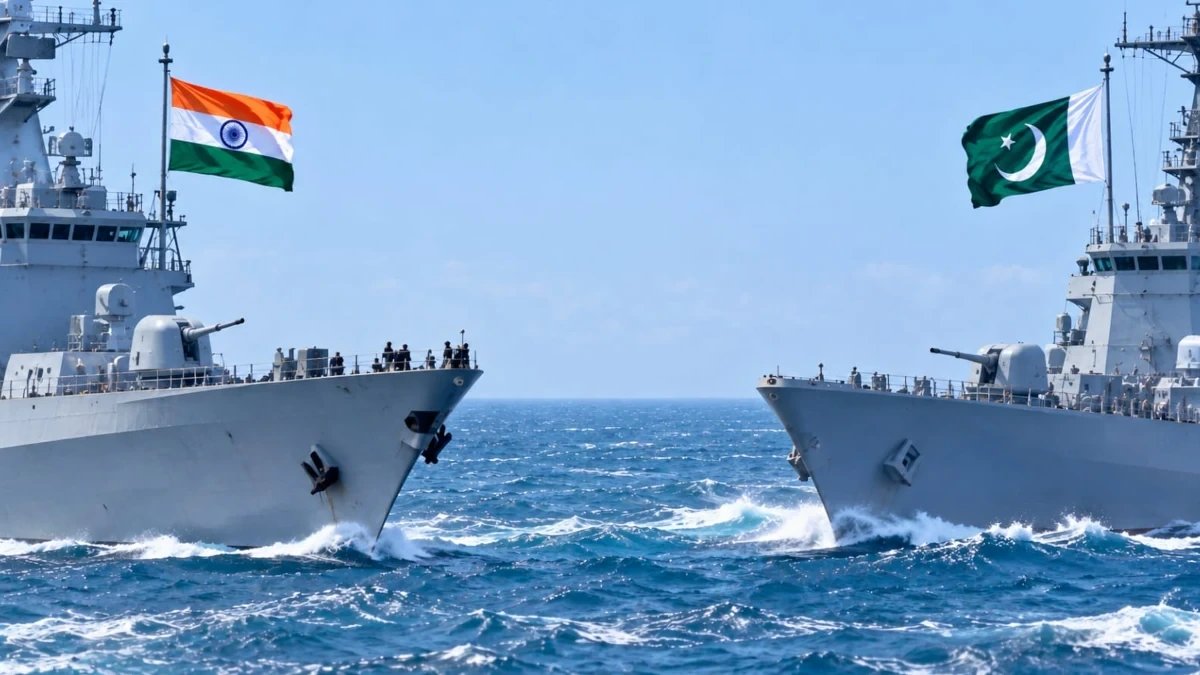
This digest was compiled by AI from multiple sources — links to the originals are below.
PNS Hunain, a Pakistan Navy corvette, collided with Indian Navy warship INS Kolkata in the north Arabian Sea on September 15, 220 kilometers east of Oman. India's Ministry of External Affairs summoned Pakistan's Chargé d'Affaires Saad Ahmad Warraich to protest the conduct of Pakistani naval units. Pakistan blamed India for the incident, saying the Indian vessel carried out aggressive maneuvers during Pakistan's SEASPARK-26 exercise.
Key Facts
- The collision occurred on September 15, 220 kilometers east of Oman in the north Arabian Sea.
- India's Ministry of External Affairs summoned Pakistan's Chargé d'Affaires Saad Ahmad Warraich on September 16 to protest the incident.
- The MEA said the Pakistani ship's conduct violated Article 10 of the 1991 India-Pakistan Agreement on Advance Notice on Military Exercises, Manoeuvres and Troops Movements.
- Pakistan's Foreign Office said the Indian vessel carried out aggressive maneuvers in close proximity during Pakistan's biennial SEASPARK-26 exercise.
- Indian media reports cited unnamed officials saying the Pakistani vessel approached at high speed and made a high-speed crossing in front of the Indian ship's bow.
The Collision
On September 15, PNS Hunain, a Pakistan Navy corvette, collided with Indian Navy warship INS Kolkata in the north Arabian Sea, 220 kilometers east of Oman. The incident took place in international waters and did not cause any major damage, according to India's Ministry of External Affairs. The MEA described the conduct of the Pakistani naval ship as a direct contravention of Article 10 of the 1991 Agreement between India and Pakistan on Advance Notice on Military Exercises, Manoeuvres and Troops Movements. Article 10 states that naval ships and submarines of the two countries should not come within three nautical miles of each other while operating in international waters.
Diplomatic Response
The following day, India's Ministry of External Affairs summoned Pakistan's top-most diplomat in New Delhi, Chargé d'Affaires Saad Ahmad Warraich, to the foreign ministry to protest the 'unacceptable and unprofessional conduct' of Pakistani naval units. Pakistan's Foreign Office blamed India for the incident, stating that while the Pakistan Navy was undertaking its biennial exercise, SEASPARK-26, the Indian vessel carried out aggressive maneuvers in dangerously close proximity to a Pakistani naval ship. The 1991 agreement was signed as a confidence-building measure to prevent a crisis from arising due to the misreading of the other side's intentions, following heightened tension when India conducted the Brass Tacks military exercise in January 1987.
Conflicting Accounts
Unnamed officials 'aware of the matter' told Hindustan Times that the incident involved close-in maneuvering by the Pakistani vessel, which approached the Indian warship at high speed and in an unsafe manner. A report in First Post, citing sources within India's defense establishment, claimed that the Pakistani vessel shadowed the Indian ship, ignored multiple warnings, and then made a high-speed crossing directly in front of the bow, resulting in the crash. The Hindu reported that INS Godavari was on a routine surveillance mission when PNS Hunain approached while attempting to intercept or follow it, and the close-range maneuver caused the two vessels to graze each other. The Pakistani vessel sustained damage in the collision and returned to harbor, while INS Godavari suffered minor damage and continued on its mission, according to The Hindu.
1 source
Time · lag behind first