
OpenAI's Navier–Stokes claim raises attribution concerns among mathematicians
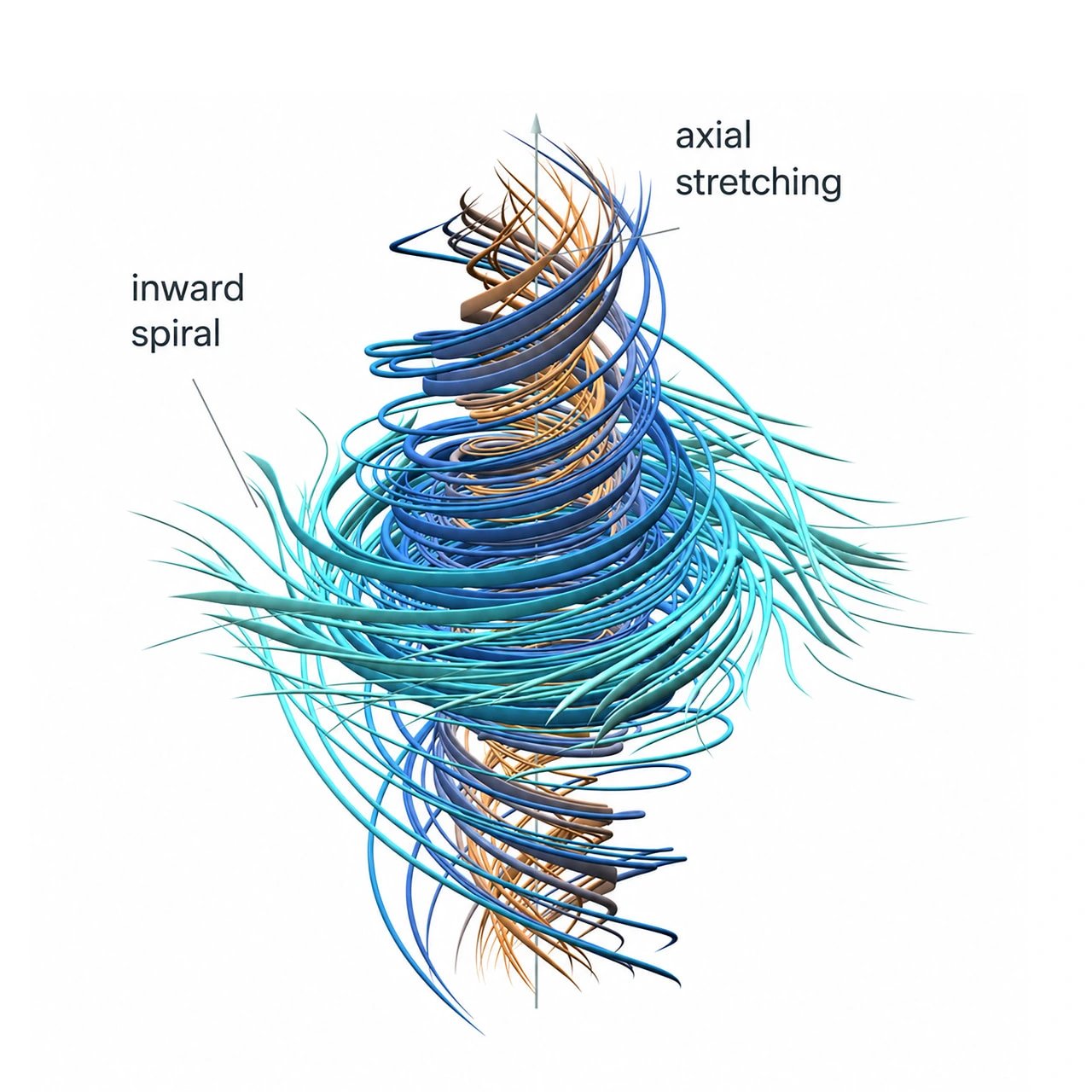
This digest was compiled by AI from multiple sources — links to the originals are below.
OpenAI announced on 8 September that it had solved the Navier–Stokes Millennium Prize Problem, a 200-year-old set of equations describing fluid motion. The claim, made via press release, has sparked renewed concerns among mathematicians about how AI models credit prior work. The announcement came twelve hours after two researchers posted a partial solution they say was aided by OpenAI's tools.
Key Facts
- OpenAI announced on 8 September that it had solved the Navier–Stokes Millennium Prize Problem, one of seven unsolved problems in mathematics.
- The Navier–Stokes equations are 200-year-old differential equations that describe how fluids behave and have applications including aircraft design.
- OpenAI says the solution shows the equations can break down under certain conditions, so are not reliable for real-world fluids.
- Twelve hours before OpenAI's announcement, mathematicians Tristan Buckmaster and Levent Alpöge posted a partial solution to the Navier–Stokes problem using AI tools from OpenAI and Anthropic.
- Buckmaster suggested that interactions with OpenAI's Codex agent could have been crucial to the company's breakthrough, a claim OpenAI denies.
The Claimed Breakthrough
OpenAI, based in San Francisco, California, announced on 8 September that it had solved the Navier–Stokes Millennium Prize Problem. The problem concerns 200-year-old differential equations that describe fluid motion and are used in aircraft design. OpenAI stated that the solution shows the equations can break down under certain conditions, making them unreliable for real-world fluids. The company said the breakthrough cost several million US dollars and was validated using an automated verification method.
Attribution Dispute
Twelve hours before OpenAI's announcement, mathematician Tristan Buckmaster at New York University posted on social media that he and Levent Alpöge at Anthropic had achieved a partial solution using AI tools from both companies. Buckmaster's statement suggested that interactions with OpenAI's Codex agent could have been crucial to the company's breakthrough. OpenAI denies that the researchers' interactions with its tools contributed to the breakthrough. Mathematicians have renewed concerns about how AI models learn from user interactions and whether due credit is given to previous work.
Scientific Integrity Risks
AI systems are already acquiring and digesting all of digitized human knowledge, but their neural networks are 'black boxes' that do not track what they learned or from where. This makes it almost impossible to establish the origin of hints that lead to scientific breakthroughs. The integrity of the scientific process is at risk if studies from researchers in and outside tech companies do not appropriately credit those who helped make AI models smart.
1 source
Time · lag behind first