
Nepal frames glacier flood disaster as climate loss and damage test
This digest was compiled by AI from multiple sources — links to the originals are below.
Nepal is framing the Langtang Lirung glacier collapse floods, which killed more than 1,380 people, as a climate loss and damage case. The government estimates recovery and reconstruction will require $4.7bn, about 10 percent of GDP. The muted international response has pushed Nepal to ask the UN Fund for Responding to Loss and Damage for urgent support.
Key Facts
- More than 1,380 people were killed and around 5,100 remain missing after the Langtang Lirung glacier collapse triggered floods in Nepal's Bhotekoshi and Trishuli valleys.
- Nepal's rapid assessment estimates full recovery and long-term reconstruction will need $4.7bn, roughly 10 percent of Nepal's annual GDP and more than a third of its federal budget.
- The United States pledged $3.6m, the United Kingdom $6m, and the European Union $2.3m in immediate humanitarian aid.
- Nepal has asked the United Nations' Fund for Responding to Loss and Damage for urgent support, and the fund's board is now considering how to respond.
- Loss and damage is recognised in Article 8 of the Paris Agreement, but wealthy countries drew a line around what that recognition could mean.
The Disaster
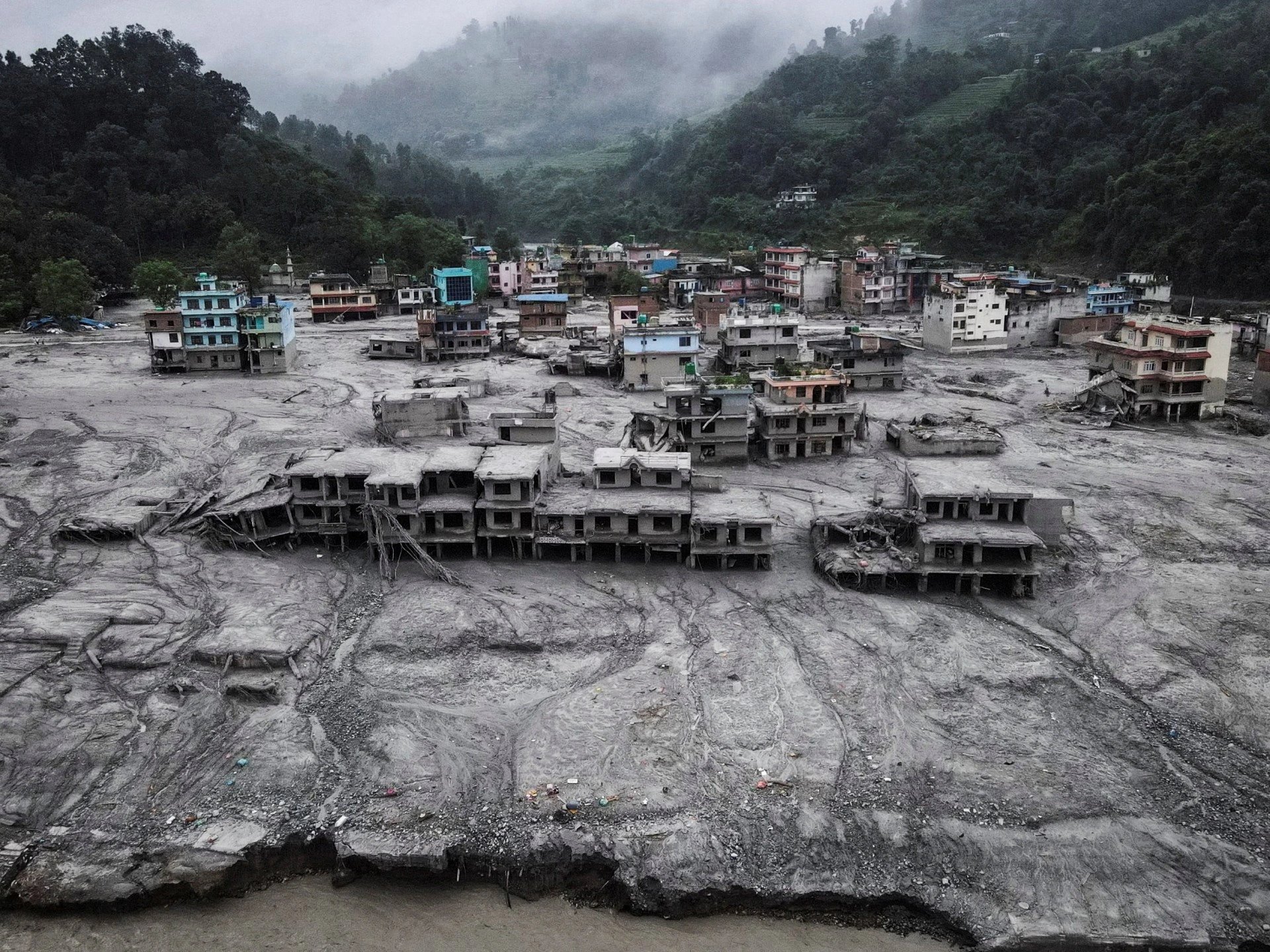
Three weeks ago, a glacier and rock mass collapsed from Langtang Lirung mountain, triggering floods in Nepal's Bhotekoshi and Trishuli valleys. Officials have confirmed the loss of more than 1,380 lives, while around 5,100 remain missing. The disaster shattered thousands of homes and wiped out vital infrastructure.
International Response
Despite considerable media and public attention, the international political response has remained strikingly muted. Condolence messages, emergency supplies, and pledges of help have come from foreign governments, but the response mainly targeted immediate humanitarian aid. The United States pledged $3.6m, the United Kingdom $6m, and the European Union $2.3m. These funds cannot meet the needs of affected communities and provide them with the shelter, food and infrastructure to survive the winter.
Climate Justice
Nepal is increasingly framing the floods not simply as another weather-induced catastrophe, but as a consequence of a climate crisis to which the country contributed almost nothing. For over a century, wealthy countries have consumed a vastly disproportionate share of the atmosphere's capacity to absorb carbon dioxide, growing their economies through industrialisation driven by fossil fuel consumption. Nepal has argued that international support to deal with climate catastrophe is not a charity but climate justice. It has asked the United Nations' Fund for Responding to Loss and Damage for urgent support, and the fund's board is now considering how to respond. Developing countries secured recognition of loss and damage in Article 8 of the Paris Agreement, but wealthy countries drew a line around what that recognition could mean.
1 source
Time · lag behind first