
Korea Exchange after-hours debut sees 1,637 volatility halts, retail-driven trading
This digest was compiled by AI from multiple sources — links to the originals are below.
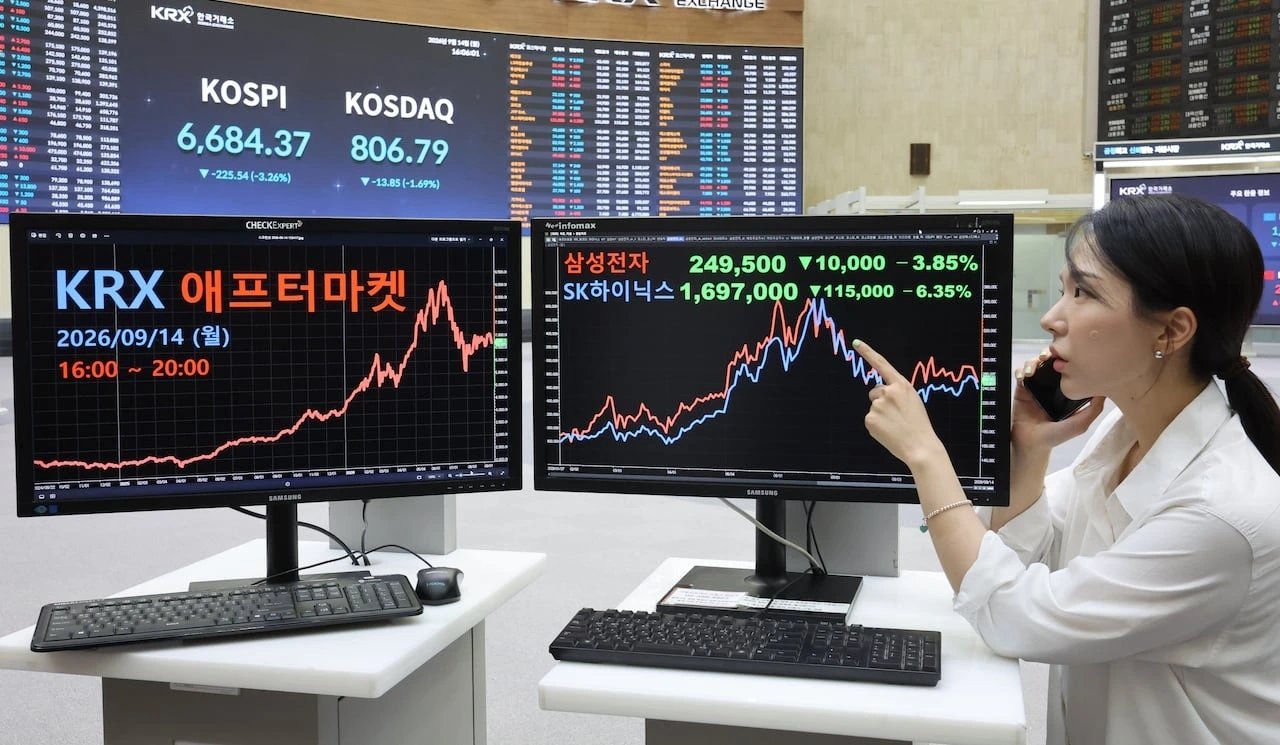
The Korea Exchange's first after-hours session saw 1,637 volatility halts, more than four times the regular session's count. Retail investors accounted for 93% of the 1.8 trillion won turnover, while institutional traders largely stayed away.
Key Facts
- The Korea Exchange launched after-hours trading from 4 p.m. to 8 p.m. on Monday, its first step toward around-the-clock trading.
- Volatility interruptions were triggered 1,637 times in the extended session, more than four times the number during the regular session.
- Retail investors accounted for 93% of the extended session's total turnover of 1.8 trillion won ($1.34 billion).
- Foreign investors accounted for just 3.9% of the extended session's turnover, with local institutions making up the remainder.
- A total of 2,501 different stocks were traded in the evening session, with some triggering the volatility interruption mechanism more than once.
Extended Session Launch
The Korea Exchange introduced after-hours trading between 4 p.m. and 8 p.m. on Monday, marking the first step by a major Asian exchange toward around-the-clock trading. Nasdaq Inc. and the New York Stock Exchange are among other markets considering similar moves to tap international demand. The extended session traded 2,501 different stocks, with some activating the volatility interruption mechanism more than once.
Retail Dominance and Volatility
Individual investors accounted for 93% of the extended session's total turnover of 1.8 trillion won ($1.34 billion), according to Korea Exchange. Foreign investors accounted for just 3.9%, with local institutions accounting for the rest. Volatility spikes triggered brief trading halts 1,637 times, more than four times the number during the day's regular session. Sanghyun Park, founder of Clepsydra Capital, said institutional traders mostly stayed on the sidelines, leaving insufficient buy and sell orders. Park described smaller stocks as an 'absolute roller coaster,' jumping 15% to 30% on relatively minor news before dropping just as quickly.
1 source
Time · lag behind first