
Libya's NOC threatens force majeure as guards halt two oilfields
This digest was compiled by AI from multiple sources — links to the originals are below.
Libya's National Oil Corporation threatened force majeure after Petroleum Facilities Guard members shut a valve and halted production at the Hamada and Tahara oilfields. The guard said it would impose partial cuts for one week at several additional fields, including Wafa, Al-Khamsa and El Feel, and a full shutdown would follow if its demands are not met. The disruption comes as Libya targets 1.6 million barrels per day by the end of 2026, up from roughly 1.4 million bpd currently.
Key Facts
- Production stopped completely at the Hamada and Tahara oilfields and at a pumping station after Petroleum Facilities Guard members closed a valve on the main Hamada-Zawiya crude pipeline.
- The Petroleum Facilities Guard said it would impose partial production cuts for one week at several additional fields, including Wafa, Al-Khamsa and El Feel, with a full shutdown to follow if its demands are not met.
- NOC said it could declare force majeure if the closed valve is not reopened or if similar shutdowns hit other oilfields.
- Libya's output has climbed to roughly 1.4 million barrels per day, its highest level in more than a decade, and NOC is targeting 1.6 million bpd by the end of 2026.
- NOC received a $2 billion allocation under Libya's 2026 budget to support its production plans.
The Shutdown
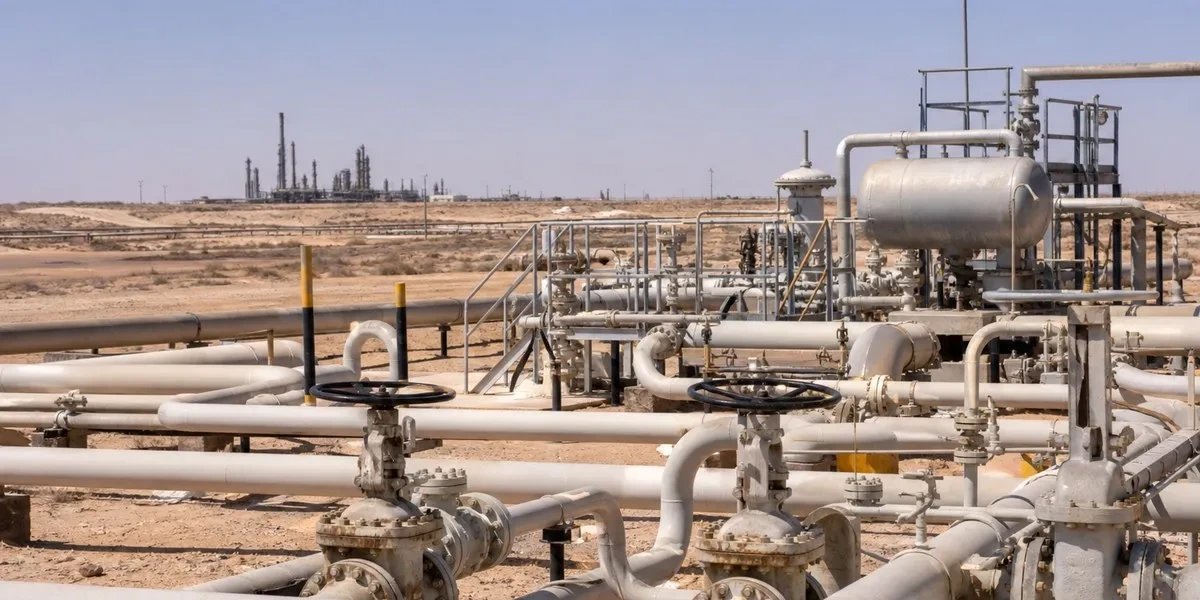
Members of the Petroleum Facilities Guard closed a valve on the main Hamada-Zawiya crude pipeline, halting production completely at the Hamada and Tahara oilfields and at a pumping station. The guard said it would impose partial production cuts for one week at several additional fields, including Wafa, Al-Khamsa and El Feel. A full shutdown would follow if its demands are not met. The guard wants to be transferred financially and administratively from Libya's defense ministry to the National Oil Corporation and has called for a timetable to complete the move.
NOC Response
NOC said it could declare force majeure if the closed valve is not reopened or if similar shutdowns hit other oilfields. The disruption lands just as Libya is trying to push production much higher. Output has climbed to roughly 1.4 million barrels per day, its highest level in more than a decade. NOC is targeting 1.6 million bpd by the end of 2026 and 2 million bpd by the early 2030s. NOC received a $2 billion allocation under Libya's 2026 budget to support its production plans.
Investment Context
Getting to those targets could require $36 billion to $40 billion in foreign investment, according to NOC Chairman Masoud Suleman. Libya signed exploration and production-sharing agreements this year with Repsol, Turkish Petroleum, Eni, QatarEnergy and MOL following its first major licensing round in 17 years. BP, Shell, Exxon and Chevron have also been pursuing a return. Political groups, armed factions and workers have repeatedly used oilfields, pipelines and terminals as leverage since the 2011 uprising that toppled Muammar Gaddafi.
1 source
Time · lag behind first