
Kazakhstan and South Korea to establish rare earth metals technology cooperation center
This digest was compiled by AI from multiple sources — links to the originals are below.
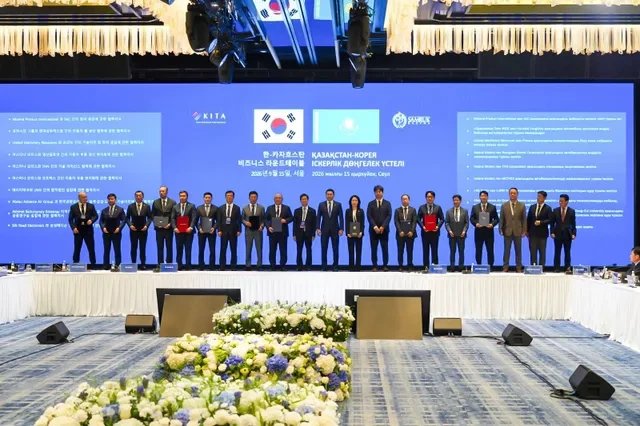
Kazakhstan and South Korea signed more than 40 bilateral agreements in science, higher education, AI and high technologies following a roundtable in Seoul. The agreements include establishing a rare earth metals technology cooperation center at Satbayev University. The center will be created with participation of Korea's KORAM and KITECH institutes.
Key Facts
- Kazakhstan and South Korea signed more than 40 interagency, inter-institutional and inter-university documents in Seoul on September 15, 2026.
- A rare earth metals technology cooperation center will be established at Satbayev University with participation of Korea's KORAM and KITECH institutes.
- Kostanay Regional University and Dong-Eui University will create a joint AI laboratory for the automotive industry.
- A document was signed to develop the KAIST Kazakhstan project following the model of the leading Korean research university KAIST.
Rare Earth Metals Cooperation
A memorandum of understanding creates the basis for joint research, introduction of advanced technologies and development of industrial cooperation in rare metals. The center will be established at Satbayev University with participation of the Institute of Metallurgy and Ore Beneficiation, Korea's National Institute of Rare Metals (KORAM) under the Korea Institute of Industrial Technology (KITECH), and specialized organizations of both countries. The project implementation will combine the scientific and technological potential of the two countries and strengthen the practical component of cooperation.
AI and High-Tech Projects
Kostanay Regional University named after A. Baitursynuly and Dong-Eui University will create a joint AI laboratory in the automotive industry. The laboratory will serve as a platform for applied research projects, implementation of AI-based solutions and training of specialists considering the technological needs of the industry. A document was signed to develop the KAIST Kazakhstan project following the model of KAIST, a leading Korean research university.
1 source
Time · lag behind first