
Long COVID brain fog linked to dopamine loss in University of Toronto study
This digest was compiled by AI from multiple sources — links to the originals are below.
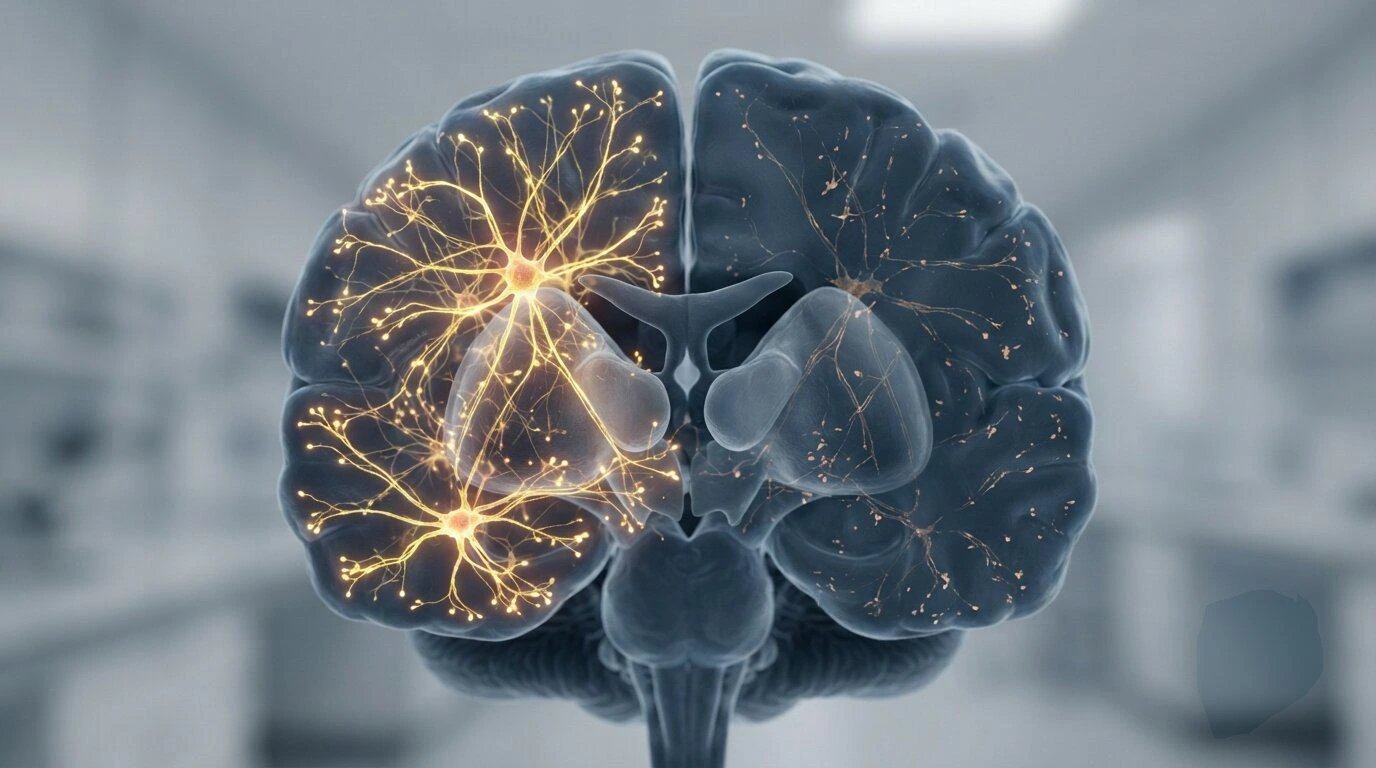
Researchers at the Centre for Addiction and Mental Health and the University of Toronto found that long COVID patients have significantly lower levels of a dopamine-related protein in brain regions tied to motivation, movement, and memory. The reduction ranged from 16% to 20% compared with people who had only mild or moderate initial infections. The findings provide a biological marker for symptoms that have long lacked an objective explanation.
Key Facts
- The study used PET imaging to measure VMAT2, a protein on dopamine-releasing nerve terminals, in 24 long COVID patients and 24 healthy controls.
- VMAT2 levels were 16% lower in the dorsal putamen and 20% lower in the ventral striatum of long COVID patients.
- Reduced dopamine markers in the ventral striatum correlated with memory problems, while markers in the dorsal putamen tracked with slowed movement.
- The study builds on a 2023 finding by the same team that showed elevated inflammation in the same brain regions.
Biological Marker
Long COVID has lacked an objective marker, leaving diagnosis built almost entirely on self-reported symptoms. The new study identifies reduced VMAT2 as a measurable change that correlates with specific symptoms. Jeffrey Meyer, psychiatry professor at the University of Toronto, said the marker's strong relationship to important symptoms is a definite strength of the study.
Study Design
Researchers compared 24 long COVID patients with 24 healthy people who had only mild or moderate initial infections. PET imaging measured VMAT2, a protein found on nerve terminals that release dopamine. The striatum, a brain region tied to motivation, movement, and memory, showed the most significant reductions.
Symptom Correlation
Reduced dopamine markers in the ventral striatum, associated with apathy, lined up with memory problems. Markers in the dorsal putamen, tied to planning, tracked with slowed movement. A third brain region tracked with loss of motivation.
1 source
Time · lag behind first