
Ancient horse DNA reveals behavior was selected before physical traits
This digest was compiled by AI from multiple sources — links to the originals are below.
Genetic analysis of ancient horse DNA shows early domestication first selected for calm, controllable behavior before physical traits for riding and endurance. Researchers from China, France, and Switzerland analyzed 266 genetic markers to trace the sequence of selection. The study, published in Science, indicates that behavioral selection preceded selection for body traits needed for transport and warfare.
Key Facts
- The study analyzed 266 genetic markers associated with behavior and body structure in ancient horses.
- The research was led by Xuexue Liu from the Institute of Animal Science at the Chinese Academy of Agricultural Sciences.
- The study was published in the journal Science.
- Successful spread of modern domestic horses began in the western Eurasian steppes just over 4,000 years ago.
Genetic Timeline of Selection
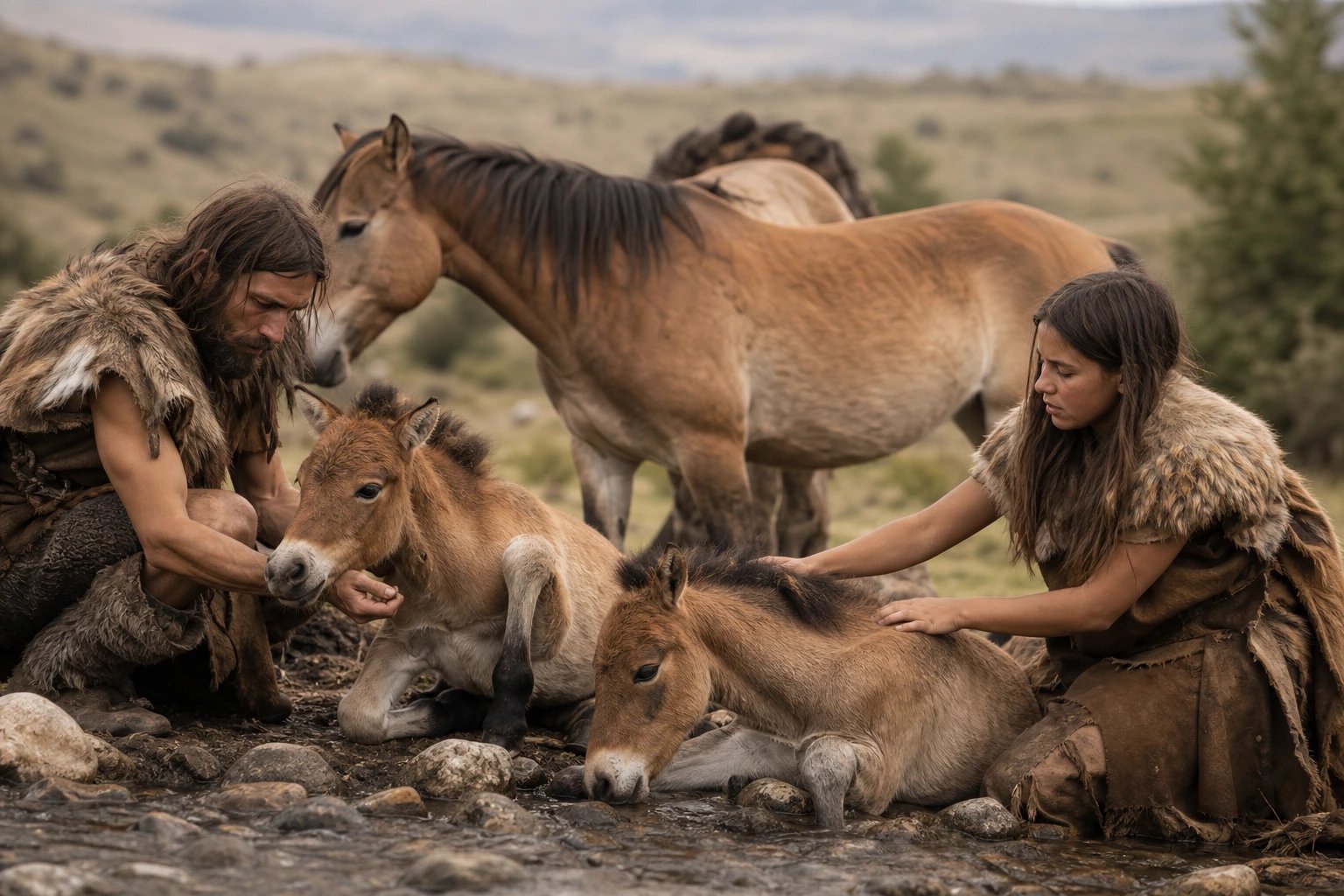
Researchers created a genetic timeline by analyzing genomes of ancient horses and tracking changes in 266 markers related to behavior and body structure. The earliest noticeable selection signals were associated with behavior, indicating that humans first needed controllable horses rather than merely strong ones. A large, fast, and easily frightened horse could be extremely difficult and even dangerous to manage, so animals had to calmly tolerate human presence and not panic at unexpected movements or sounds. Only after such temperament became more common did it make sense to select for physical traits needed for long-distance travel and carrying loads.
Domestication Impact
Archaeological and genetic data show that the successful spread of modern domestic horses began in the western Eurasian steppes just over 4,000 years ago. From that point, the relationship between humans and horses began to rapidly change the established order of life. Horses became a means of transport, cargo hauling, and communication, helped cultivate land, and later turned into a major battlefield advantage. Until the advent of internal combustion engines, horses were the fastest way to move people and goods over land.
1 source
Time · lag behind first