
Tokayev Calls for Deeper BRICS Plus Cooperation on Trade, AI and Critical Minerals
This digest was compiled by AI from multiple sources — links to the originals are below.
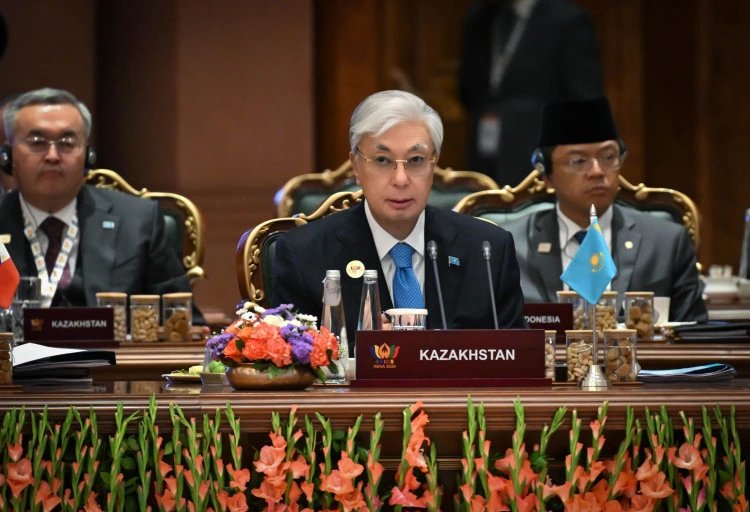
President Kassym-Jomart Tokayev called for deeper practical cooperation between Kazakhstan and BRICS countries in trade, logistics, artificial intelligence, critical minerals and water security at the BRICS Plus plenary session in New Delhi on Sept. 13. He positioned the format as a platform for broader economic ties amid growing geopolitical fragmentation.
Key Facts
- Tokayev spoke at the BRICS Plus plenary session in New Delhi on Sept. 13.
- He said BRICS represents nearly half of the world's population and around 40% of global GDP.
- Tokayev described the current global environment as an era of "great fragmentation," a term used in the 2026 Global Peace Index.
- Anastasia Golyakova, founder of the ThinkBricks YouTube channel, said closer BRICS cooperation could give Kazakhstan greater access to trade, investment and technological opportunities.
BRICS Cooperation Areas
Tokayev called for deeper practical cooperation between Kazakhstan and BRICS countries in trade, logistics, artificial intelligence, critical minerals and water security. He said Kazakhstan sees cooperation with the group as an opportunity to expand access to new markets, attract investment, strengthen transport links and advance technological development. Tokayev positioned BRICS as a platform for practical cooperation rather than an alternative to the existing international system. He added that Kazakhstan always seeks to find a "common ground on every difficult issue," describing the approach as consistent with the country's "balanced, goal-oriented foreign policy."
Global Fragmentation Context
Tokayev described the current global environment as an era of "great fragmentation," a term used in the 2026 Global Peace Index to characterize geopolitical confrontation, rising militarization, weakening multilateral institutions and growing trade barriers. He noted that BRICS, representing nearly half of the world's population and around 40% of global GDP, has both the capacity and responsibility to help overcome global divisions and deliver concrete results. "Peace and strategic stability are necessary conditions for economic and sustainable development," Tokayev said, calling for a shift from the de-escalation of individual conflicts toward long-term stability based on political dialogue and diplomacy. Anastasia Golyakova, founder of the ThinkBricks YouTube channel, said the approach reflects BRICS' broader focus on resilience, innovation, cooperation and sustainability, priorities that have gained greater relevance amid rising geopolitical tensions.
Expert Perspectives
Golyakova said closer cooperation among BRICS members could help address shared challenges while giving partner countries such as Kazakhstan greater access to the bloc's growing trade, investment and technological opportunities. "BRICS gives much support to each other. So, from this point of view, for Kazakhstan, it's a prosperous future, in my opinion," Golyakova told The Astana Times. Ayanangsha Maitra, an editor and a geopolitics specialist, echoed this view, saying Kazakhstan's BRICS partnership could open new opportunities for economic cooperation and market access.
1 source
Time · lag behind first