
Russian strike near Polish border halts train carrying Merz adviser, Boris Johnson
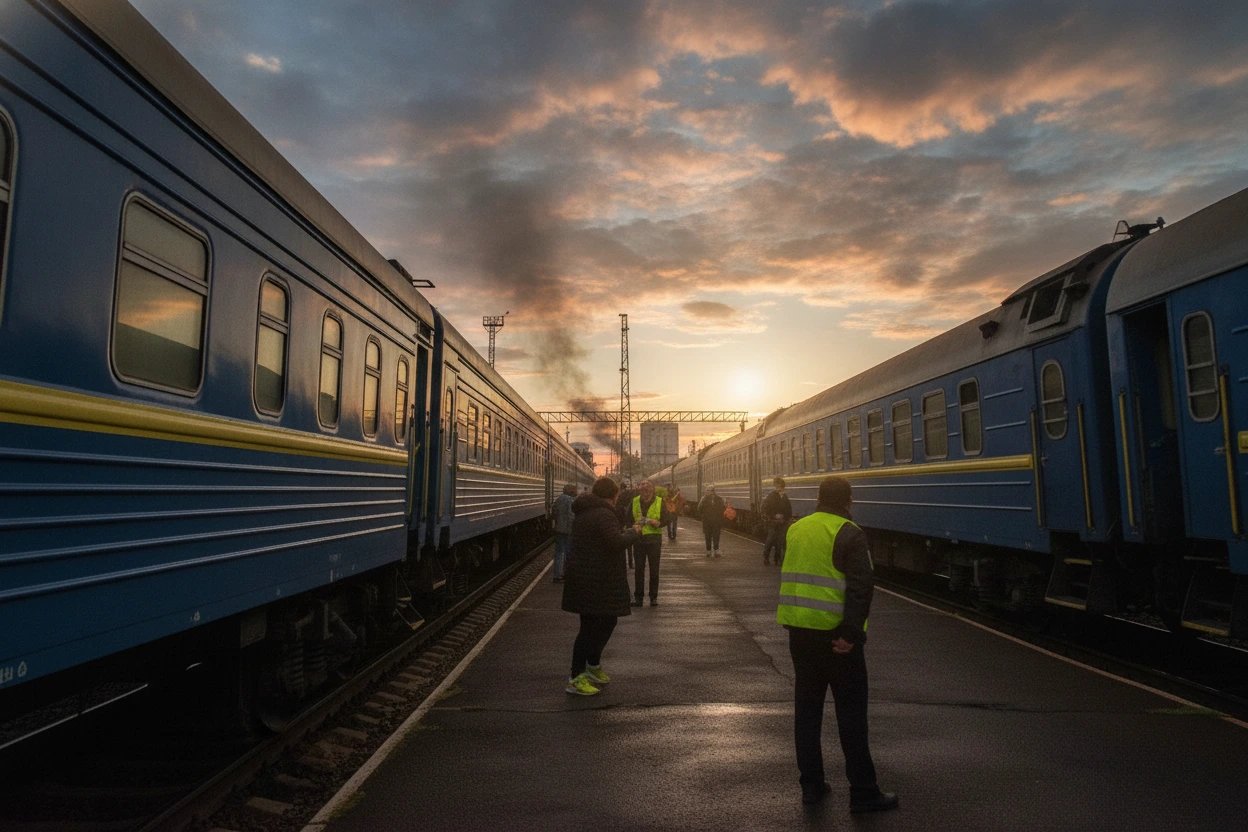
This digest was compiled by AI from multiple sources — links to the originals are below.
A Russian attack on a railway line near the Yahodyn border crossing between Ukraine and Poland halted a special train carrying Chancellor Friedrich Merz's adviser Günter Sautter, other European security advisers, Bundestag deputies, diplomats, and former UK Prime Minister Boris Johnson. No passengers were injured in the attack, which struck a locomotive of a regular Kyiv-Warsaw passenger train. Ukrainian President Volodymyr Zelensky said Russian forces demonstratively burned the locomotive, while Foreign Minister Andrii Sybiha called for stronger sanctions against Moscow.
Key Facts
- The attack occurred around 5 a.m. on September 13 near the Yahodyn border crossing on the Ukrainian-Polish border.
- The special train carried Günter Sautter, adviser to German Chancellor Friedrich Merz, along with other European security advisers, Bundestag deputies, diplomats, and scholars.
- Former UK Prime Minister Boris Johnson was also on the special train returning to Poland.
- The Russian strike hit a locomotive of a regular passenger train traveling from Kyiv to Warsaw, causing the special train to stop and some passengers to be evacuated.
- Ukrainian President Volodymyr Zelensky said Russian forces demonstratively burned the locomotive, and Foreign Minister Andrii Sybiha called for stronger sanctions against Moscow.
The Attack
Russia attacked a railway line near the Yahodyn border crossing on the Ukrainian-Polish border in the early hours of September 13. The strike targeted a locomotive of a regular passenger train traveling from Kyiv to Warsaw. Around 5 a.m., the special train carrying the delegation stopped near the Polish border and some passengers were evacuated. The evacuation was triggered by a drone threat, but the alarm was soon lifted after no further drones were detected.
Passengers and Reaction
The special train carried Günter Sautter, the closest adviser to German Chancellor Friedrich Merz, as well as security advisers from other European countries, Bundestag deputies, diplomats, and scholars. Former UK Prime Minister Boris Johnson was also on the train returning to Poland. No passengers on either train were injured in the attack. Ukrainian President Volodymyr Zelensky said Russian forces demonstratively burned the locomotive, and Foreign Minister Andrii Sybiha called for stronger sanctions against Moscow, describing the incident as 'Putin's terror knocking on the doors of the EU and NATO.'
1 source
Time · lag behind first