
US and Philippine Marines Link Hermes Drones to BrahMos Strikes in Luzon Exercise
This digest was compiled by AI from multiple sources — links to the originals are below.
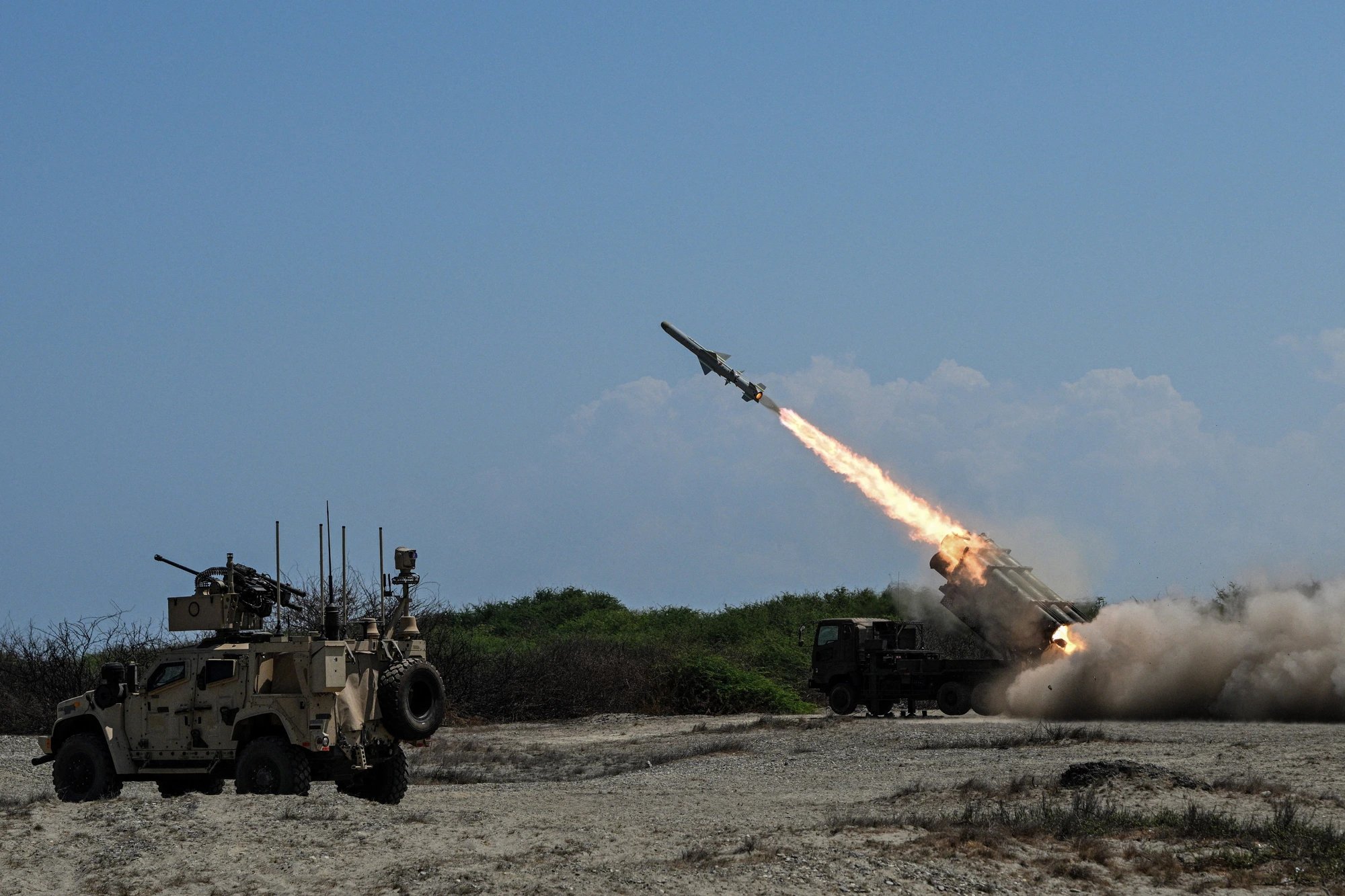
US and Philippine Marines rehearsed a drone-enabled BrahMos strike against a simulated Chinese naval group in northern Luzon, linking aerial surveillance with coastal missile targeting. The exercise advances a distributed maritime-denial network that could complicate Chinese naval operations across the South China Sea and Luzon Strait.
Key Facts
- The exercise paired Philippine Air Force Hermes drone tracks with targeting procedures for road-mobile BrahMos anti-ship batteries against a simulated formation of two Type 052D destroyers, a Type 054A frigate, and a Type 901 support ship.
- Official US Marine Corps imagery published on September 1, 2026, confirmed personnel from Air Naval Gunfire Liaison Company Detachment North worked with the Philippine Coastal Defense Regiment at Camp Bojeador.
- The Philippines became the first export customer for the BrahMos missile in 2022 under a contract valued at approximately $375 million for three coastal defense batteries.
Exercise Scenario
The training paired Philippine Air Force Hermes drone tracks with targeting procedures for road-mobile BrahMos anti-ship batteries against a formation representing two Type 052D destroyers, a Type 054A frigate and a Type 901 support ship. The concept is intended to shorten the sensor-to-shooter cycle while allowing Philippine forces to disperse launchers across the archipelago and contest key maritime approaches without relying on a comparable surface fleet. Planners represent two Type 052D guided-missile destroyers, one Type 054A frigate, and one Type 901 fast combat support ship, all currently operated by the People's Liberation Army Navy. Philippine Air Force Hermes drones provide the tracks used to follow the simulated vessels, and US and Philippine teams then convert this information into targeting data for a BrahMos strike, including target identification, track maintenance, weapon assignment, and engagement timing.
Interoperability and Confirmation
According to official US Marine Corps imagery published on September 1, 2026, through the Defense Visual Information Distribution Service, personnel from Air Naval Gunfire Liaison Company Detachment North of Marine Rotational Force Southeast Asia worked alongside the Philippine Coastal Defense Regiment at Camp Bojeador on maritime targeting procedures. The official release confirms that the activity supports the Philippines' Archipelagic Coastal Defense Concept and is intended to improve interoperability between the two forces. Additional information published by USNI News on September 8, based on those images and details provided by Marine Rotational Force Southeast Asia, identifies the Hermes drones, the BrahMos missile, and the exact composition of the simulated Chinese naval group.
1 source
Time · lag behind first