
EAEU and India agree to accelerate free trade talks, next round in November
This digest was compiled by AI from multiple sources — links to the originals are below.
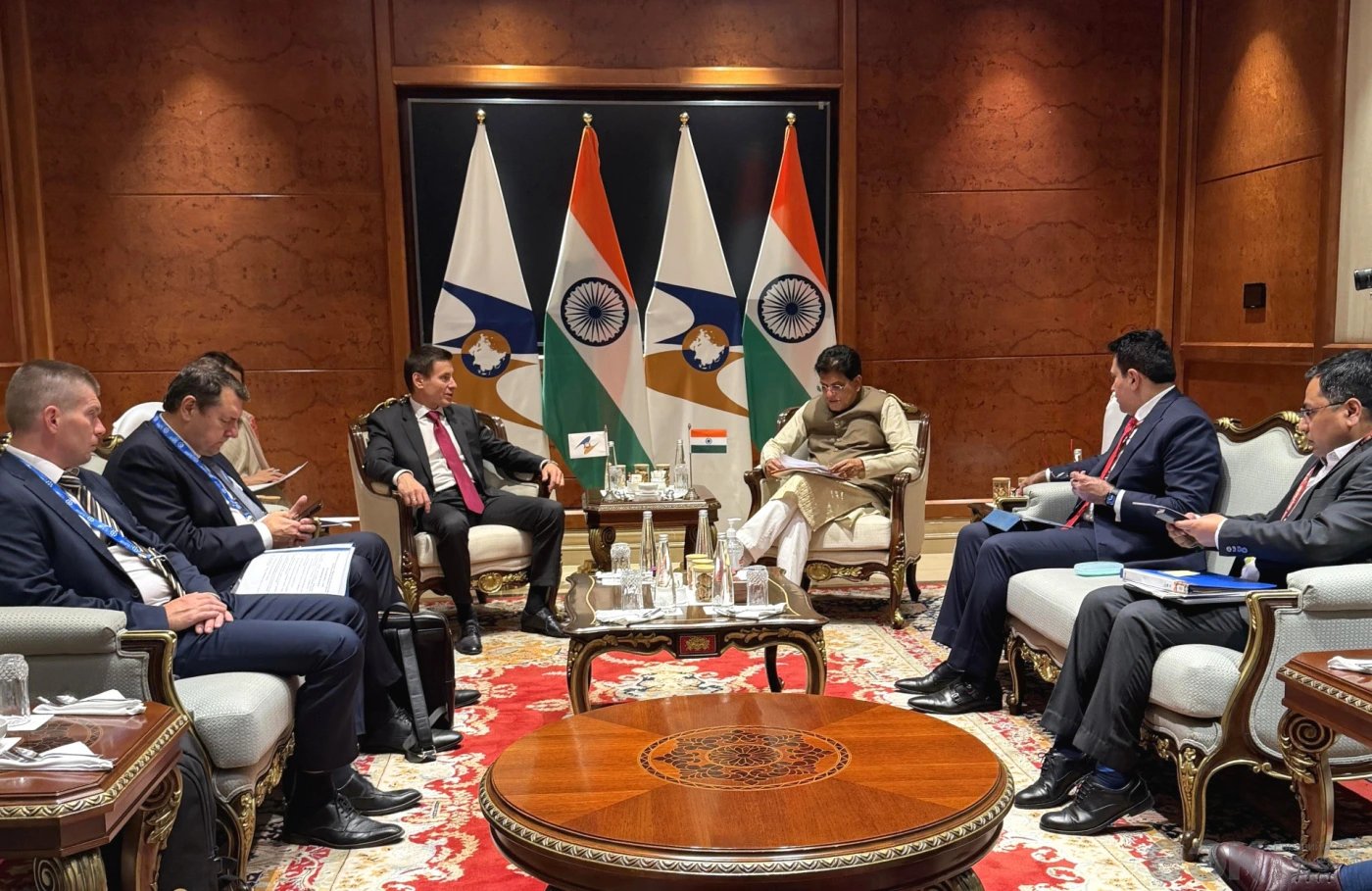
The Eurasian Economic Union and India agreed in New Delhi to accelerate negotiations on a free trade agreement, with a full-format round set for November. Trade ministers Andrey Slepnev and Piyush Goyal instructed negotiating teams to intensify work on key provisions by the end of 2026.
Key Facts
- The next full-format round of EAEU-India free trade negotiations is scheduled for November 2026.
- Trade ministers Andrey Slepnev and Piyush Goyal met in New Delhi and instructed teams to accelerate work by the end of 2026.
- Two negotiation rounds have already taken place: the first in November 2025 and the second in Moscow in June 2026.
- The second round covered the draft agreement text, market access for goods, non-tariff measures, and the work schedule.
- Kazakhstan participates in the EAEU's common trade policy, so the future agreement will apply to Kazakh companies.
Negotiation Timeline
The EAEU and India agreed in New Delhi to accelerate negotiations on a free trade agreement, with the next full-format round set for November 2026. This will be the third such round in 2026, following the first in November 2025 and the second in Moscow in June 2026. Ministers Andrey Slepnev and Piyush Goyal instructed negotiating teams to intensify work on key provisions by the end of 2026. The accelerated process comes less than a year after the roadmap was agreed in September 2025.
Market Access Focus
The central issue is which goods will receive more favorable access to the markets of India and the EAEU countries, and what tariff commitments the parties are ready to accept. During the second round, negotiators examined key requests on mutual market access and rules for applying non-tariff measures. Kazakhstan participates in the EAEU's common trade policy, so future agreements with India will apply to trading conditions for Kazakh companies. The potential effect will vary by sector: lower barriers may ease access for Kazakh products to the Indian market, while the agreement will also determine access for Indian goods to the Union market.
1 source
Time · lag behind first