
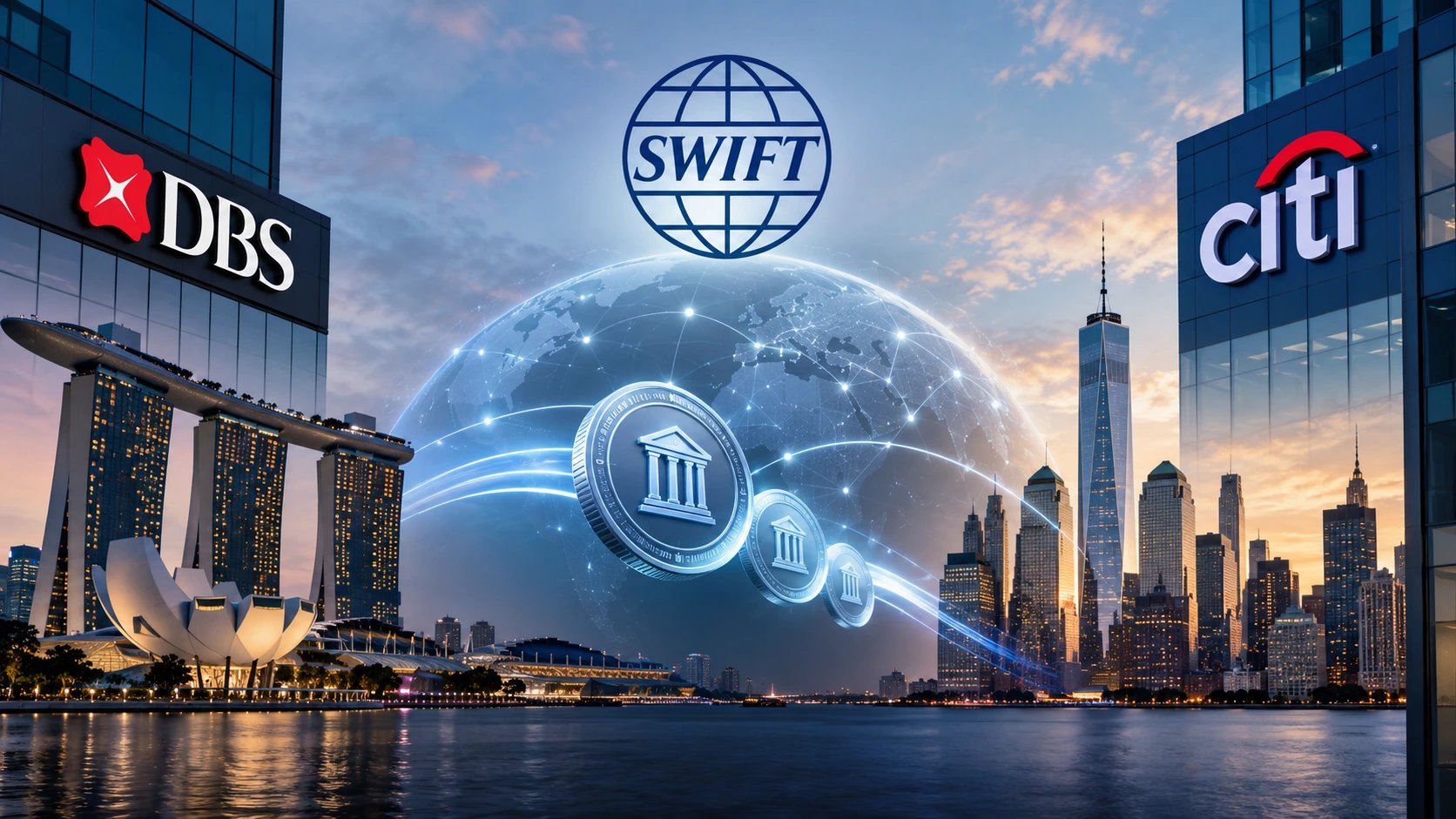
DBS and Citi complete tokenized dollar transfer via SWIFT digital ledger
This digest was compiled by AI from multiple sources — links to the originals are below.
DBS and Citi's New York office completed a dollar payment between Singapore and the US in minutes on Sept. 5 using tokenized deposits through SWIFT's digital ledger. The banks have not disclosed the amount or confirmed availability for all customers. The transfer demonstrates the cross-border payment service banks aim to sell to corporate clients.
Key Facts
- DBS and Citi's New York office completed a dollar payment between Singapore and the US in minutes on Sept. 5, according to DBS's announcement.
- The transfer used tokenized deposits—bank deposits recorded as digital tokens—through SWIFT's digital ledger.
- The banks have not disclosed the payment amount or established that every customer can use the service.
- 21 financial institutions partnered to establish a stablecoin business, reflecting banks' push into multiple forms of digital money.
- A company prefunding a $10 million payment two days early at a 5% annual borrowing rate incurs about $2,740 in extra borrowing costs.
Tokenized Deposit Transfer
On Sept. 5, DBS and Citi's New York office completed a dollar payment between Singapore and the US in minutes, according to DBS's announcement. The payment used tokenized deposits, a method of recording bank deposits as digital tokens, through SWIFT's digital ledger. The announcement describes the payment route, but the banks have not disclosed the amount or confirmed that every customer can use the service. The transfer provides a concrete example of the cross-border payment service banks want to sell to corporate clients, including weekend availability.
Bank Revenue Motivation
Banks earn fees from companies that keep money with them for currency conversion and loan arrangements. If another provider offers a better way to hold and move money, banks could lose those fees. That risk drove 21 financial institutions to partner in establishing a stablecoin business. Banks are developing more than one kind of digital money because customers want different payment options, and the bank aims to remain the primary provider.
Prefunding Cost Example
International money transfers require several banks to work together, and settlement—the completion of the financial obligation—depends on institutions having enough money and being open to process it. A business that moves $10 million into an account two days early to ensure a payment goes through engages in prefunding. At a 5% annual borrowing rate, carrying that $10 million for two extra days costs about $2,740 before interest earned on the account. This hypothetical example does not describe an actual DBS payment or measured saving, and interest earned would reduce the net cost.
1 source
Time · lag behind first