
AI breakthroughs reshape mathematics, leaving researchers grappling with identity
This digest was compiled by AI from multiple sources — links to the originals are below.
OpenAI used tens of thousands of agents to solve a 90-year-old math problem with a $1 million prize, building on work by Spanish mathematicians Diego Córdoba and Luis Martínez-Zoroa. The announcement sparked a dispute with mathematician Tristan Buckmaster, who claims OpenAI rushed ahead after learning of his work with Anthropic researcher Levent Alpöge. The rupture highlights the rapid transformation of mathematics as AI systems accelerate breakthroughs.
Key Facts
- OpenAI said it used tens of thousands of agents to solve a 90-year-old math problem with a $1 million prize attached.
- The solution builds on a strategy developed by Spanish mathematicians Diego Córdoba and Luis Martínez-Zoroa.
- Tristan Buckmaster claims OpenAI rushed ahead to solve the problem after learning of his work alongside Anthropic researcher Levent Alpöge.
- Anthropic said Claude proved 29,500 small theorems while formalizing an existing proof of Fermat's Last Theorem.
- In August, OpenAI announced advancements in 10 other long-standing mathematical problems.
OpenAI's Breakthrough
On Tuesday, OpenAI said it had used tens of thousands of agents to solve a 90-year-old math problem, which had a $1 million prize attached. The solution builds on a strategy developed by Spanish mathematicians Diego Córdoba and Luis Martínez-Zoroa. The announcement was marred by claims from mathematician Tristan Buckmaster, who says OpenAI rushed ahead to solve the problem after learning of his work alongside Anthropic researcher Levent Alpöge. Buckmaster claims OpenAI also tried to influence who got credit for the work.
Anthropic's Formalization Effort
Last week, Anthropic said Claude had proved 29,500 small theorems while formalizing an existing proof of Fermat's Last Theorem. The project was one that other mathematicians had been working on for years. In August, OpenAI announced it had made advancements in 10 other long-standing mathematical problems.
Mathematicians' Response
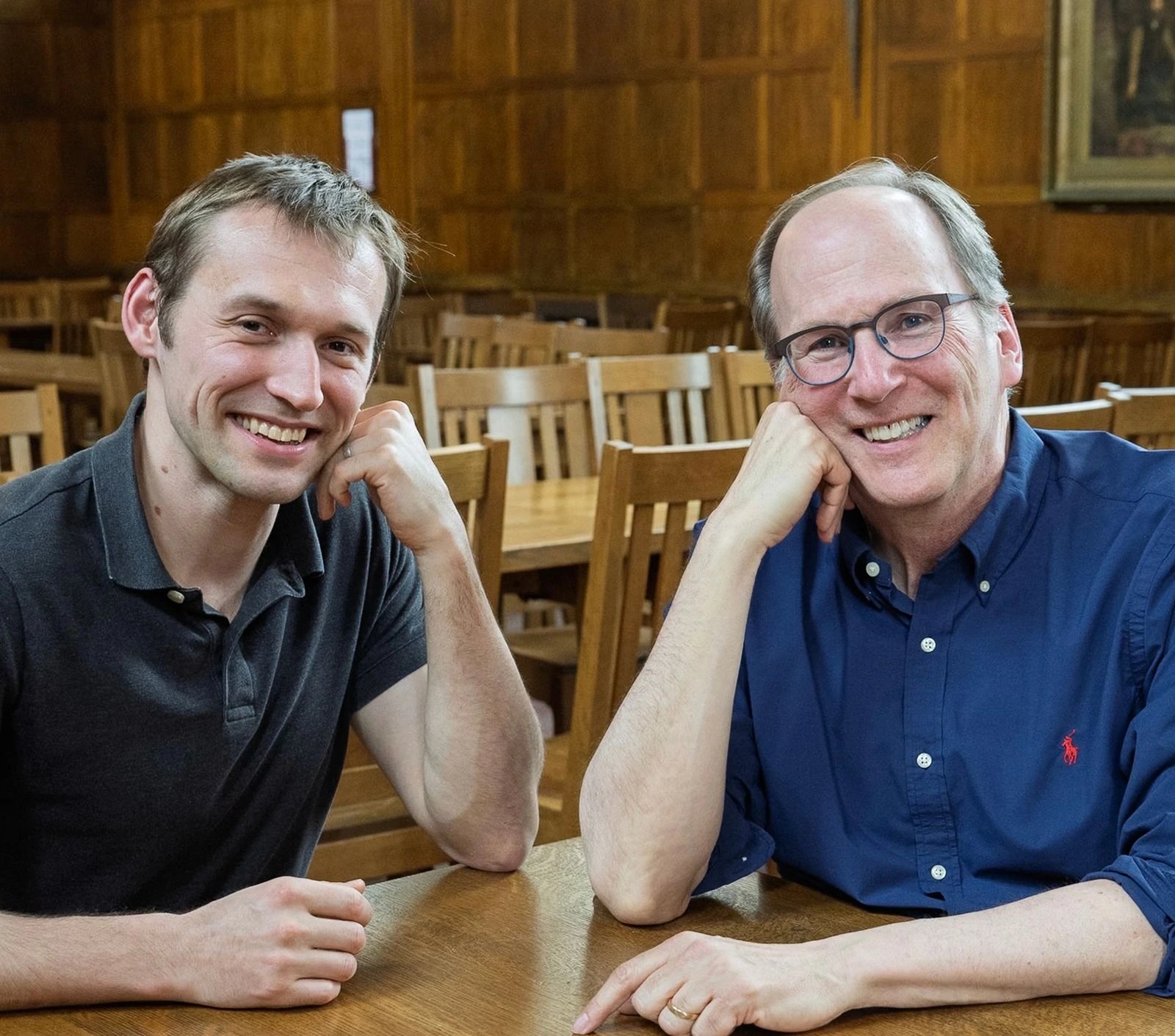
Steven Strogatz, a mathematician and author at Cornell University, says the science is thrilling but there is a lot of human unpleasantness going with it. Strogatz predicts 2026 will be remembered as either an annus mirabilis or annus horribilis for mathematics because so much has happened. Alex Townsend, Strogatz's book collaborator, says he feels upset that he dedicated 15 years to research mathematics and now something is able to surpass him. Townsend recently used ChatGPT to help solve a decades-old numerical linear algebra problem.
1 source
Time · lag behind first