
9/11 'War on Terror' normalized far-right Islamophobia in Europe
This digest was compiled by AI from multiple sources — links to the originals are below.
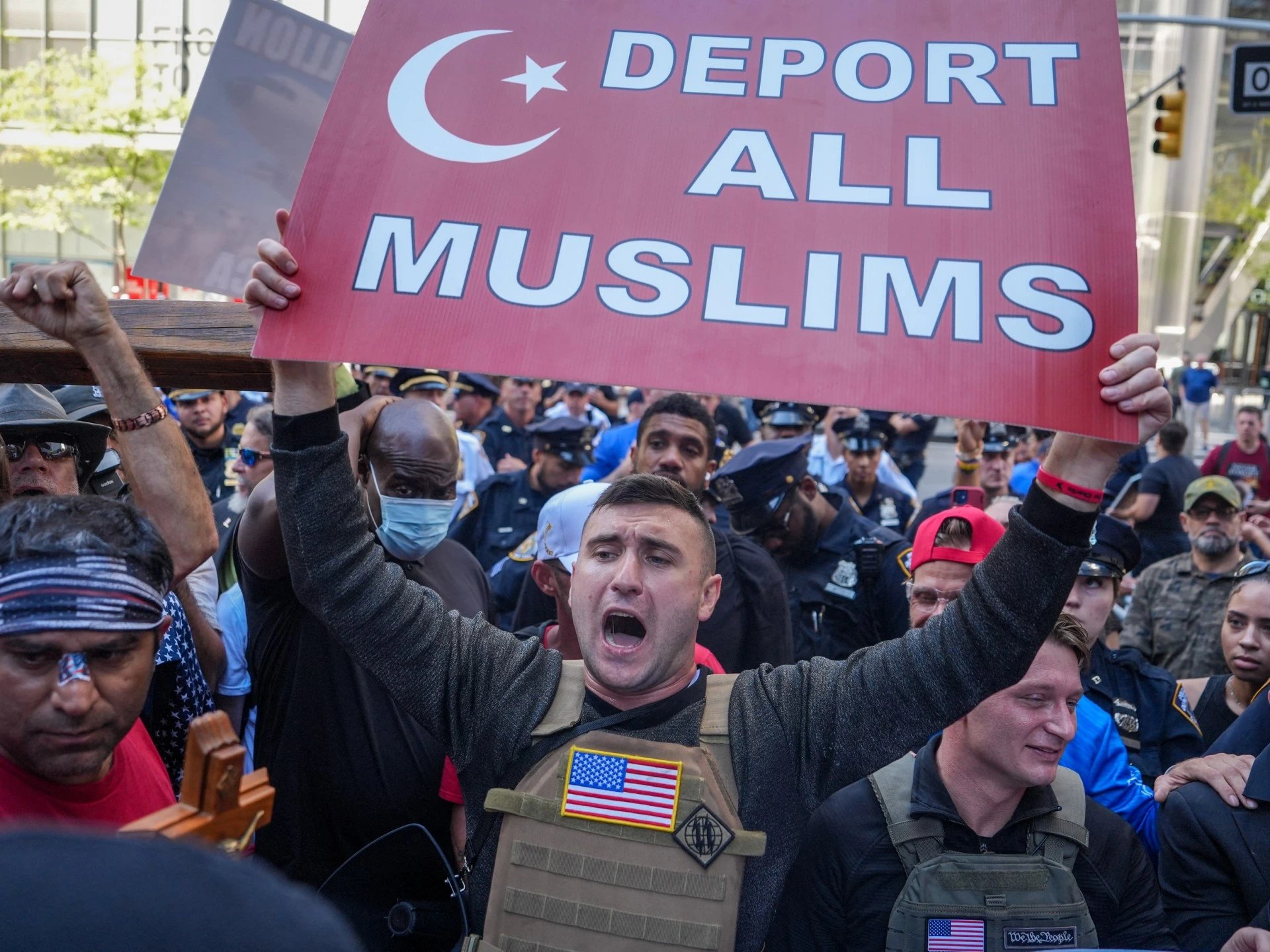
Twenty-five years after the September 11 attacks, the Global War on Terror helped mainstream far-right parties in Europe by legitimizing anti-Muslim racism. The political order built after 2001 gave far-right parties an opening they had not built for themselves, as Islamophobic narratives shaped global policy. European governments joined US-led wars in Afghanistan and Iraq, while media coverage reinforced an image of the violent Muslim.
Key Facts
- The September 11 attacks killed 2,977 people when 19 al-Qaeda hijackers crashed four planes into the World Trade Center, the Pentagon, and a field in Pennsylvania.
- More than 13 European countries joined the US-led invasion of Afghanistan, with British forces most directly engaged in combat.
- Twelve European countries joined the invasion and occupation of Iraq, with the UK and Poland taking major combat roles while France and Germany opposed the war.
- Before September 11, far-right parties in Europe were largely marginalized, often known for anti-Semitism and nostalgia for fascist origins rather than as credible contenders for government.
- The Dutch People's Party for Freedom and Democracy argued as early as 1991 that Islam posed a threat to liberal democracy and blocked immigrant integration.
Far-Right Shift to Islamophobia
After the collapse of the Soviet Union, Europe's far right began to sharpen its long-standing racism to focus specifically on Islam. The French Front National, now the Rassemblement National, and the Austrian Freedom Party discovered Islam as their new 'enemy within'. In far-right rhetoric, Arabs and Black communities in France became simply 'Muslims', as did Turks in Austria. By the late 1990s, Dutch politician Pim Fortuyn had written a book titled Against the Islamisation of Our Culture, introducing a cruder strain of Islamophobia to Dutch politics.
War on Terror Legitimization
President George W. Bush declared a 'Global War on Terror' after the attacks, insisting the fight targeted terrorists who had perverted Islam, not Islam itself. The rhetoric and policy that followed routinely treated all Muslims as suspects, casting the religion itself as inherently violent. Bush's declaration that 'either you are with us or you are with the terrorists' left European governments with little room to manoeuvre. Blatantly Islamophobic media coverage across the continent accompanied the military campaigns, reinforcing an image of the violent, threatening Muslim.
1 source
Time · lag behind first