
Nepal disinfects landslide-hit areas as disease risk rises
This digest was compiled by AI from multiple sources — links to the originals are below.
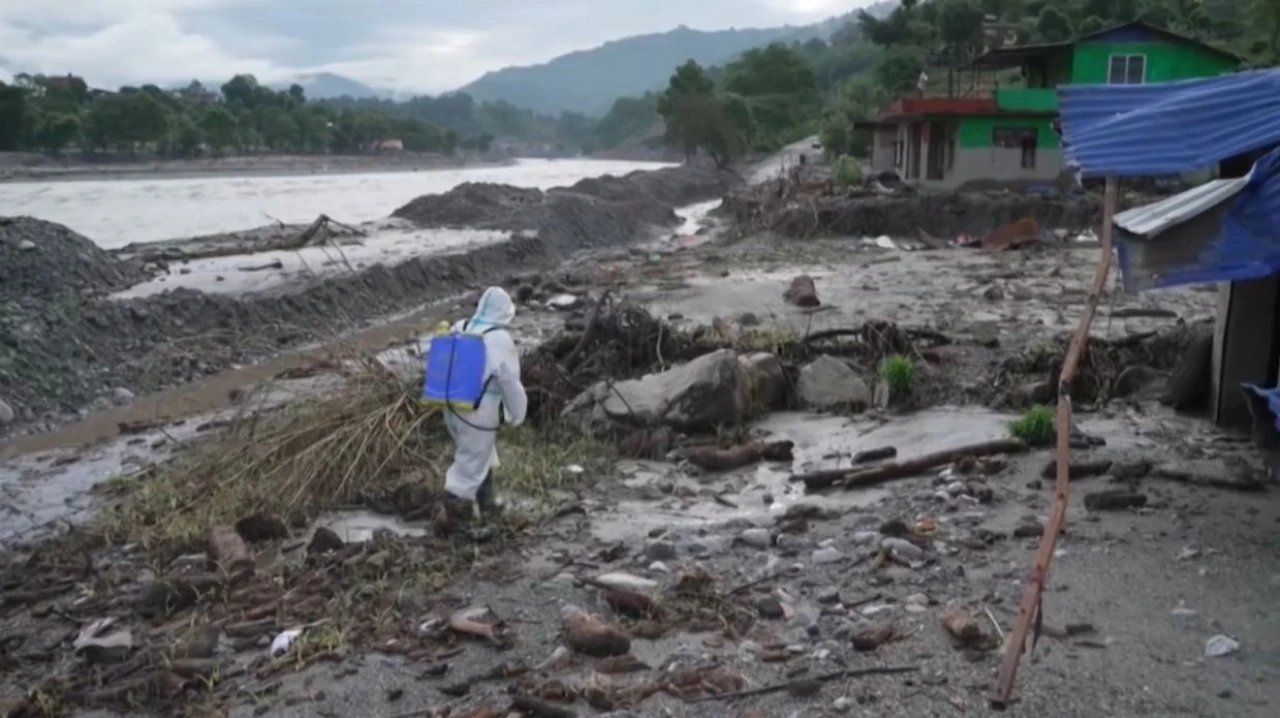
Rescue workers in Nepal are disinfecting landslide debris, destroyed homes, and crowded areas with chlorine to prevent disease outbreaks. Thousands of families lack clean drinking water after damaged pipes and pumping stations forced them to use contaminated sources. The disinfection effort comes as more than 1,400 people have died and over 5,000 remain missing from the August 26 glacial lake outburst floods.
Key Facts
- Rescue workers are applying chlorine to debris, destroyed homes, and crowded areas in Nepal.
- Thousands of families lack clean drinking water because damaged pipes and pumping stations forced them to use contaminated sources.
- Dead animals remain in stagnant water and under debris, accelerating bacterial growth.
- The disaster was triggered by glacial lake outburst floods on the Nepal-Tibet border on August 26.
- Landslides and floods have killed more than 1,400 people, with over 5,000 still missing.
Disinfection Effort
Rescue workers are disinfecting landslide debris, destroyed homes, and crowded areas with chlorine. The measure aims to prevent outbreaks of dangerous infections in the affected region. Reuters reported that the disinfection is being carried out across multiple sites.
Water Crisis
Damaged pipes and pumping stations have left thousands of families without clean drinking water. Residents are forced to draw water from contaminated sources, increasing health risks. Stagnant water and debris contain dead animals, which sharply accelerates bacterial reproduction.
Disaster Toll
The tragedy was caused by glacial lake outburst floods on the Nepal-Tibet border on August 26. The floods triggered powerful mudslides and landslides across the region. More than 1,400 people have died, and over 5,000 remain missing.
2 sources
Time · lag behind first