
UK MPs reject assisted dying bill by 286-270 vote
This digest was compiled by AI from multiple sources — links to the originals are below.
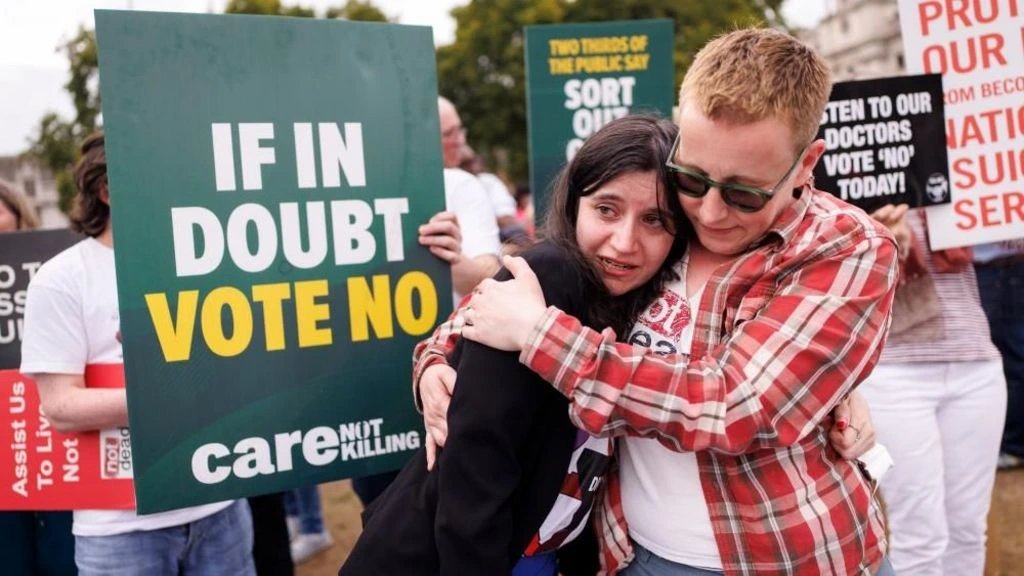
The House of Commons voted 286 to 270 against the Terminally Ill Adults (End of Life) Bill on Friday, ending the latest attempt to legalise assisted dying in England and Wales. The bill would have allowed adults with fewer than six months to live to apply for help to end their own life. Supporters and opponents gathered outside Parliament as the result was announced.
Key Facts
- The House of Commons voted 286 to 270, a majority of 16, against the Terminally Ill Adults (End of Life) Bill.
- The bill was tabled by Labour MP Lauren Edwards and would have allowed adults with fewer than six months to live to apply for assisted dying.
- MPs were given a free vote, meaning they did not vote on party lines.
- Dame Esther Rantzen told the BBC the result was 'a tragic day' and that she is sure a change in the law will come.
The Vote
MPs voted 286 to 270 against giving the Terminally Ill Adults (End of Life) Bill a second reading. The bill was tabled by Labour MP Lauren Edwards and would have allowed adults with fewer than six months to live to apply for help to end their own life, subject to safeguards. MPs were given a free vote, meaning they did not vote on party lines. The decision rules out changes to the law on assisted dying in the short term.
Reactions
Dame Esther Rantzen, who was unable to join supporters in Parliament Square, told the BBC it was 'so sad that people in this country won't have the choice' that terminally ill adults have in other countries. The Childline founder said: 'I am sure a change in the law will come. I am deeply sad that it won't come soon enough for many of the people who need it, it's a tragic day.' Edwards, the Labour MP for Rochester and Strood, said: 'Parliament has dropped the ball today.' Labour MPs Ashley Dalton, Dame Meg Hillier and Jess Asato, who opposed the bill, said in a joint statement: 'This is not a moment for celebration, we understand the deep concerns of so many people across the country who have campaigned hard for a change in the law.'
1 source
Time · lag behind first