
Kazakhstan court upholds six-year sentence for grain warehouse arson in North Kazakhstan
This digest was compiled by AI from multiple sources — links to the originals are below.
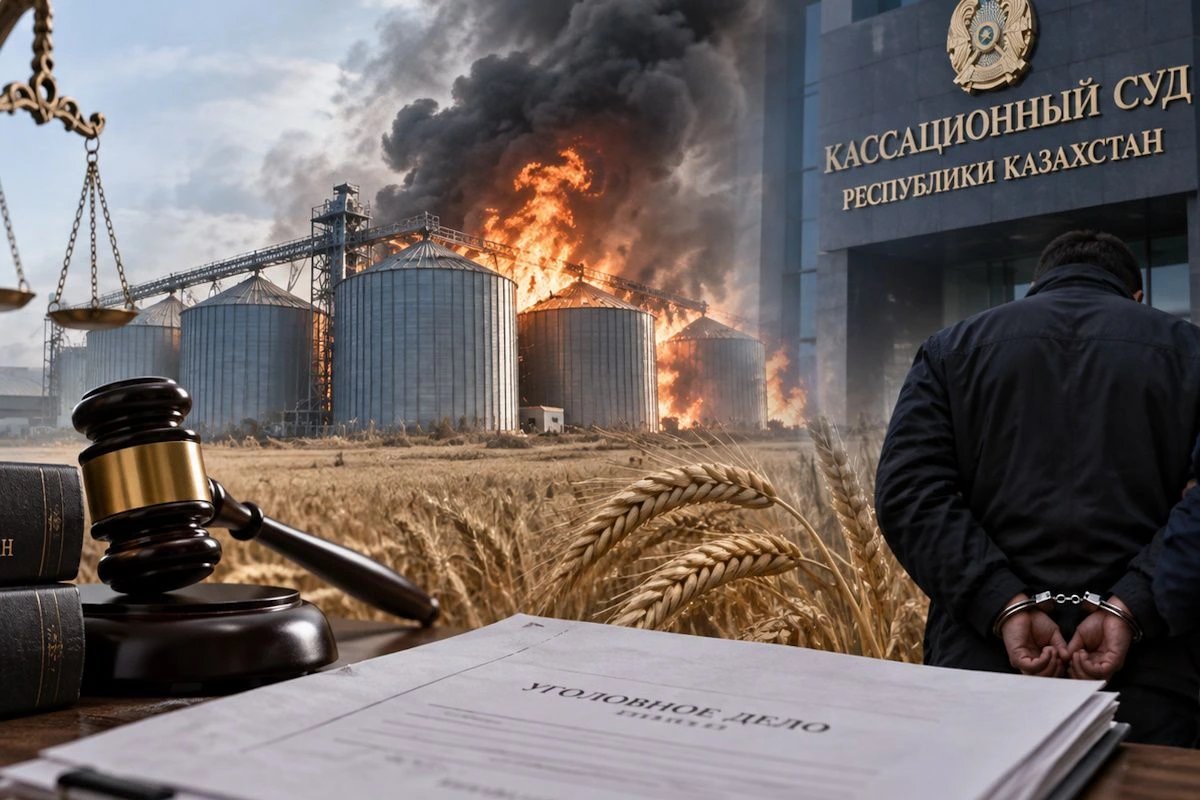
Kazakhstan's Court of Cassation upheld a six-year prison sentence for a farm manager convicted of organizing the arson of grain warehouses in North Kazakhstan Region. The May 2023 fire caused 495 million tenge in damage. The court rejected the defense's appeal that the manager's guilt was not proven.
Key Facts
- The Court of Cassation upheld a six-year prison sentence for a farm manager convicted of organizing the arson of grain warehouses in North Kazakhstan Region.
- The fire caused 495 million tenge in damage, according to court findings.
- The arson occurred in May 2023 after a personal conflict between the manager and the farm's director.
- The manager was convicted under Article 202, Part 3, Clause 2 of the Criminal Code for intentional destruction of property by arson causing especially large damage.
- The court also ordered the manager to compensate the material damage.
Arson and Conviction
In May 2023, the manager of a peasant farm in North Kazakhstan Region organized the arson of grain warehouses following a personal conflict with the farm's director. The fire destroyed and damaged the farm's property on an especially large scale, with damage assessed at 495 million tenge. The first-instance court found the manager guilty under Article 202, Part 3, Clause 2 of the Criminal Code and sentenced him to six years in prison. The court also ordered the manager to compensate the material damage caused by the fire.
Appeal and Cassation Review
The manager's lawyer appealed to the Court of Cassation, arguing that his client's guilt had not been proven. The judicial panel rejected the defense's arguments and upheld the conviction. The court found the manager's involvement confirmed by materials from emergency authorities, fire scene inspection reports, fire-technical research results, telephone connection data, and testimony from the victim and witnesses. The amount of damage was established by a judicial construction-economic expertise. The Court of Cassation found the sentence commensurate with the gravity of the crime and saw no grounds for review.
2 sources
Time · lag behind first