
AI-predicted structures reveal 'superdark' protein resembling GPCR but functioning differently
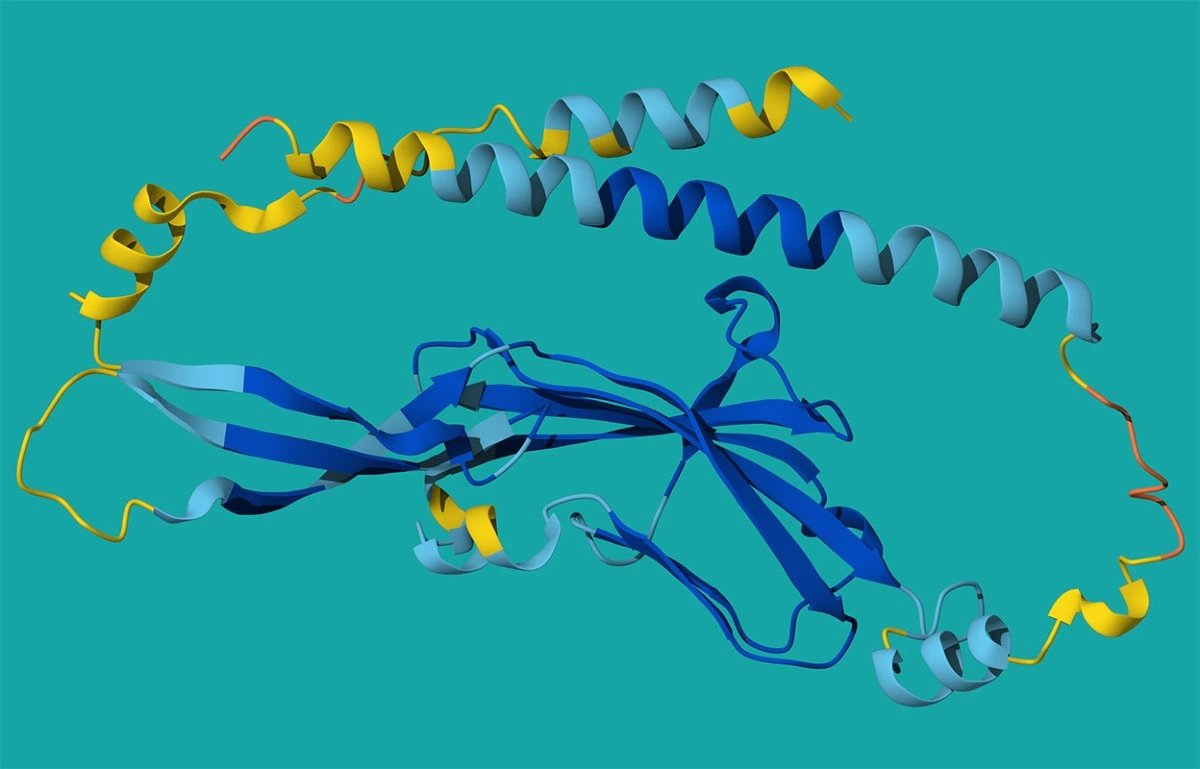
This digest was compiled by AI from multiple sources — links to the originals are below.
Researchers mining millions of AI-predicted protein structures identified an evolutionarily conserved protein that resembles a G-protein-coupled receptor but shows unconventional behavior. The finding, reported in Nature on September 9, 2026, sheds light on the 'dark proteome' of proteins with unknown functions.
Key Facts
- Lee et al. reported the discovery in Nature on September 9, 2026.
- The protein is evolutionarily conserved and resembles a G-protein-coupled receptor family member.
- The study used millions of AI-predicted protein structures to identify the protein.
- The protein belongs to the 'dark proteome'—proteins whose functions cannot be inferred from sequence similarity.
The Discovery
Lee et al. used predicted protein structures to identify a previously uncharacterized protein. The protein shows structural similarity to G-protein-coupled receptors (GPCRs), a large family of cell surface receptors. Despite this resemblance, the protein exhibits unconventional behavior distinct from typical GPCRs. The authors mined millions of AI-predicted structures to find this evolutionarily conserved protein.
Dark Proteome Context
Many human proteins remain part of the 'dark proteome' because their amino-acid sequences lack similarity to characterized families. This protein's function could not be inferred from sequence alone, placing it in the dark proteome. The study demonstrates how AI-predicted structures can illuminate proteins that sequence-based methods miss.
1 source
Time · lag behind first