
Iran's infiltration bill exposes rift over wartime security crackdown
This digest was compiled by AI from multiple sources — links to the originals are below.
Iran's parliament is debating a bill that would require Iranians to obtain prior approval from the Intelligence Ministry and the IRGC Intelligence Organization before engaging in activities such as publishing, academic cooperation, and contact with foreign media. Parliament approved the bill's general framework in mid-August by a 183-4 vote, but the draft has since expanded from 19 to 33 articles and only its first two articles have cleared the floor. The debate has exposed divisions within the Islamic republic over how far the state should go in policing Iranians' contact with the outside world.
Key Facts
- Parliament approved the bill's general framework in mid-August by a 183-4 vote.
- The draft has expanded from 19 to 33 articles as it moved through the National Security and Foreign Policy Committee.
- Only the first two articles of the bill have cleared the floor so far.
- The bill requires prior approval from the Intelligence Ministry and the IRGC Intelligence Organization for activities including publishing, academic cooperation, and interviews with foreign media deemed hostile.
- Violations such as sending photographs, videos, or other material to foreign media are punishable by prison terms of up to two years.
The Infiltration Bill
The bill, formally called the Plan To Counter The Infiltration Of Intelligence Services And Foreign Governments Or Institutions, is commonly referred to as the 'infiltration bill.' It would require Iranians to obtain prior approval from the Intelligence Ministry and the Islamic Revolutionary Guards Corps (IRGC) Intelligence Organization before engaging in a sweeping range of activities. Those activities include publishing books or articles, academic cooperation, interviews with foreign media deemed 'hostile,' and participation in scientific conferences or arts festivals. The bill also criminalizes interviews, discussions, and other communication with media deemed hostile, as well as sending photographs, videos, audio, or other material to foreign media, with violations punishable by prison terms of up to two years.
Parliamentary Debate
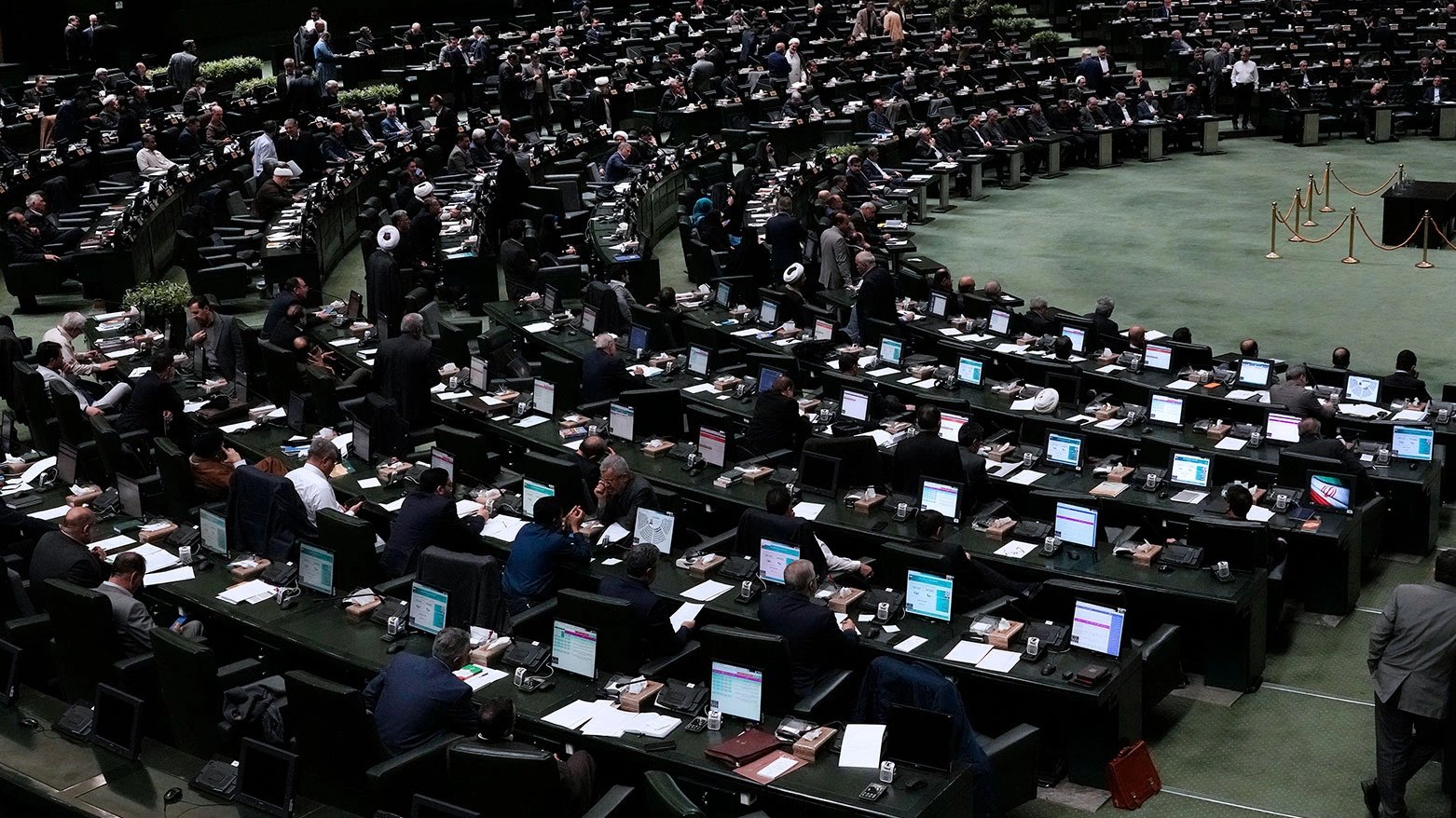
Parliament approved the bill's general framework in mid-August by a lopsided 183-4 vote. The draft has since expanded from 19 to 33 articles as it has moved through the National Security and Foreign Policy Committee. Only its first two articles have so far cleared the floor, while the remaining provisions remain subject to revision. Even if parliament approves them, the bill will still require Guardian Council approval before it can become law.
Qalibaf's Balancing Act
Parliament Speaker Mohammad Baqer Qalibaf has defended the need for tougher measures against foreign infiltration while warning that the current draft of the legislation goes too far. During a recent parliamentary session, Qalibaf said, 'No patriot opposes countering foreign infiltration,' but added that lawmakers needed to ensure that people's 'rights, their lives, and their trade' were not affected. He said security agencies may need to be able to vet Iranians' contacts with foreigners but that they cannot demand permission at every stage. Qalibaf stated, 'They say they want to be certain, to have permission sought from them at every stage. That's not possible, because then we'd have to lock the country down.'
1 source
Time · lag behind first