
NTSB: Miami 767 pilot applied go-around thrust before fatal overrun
This digest was compiled by AI from multiple sources — links to the originals are below.
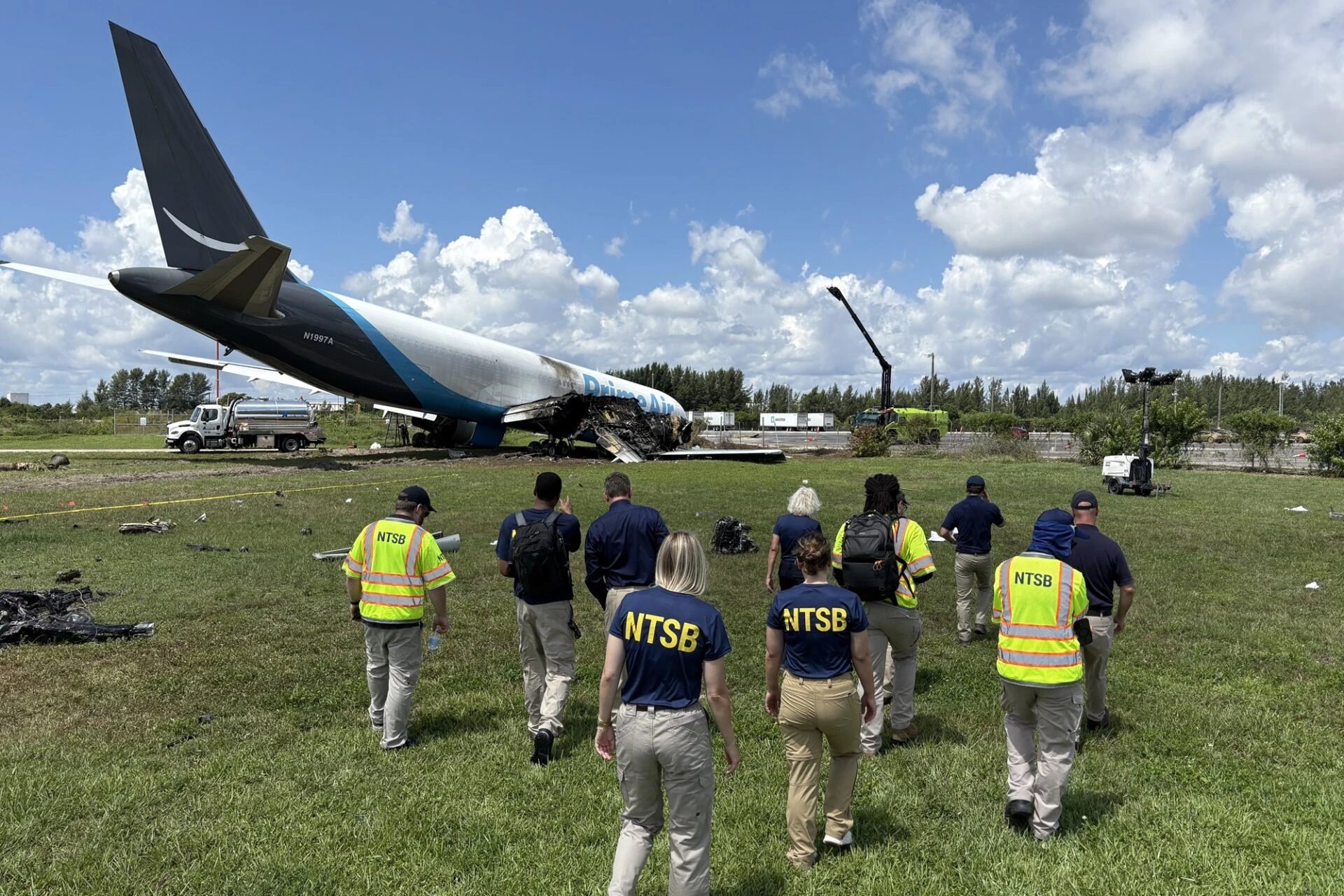
The NTSB said on September 8 that the pilot of a 21 Air Boeing 767-300 freighter applied go-around thrust moments before the aircraft overran a Miami runway and struck vehicles, killing five people. Flight data showed the throttles increased to go-around thrust 15 seconds before the recording ended, then were reduced to idle 11 seconds before impact. The aircraft, operating for Amazon Air, breached the airport perimeter on September 6 and hit two vehicles on a public road.
Key Facts
- The 32-year-old Boeing 767-33A(ER) overran runway 30 at Miami International Airport on September 6, 2026, and struck two vehicles on a public road, killing five people.
- Flight data recorder evidence shows the left main landing gear touched down at 134 knots 19 seconds before the recording ended, and throttles increased to go-around thrust 15 seconds before the end.
- NTSB Chair Jennifer Homendy confirmed interviews with the chief pilot and two pilots onboard will be held on September 9, 2026.
- The captain, 55, has 7,145 flight hours and received his 767 type rating in May 2026; the first officer, 37, has 2,655 hours and was rated on April 2, 2025.
- The cockpit voice recorder contained more than two hours of good quality audio, and the flight data recorder held approximately 55 hours of data with over 400 parameters.
Flight Data Sequence
Senior Aviation Accident Investigator Chihoon Shin presented flight data recorder evidence at the September 8 press conference. Thirty seconds before the recording ended, the nose and right main landing gear touched down at 158 knots. Brakes were applied 23 seconds before the end, and the left main gear touched down at 134 knots 19 seconds before the end. Fifteen seconds before the end, brakes were released at 120 knots and throttles increased to values consistent with go-around thrust. Eleven seconds before the end, throttles were reduced to idle, brakes were reapplied at 117 knots, and the final recorded ground speed was 65 knots. Shin said there was no indication that speed brakes or thrust reversers were deployed.
Crew and Investigation
NTSB Chair Jennifer Homendy said interviews with the chief pilot and the two pilots onboard will be held on September 9, 2026. The captain is 55 years old with 7,145 flight hours and received his 767 type rating in May 2026. The first officer is 37 with 2,655 hours and received a 767 type rating on April 2, 2025. On September 8, NTSB representatives spoke with air traffic controllers and began gathering evidence at the crash site. The cockpit voice recorder contained more than two hours of good quality audio, and the flight data recorder held approximately 55 hours of data with over 400 parameters. Both recorders were taken to the NTSB laboratory in Washington DC, and Homendy said the takeoff weight was 252,182 lbs (114.4 tons).
2 sources
Time · lag behind first