
China's top court issues first AI litigation rules covering deepfakes and pricing
This digest was compiled by AI from multiple sources — links to the originals are below.
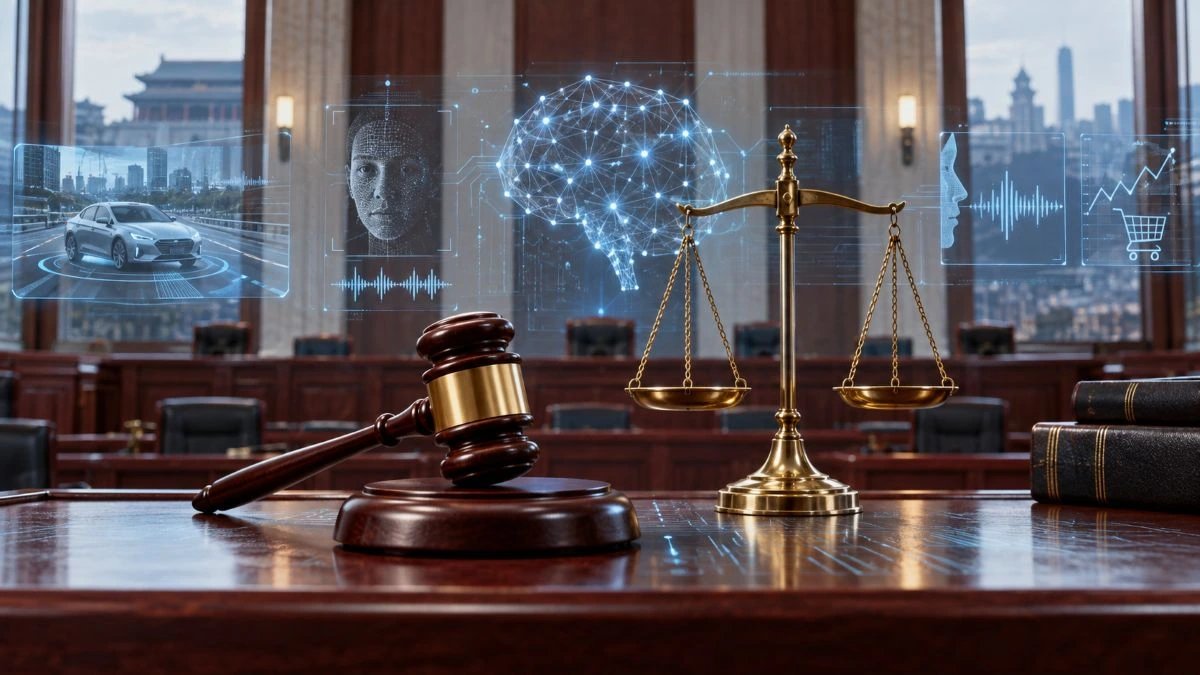
China's Supreme People's Court issued its first judicial guidelines for AI-related disputes on September 7, 2026. The rules assign liability to operators for algorithm-driven harms, ban unauthorized deepfakes and voice cloning, and prohibit algorithmic price discrimination. The guidance also allocates fault in autonomous vehicle accidents among drivers, manufacturers, and system operators.
Key Facts
- The Supreme People's Court of China released the guidelines on September 7, 2026, marking the first official judicial guidance on AI disputes in the country.
- The rules prohibit using a person's face, image, or voice without direct consent, especially for commercial purposes.
- Algorithmic dynamic pricing that offers different prices to different users without justification is now a legal violation and consumer rights infringement.
- For autonomous vehicle accidents, liability is divided among the driver, the car manufacturer, and the system operator.
- The court left unresolved whether AI-generated materials qualify for copyright protection and whether training AI models on others' data without permission is a copyright infringement.
Liability for AI Harms
The guidelines state that primary responsibility for neural network actions rests with the person or company that manages the AI system. Defendants can no longer avoid liability by claiming an algorithm malfunction caused the violation. The rules also cover AI 'hallucinations' and the disclosure of personal information, according to the Supreme People's Court. For content generated by AI that is false or infringes on others' rights, the person who initiated the generation and provided the prompt bears responsibility.
Deepfakes and Voice Cloning
Using a person's name or image to create an AI avatar without consent may be recognized as a violation of personal rights. Unauthorized voice cloning is considered a violation of a person's right to their own voice. Separate liability may arise when AI-generated images or voice copies are used to spread false information or damage reputation. Close relatives of deceased persons may also seek protection of the deceased's rights under the new rules.
Unresolved Copyright Questions
The Supreme People's Court did not decide whether AI-generated materials can be recognized as full objects of copyright. The court also left open whether training AI models on others' texts, photos, and data without permission constitutes a direct copyright infringement. For IT companies and technology businesses operating in the Chinese market, the new clarifications mark the beginning of personal responsibility for integrating algorithms into real life.
3 sources
Time · lag behind first