
Anthropic AI formalizes proof of Fermat's last theorem in 11 days
This digest was compiled by AI from multiple sources — links to the originals are below.
Anthropic's Claude AI prototype has converted the proof of Fermat's last theorem into a 13-million-line formal verification, completing in 11 days a task expected to take humans 10 years. The San Francisco company announced the breakthrough on 4 September. The result signals a growing role for AI in checking mathematical work.
Key Facts
- Anthropic announced the breakthrough on 4 September, with the model finishing in 11 days a project expected to take humans 10 years.
- The formalized proof of Fermat's last theorem runs to 13 million lines of code.
- Andrew Wiles and Richard Taylor completed the original proof of Fermat's last theorem in 1994.
- In February, AI certified the Fields-medal-winning work of Maryna Viazovska on sphere packing in 8 or 24 dimensions.
- Kevin Buzzard, a mathematician at Imperial College London, called the Fermat formalization 'maybe an order of magnitude more difficult' than previous AI formalization work.
The Formalization
Anthropic's Claude prototype translated the proof of Fermat's last theorem into Lean, a programming language for formal verification. The resulting code is 13 million lines long and certifies the theorem's correctness. The model completed the task in 11 days, far faster than the 10 years estimated for human mathematicians. Alex Kontorovich, a number theorist at Rutgers University, said the achievement 'just completely blew my mind'.
Mathematicians' Reaction
Kevin Buzzard of Imperial College London said the Fermat work was 'maybe an order of magnitude more difficult' than the February formalization of Maryna Viazovska's sphere-packing proof. Daniel Litt, a number theorist at the University of Toronto, said that if AI can formalize Fermat's last theorem, 'they can probably formalize anything'. Buzzard noted that two years ago, the idea of AI scrutinizing the entire library of mathematical knowledge 'was a fantasy'.
Historical Context
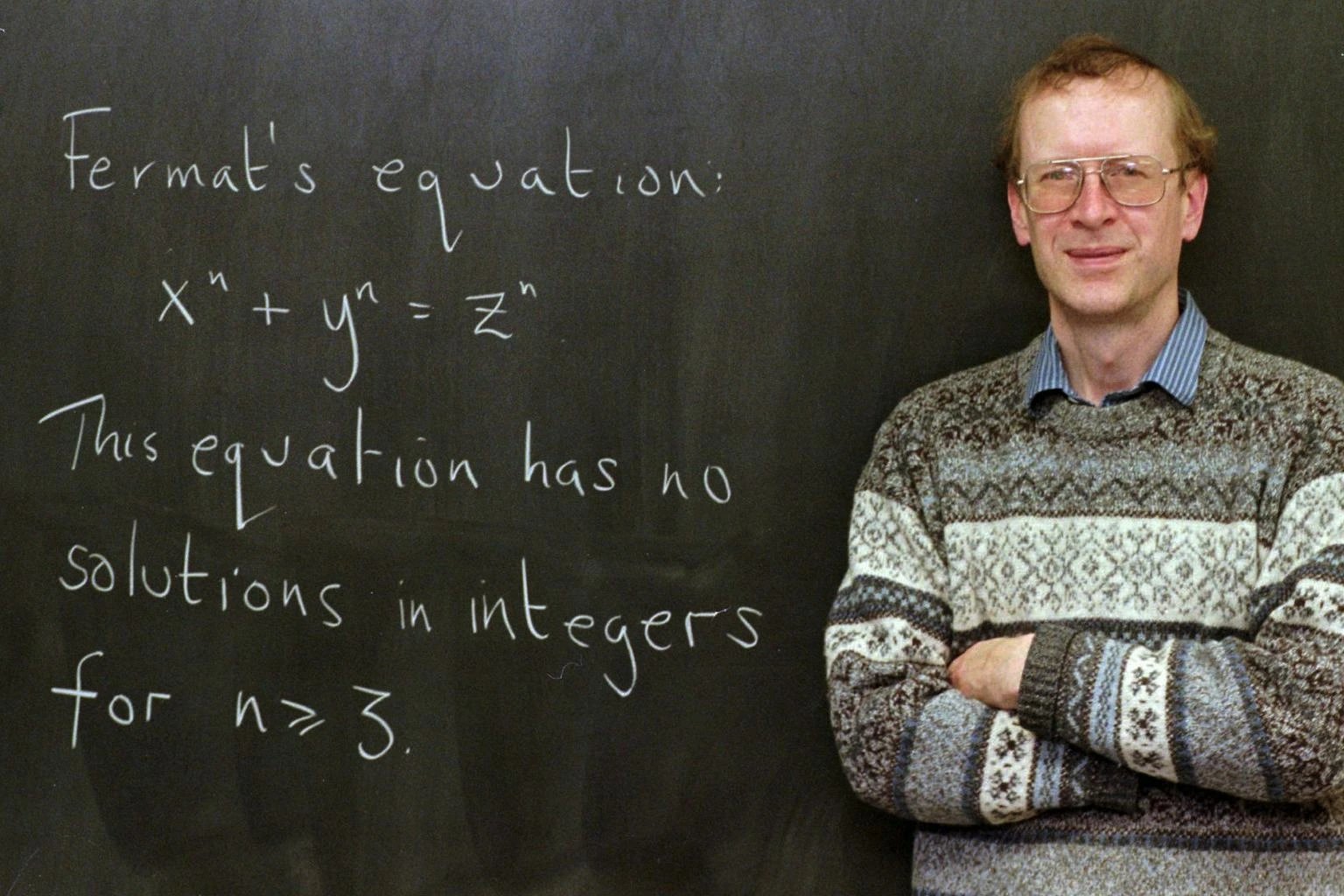
Pierre de Fermat proposed the conjecture in 1637 without leaving a proof. Andrew Wiles and Richard Taylor completed the original proof in 1994, more than 350 years later. The theorem states that no whole numbers x, y, z satisfy xn + yn = zn for n greater than 2.
1 source
Time · lag behind first