
Germany blames Russia for failed explosive drone attack on Leipzig airport
This digest was compiled by AI from multiple sources — links to the originals are below.
Germany announced on Tuesday that Russia was behind the failed explosive drone attack on Leipzig/Halle Airport on August 4. In response, Berlin will close Russia's consulate general in Bonn by September 18 and terminate leases for the Russian House for Science and Culture in Berlin. The European Union and NATO issued statements of support for Germany.
Key Facts
- German Interior Minister Alexander Dobrindt said police investigations, patterns of the act, and intelligence findings demonstrate Russian responsibility for the attempted attack at Leipzig Airport.
- An explosive-laden drone fell near a Ukrainian cargo airplane used to shuttle munitions to Ukraine in early August and was defused by a police bomb squad.
- Germany will close Russia's consulate general in Bonn, a 70,000 square meter complex, by September 18.
- Berlin will terminate leases for the Russian House for Science and Culture in Berlin and implement heightened scrutiny during immigration of Russian citizens.
- Russian President Vladimir Putin called the German decisions a "grave mistake" and accused the German government of falsifying evidence.
The Attack
An explosive-laden drone fell near a Ukrainian cargo airplane used to shuttle munitions to Ukraine in early August. The drone failed to detonate and was defused by a police bomb squad. German media later reported that two similar drones were found at or near the airport in the following days and weeks. The airport at Leipzig/Halle plays a key logistical role in the supply of Ukraine and for NATO airlift operations.
German Response
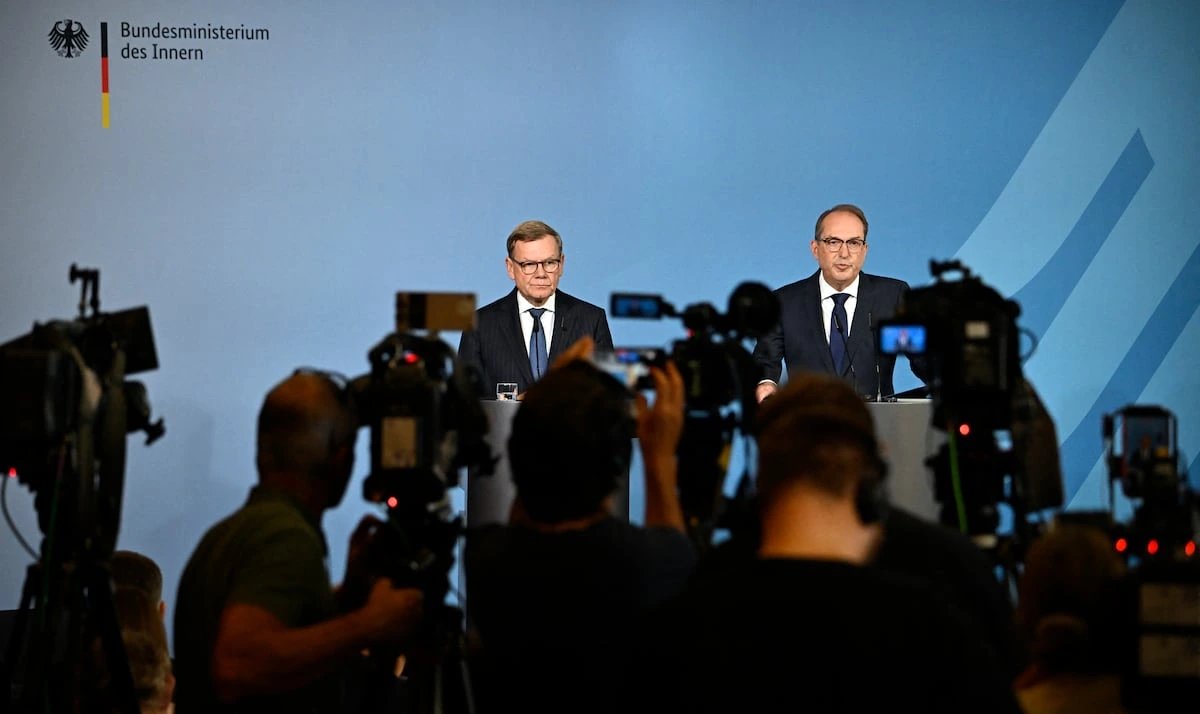
Germany will close Russia's consulate general in Bonn, a 70,000 square meter complex that hosted Soviet intelligence rezidenturas during the Cold War, by September 18. Berlin will also terminate the leases for the Russian House for Science and Culture in Berlin. German authorities will implement heightened scrutiny during immigration of Russian citizens and push for further visa restrictions for Russian people, particularly those tied to hybrid operations. The German announcement was made jointly by the country's ministers for interior and foreign affairs.
International Reaction
Russian President Vladimir Putin called the decisions a "grave mistake" and accused the German government of falsifying evidence to distract from domestic political woes and Chancellor Merz's poor popularity ratings. Russia's ambassador to Berlin said the "hastily concocted provocation at Leipzig airport" was the basis of "absurd" allegations. The Russian foreign ministry has said it would "mirror" Germany's actions, which is longstanding Russian policy. The European Union and NATO issued separate statements of support for and solidarity with Germany. Both organizations have scheduled high-level talks on the topic for Wednesday.
1 source
Time · lag behind first