
Kim Jong Un commissions Kang Kon destroyer at Wonsan Port
This digest was compiled by AI from multiple sources — links to the originals are below.
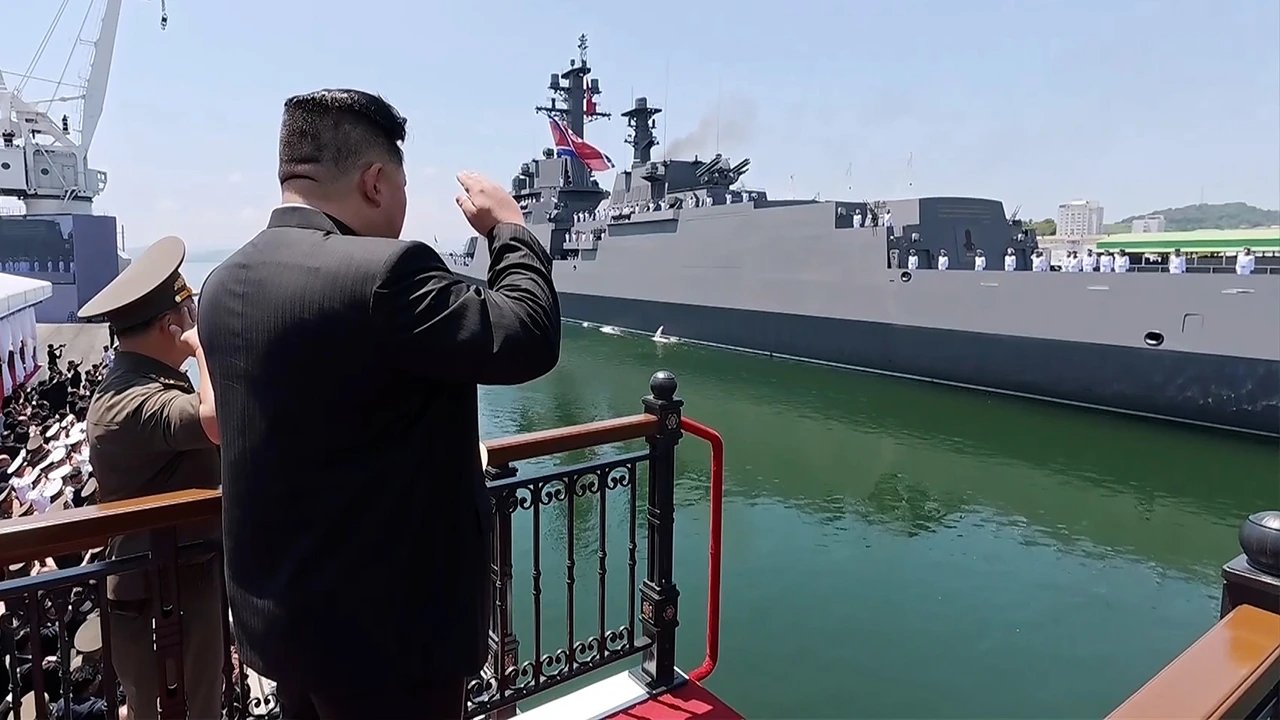
North Korean leader Kim Jong Un attended the commissioning of the Kang Kon destroyer at Wonsan Port on Sunday, state media reported. Kim said the warship will form part of Pyongyang's nuclear response system and strengthen naval forces. The ceremony marked the third launch of the vessel after a 2025 capsizing and repairs.
Key Facts
- The Kang Kon destroyer was commissioned at Wonsan Port in Kangwon Province on Sunday, September 6, 2026.
- Kim Jong Un said the warship could deliver "annihilating retaliatory strikes on an enemy" and will form part of North Korea's nuclear response system.
- The Kang Kon has the same weapons systems as the 5,000-tonne Choe Hyon destroyer launched in June, which analysts say can carry nuclear-capable missiles.
- Kim announced he would demonstrate another stage of North Korea's naval buildup in eight months.
Commissioning Ceremony
The Kang Kon, named after a North Korean military leader killed in action during the Korean War, was formally deployed at a ceremony at Wonsan Port in Kangwon Province on Sunday. Kim Jong Un attended the commissioning and said the warship "represents the self-respect and will" of North Korea to defend its rights and interests, according to KCNA. The ceremony marked the third launch of the Kang Kon; the destroyer partially capsized during its first commissioning in May 2025 before being repaired and relaunched the following month. It underwent further repairs and sea trials before completing weapons testing in July this year.
Naval Expansion
Kim said the time has come for North Korea to exercise sovereignty at sea and under water, citing constant threats in the sea east of the Korean Peninsula. He announced that construction of naval bases on North Korea's east coast was under way and that the country would create new naval units and build different classes of warships. North Korea has accelerated efforts to modernise its navy as Kim pursues a broader expansion of nuclear-capable forces. Pyongyang, which calls itself an "irreversible" nuclear state, frames the buildup as deterrence against Washington and Seoul.
1 source
Time · lag behind first