
AI and digital twins reshape Kazakhstan's oil production
This digest was compiled by AI from multiple sources — links to the originals are below.
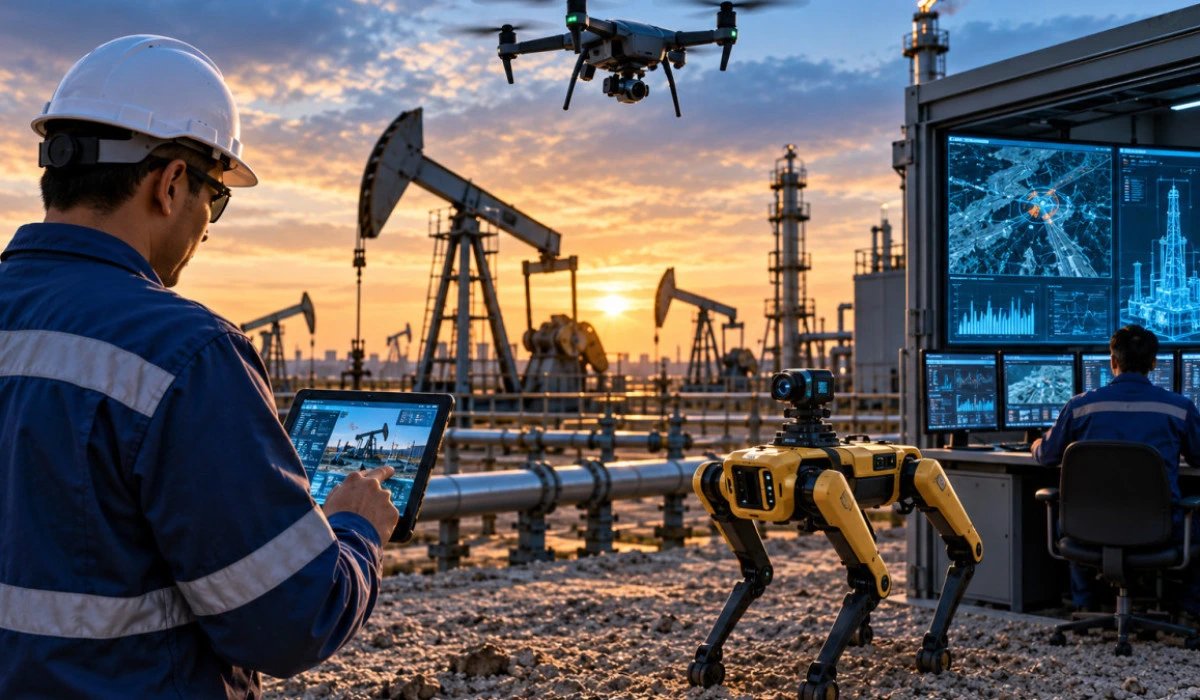
Kazakhstan's oil and gas sector is adopting drones, sensors, robotic systems, digital twins, and artificial intelligence to expand human capabilities, reduce hazardous work, cut costs, and improve production efficiency. The shift is driven by aging fields with rising water cut and falling reservoir pressure, making smart management of existing assets more important than drilling more wells.
Key Facts
- In 2025, a KazService-organized AI forum in Atyrau drew nearly 100 companies and over 200 specialists from seven regions.
- Tengizchevroil uses a large language model chat assistant that searches over 300 engineering documents, with final decisions remaining with engineers.
- Digital twins create virtual models of entire production systems, from reservoir to well and surface infrastructure.
- Kazakhstan's oil and gas industry was long considered highly conservative because a single failed well can cost millions of dollars.
AI as Engineering Assistant
Machine learning algorithms find patterns among millions of measurements and offer engineers several possible scenarios. At the 2025 Atyrau forum, participants stressed the need to move AI projects from individual pilots to industrial scale. Tengizchevroil treats AI as a tool that makes suggestions to specialists rather than replacing them. The company's chat assistant helps engineers search over 300 engineering documents, but the final decision and responsibility remain with the engineer.
Digital Twin Technology
A digital twin is a virtual model of a real oil field, replicating the production system from reservoir to well and surface infrastructure. Digital twins are considered one of the most promising technologies in the oil industry. The technology allows operators to simulate and optimize production without physical intervention.
Drivers of Digitalization
Kazakhstan's oil and gas industry was long conservative because any technological error is extremely costly. A single failed well can lead to millions of dollars in losses, and equipment downtime affects production volumes. In recent years, digitalization has become a tool for maintaining production competitiveness rather than a fashionable trend. Many Kazakhstani fields have been developed for decades, with rising water cut and falling reservoir pressure making remaining reserves harder to extract. Smart management of existing assets is becoming more important than the 'drill more' model.
1 source
Time · lag behind first