
Central Asia-China party dialogue opens in Samarkand
This digest was compiled by AI from multiple sources — links to the originals are below.
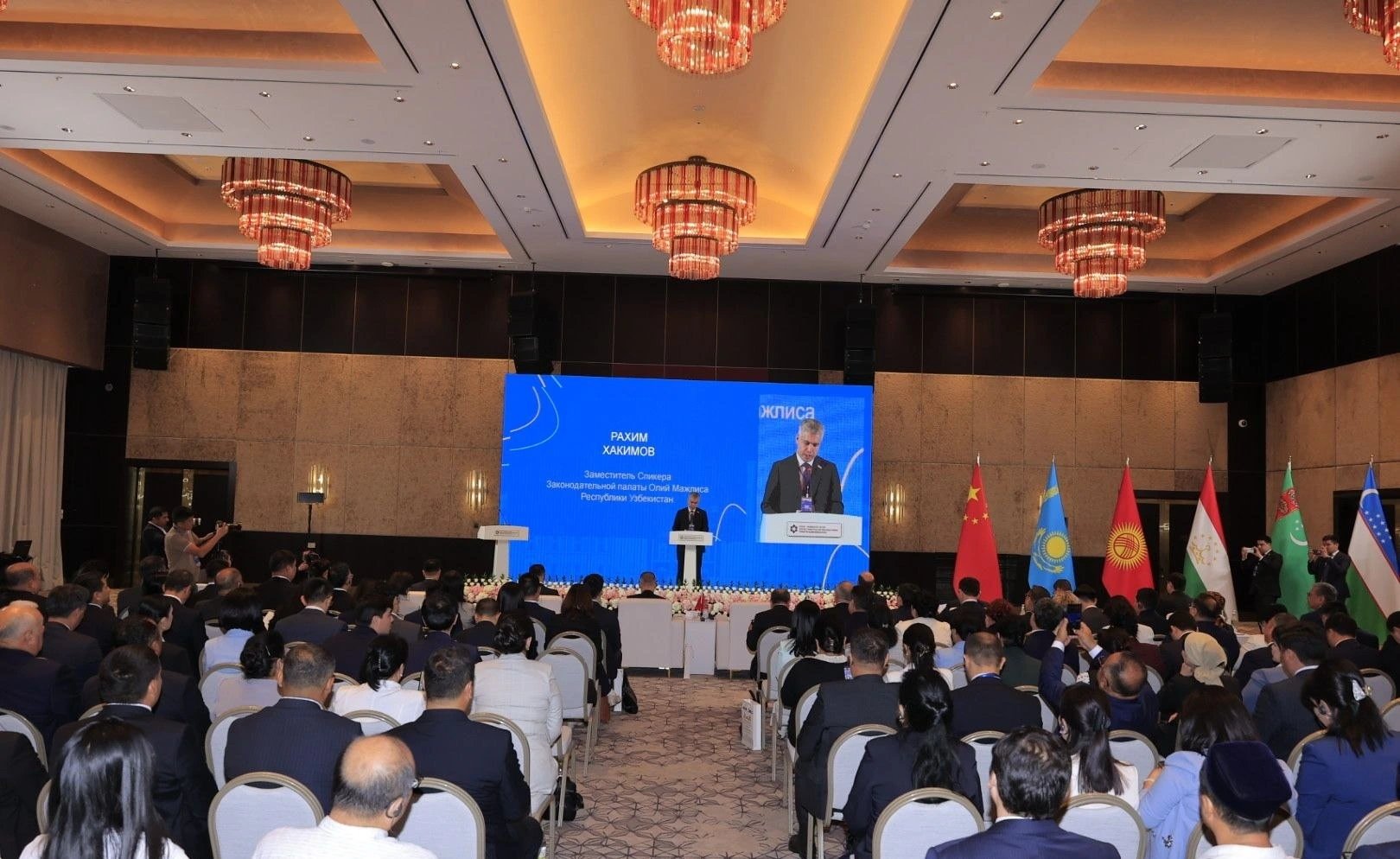
The first Central Asia-China political parties dialogue outside China opened in Samarkand, Uzbekistan, on September 6, 2026. Leaders and representatives of ruling parties from Uzbekistan, Kazakhstan, Kyrgyzstan, Tajikistan and Turkmenistan attended alongside a Chinese Communist Party delegation. The conference aims to move inter-party dialogue to a new stage and support state agreements at party and parliamentary level.
Key Facts
- The conference is the first Central Asia-China political parties dialogue held outside China, taking place in Samarkand, Uzbekistan.
- Delegations from Uzbekistan, Kazakhstan, Kyrgyzstan, Tajikistan and Turkmenistan, as well as a Chinese Communist Party delegation, are attending the event.
- Deputy Speaker of the Legislative Chamber of Uzbekistan's Oliy Majlis Rahim Hakimov and Head of the International Department of the CPC Central Committee Liu Haixin addressed the conference.
- Participants noted that the Central Asia-China format is becoming an important platform for strategic trust and multilateral cooperation.
Conference Participants
The conference brought together leaders and representatives of leading political parties from Uzbekistan, Kazakhstan, Kyrgyzstan, Tajikistan and Turkmenistan. A delegation of the Chinese Communist Party, members of parliament, diplomats and representatives of expert-analytical circles also took part. Deputy Speaker of the Legislative Chamber of the Oliy Majlis Rahim Hakimov represented Uzbekistan at the event. Liu Haixin, Head of the International Department of the CPC Central Committee, led the Chinese delegation.
Strategic Partnership Focus
Rahim Hakimov stated that relations with China are of strategic importance for Uzbekistan. He credited the political will of President Shavkat Mirziyoyev and the efforts of Chinese President Xi Jinping for raising bilateral relations to a high level of comprehensive strategic partnership. Hakimov said the effectiveness of the strategic partnership is measured by job creation, expanded business opportunities, regional development and prospects for the younger generation. Liu Haixin thanked the Uzbek side for hosting the conference and noted Uzbekistan's important initiatives and contribution to rapidly developing China-Central Asia cooperation.
Regional Stability Context
Participants noted that strengthening interdependence in the region is becoming an important factor of stability at a time of growing geopolitical contradictions and economic instability in the world. The Samarkand conference is intended to bring inter-party dialogue to a new stage and direct state agreements toward concrete economic and social results.
1 source
Time · lag behind first