
Germany announces national shield against Russian drones and cyberattacks
This digest was compiled by AI from multiple sources — links to the originals are below.
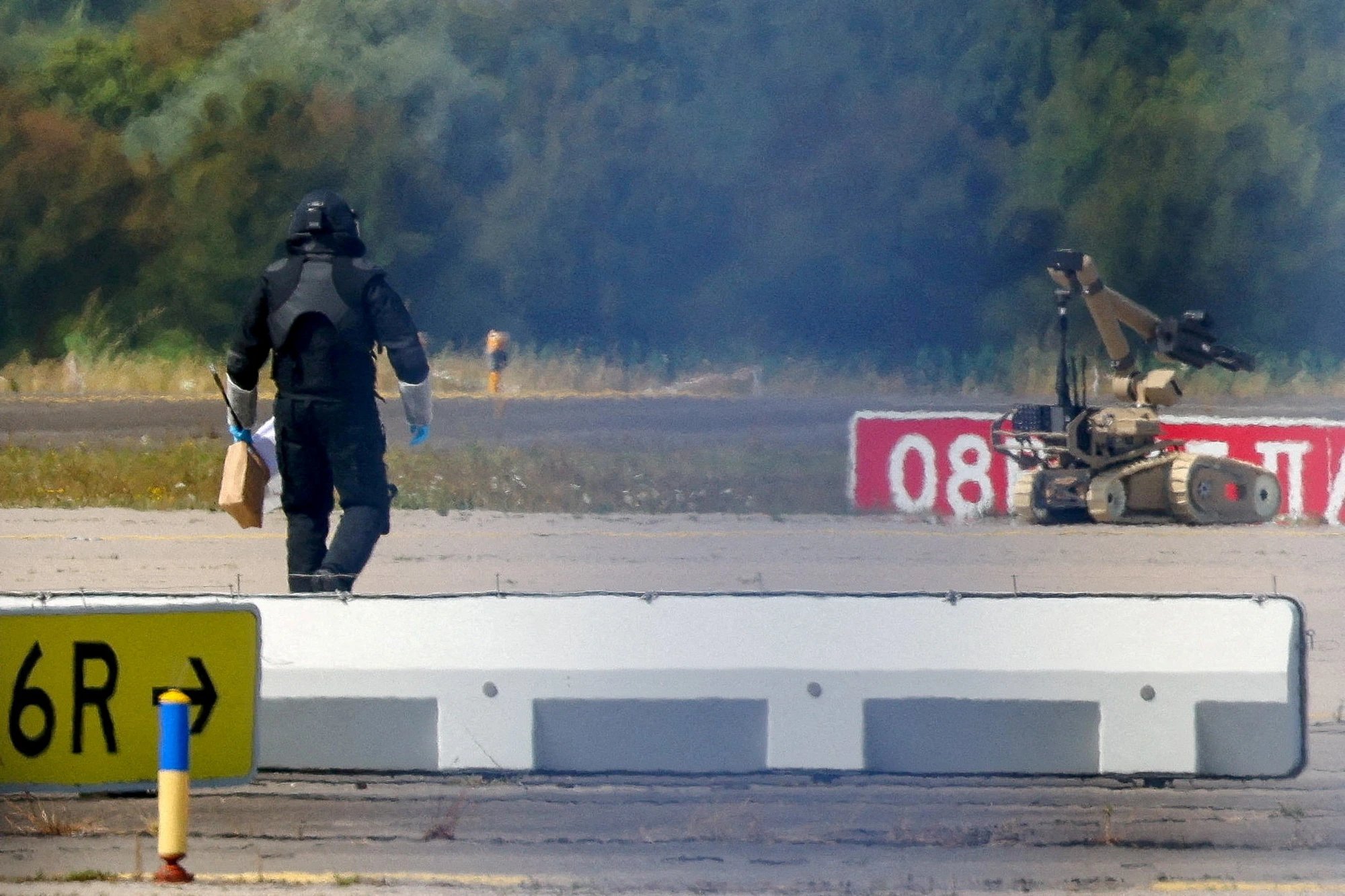
German Interior Minister Alexander Dobrindt announced a comprehensive protective shield against Russian hybrid attacks, including drone interceptions and a national cyber defense network. The plan follows a drone sabotage attempt at Leipzig/Halle Airport on August 4 and Berlin's September 1 attribution of the attack to Russia.
Key Facts
- Interior Minister Alexander Dobrindt announced the plan in an interview with Bild am Sonntag published on September 6.
- The security plan includes rapid deployment of special units in Berlin, Munich, Hamburg, Stuttgart, Düsseldorf, Frankfurt am Main, Leipzig, Hanover, and Cologne.
- Critical infrastructure operators, including energy companies and defense firms, will be granted legal authority to actively counter drone attacks.
- Germany plans a national cyber defense shield called Cyberdome to detect and intercept hacker attacks at an early stage.
- On September 1, the German government blamed Russia for the August 4 drone sabotage attempt at Leipzig/Halle Airport and closed the Russian consulate in Bonn and the Russian House in Berlin.
The Protective Shield
Dobrindt described Russian hybrid attacks—explosive drones on airports, agents in cities, cyberattacks on networks, and sabotage of infrastructure—as daily reality. The plan calls for operational deployment of special units in nine strategic cities: Berlin, Munich, Hamburg, Stuttgart, Düsseldorf, Frankfurt am Main, Leipzig, Hanover, and Cologne. Airspace over key transport hubs, airports, railway stations, and Berlin's government quarter will be protected against drones, including both interception and neutralization of explosive devices. The minister said the attacks will intensify but Germany can fight back and defend itself.
Drone Defense Expansion
Drone protection will no longer be limited to federal police; operators of critical infrastructure, including energy companies and defense enterprises, will receive legal authority to actively repel drone attacks. The August 4 incident at Leipzig/Halle Airport involved multiple drones targeting a Ukrainian Antonov An-124 cargo aircraft. One explosive drone was found near several Ukrainian cargo planes, and a second likely struck a DHL cargo aircraft minutes after the first was discovered.
Cyberdome and Response
In response to hundreds of daily cyberattacks on state bodies and companies, Germany plans a national protective shield called Cyberdome. A massive network of digital sensors will detect and intercept hacker attacks at their initial stage. On September 1, Berlin attributed the Leipzig drone sabotage to Russia and closed the Russian consulate in Bonn and the Russian House in Berlin, while tightening controls on Russian citizens entering the country and measures against Russia's shadow fleet. The EU, NATO, and several European governments expressed support for Germany, while some German opposition politicians criticized the countermeasures as either insufficient or dangerously escalatory.
1 source
Time · lag behind first