
80,000-year-old arrowheads found in Uzbekistan rewrite early human history
This digest was compiled by AI from multiple sources — links to the originals are below.
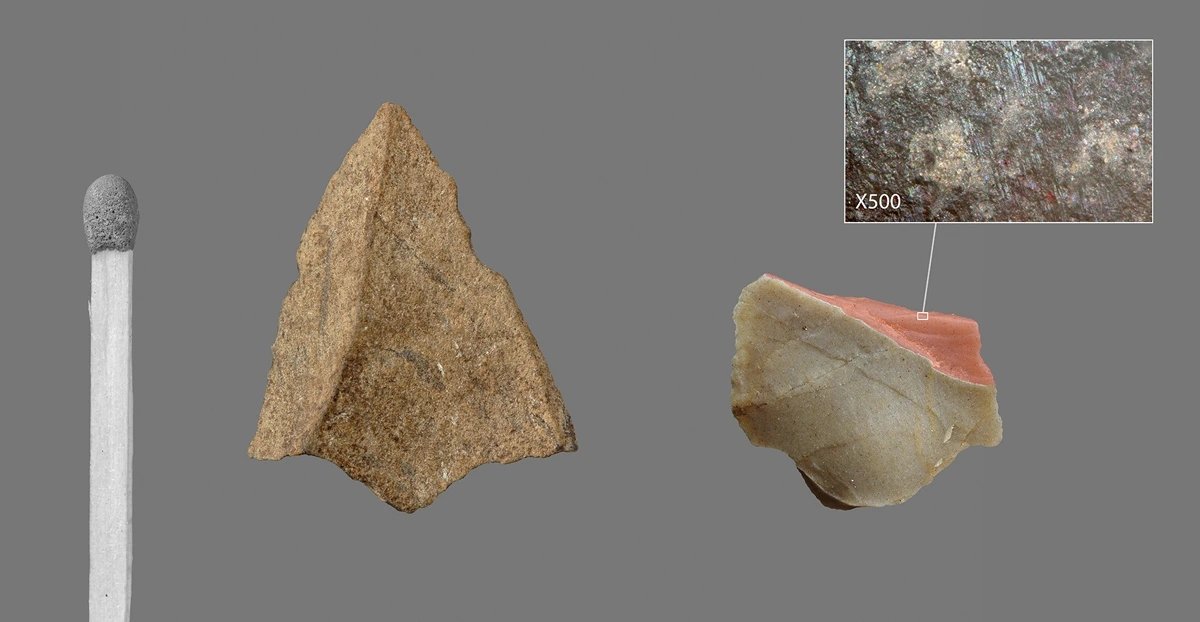
Triangular microlithic projectile points with impact traces have been identified in the oldest layers of the Obi-Rakhmat site in Uzbekistan, dating to 80,000 years ago. The points are comparable to arrowheads made by Homo sapiens 25,000 years later in the Rhône Valley. The study, published in PLOS One, challenges existing models of early human settlement in Europe.
Key Facts
- The Obi-Rakhmat rock shelter in Uzbekistan was discovered in 1962 and its latest excavations were led by Andrei Krivoshapkin.
- The site is located at an altitude of 1,250 meters in the Talassky Alatau range of the Tien Shan mountains.
- The stratigraphic sequence at Obi-Rakhmat spans over 10 meters and dates from approximately 80,000 to 40,000 years ago.
- The earliest evidence of Homo sapiens in Australia dates back around 65,000 years, predating European evidence by 10 millennia.
The Obi-Rakhmat Discovery
Unretouched triangular microlithic projectile points were identified from impact traces in the oldest occupation layers of the Obi-Rakhmat site in Uzbekistan, dating to 80,000 years ago. Their size corresponds to small arrowheads directly comparable to those produced by Homo sapiens during an incursion into Neanderthal territory in the Rhône Valley 25,000 years later. The study was published in the PLOS One journal and provides a strong argument that could rewrite history on Homo sapiens' first settlement in Europe. The Obi-Rakhmat rock shelter was discovered in 1962, and its latest excavation campaigns were led by Andrei Krivoshapkin.
Central Asian Corridor
Depending on climatic conditions, Central Asia has served as a corridor facilitating movement between the western and eastern parts of the continent or as a refuge zone. The archaeological record in this region is limited but includes several significant Paleolithic sites. The Obi-Rakhmat site is located at the south-western end of the Talassky Alatau range of the Tien Shan mountains, at an altitude of 1,250 meters. The settlement provides a remarkably consistent lithic industry, comprising points, large blades, and bladelets across a stratigraphic sequence spanning over 10 meters.
1 source
Time · lag behind first