
Kennedy Institute study finds joints primed for rheumatoid arthritis before birth
This digest was compiled by AI from multiple sources — links to the originals are below.
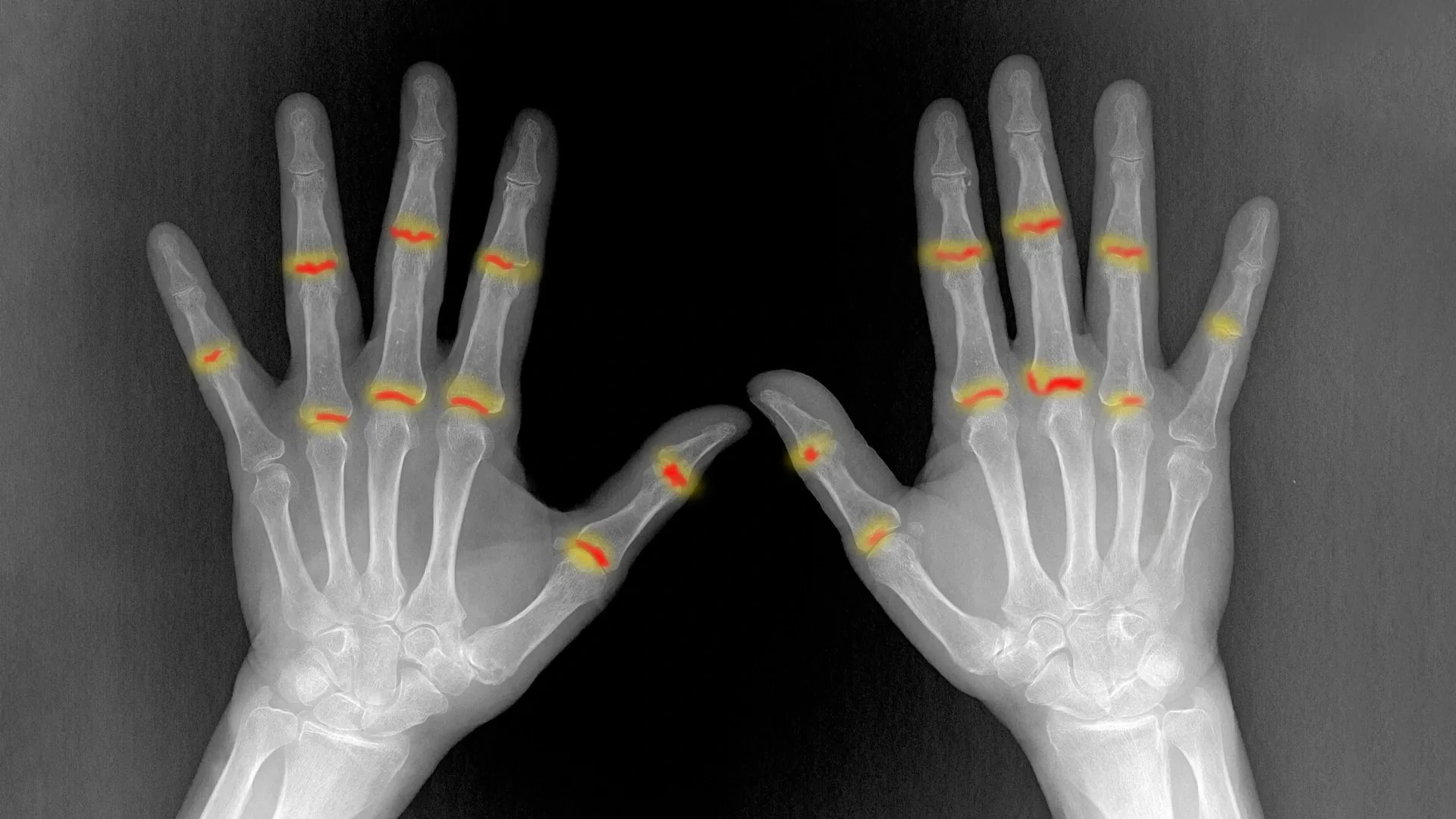
Researchers at the Kennedy Institute have found that some joints may be more vulnerable to inflammatory arthritis before birth. The study, published in Nature Immunology, shows that proximal interphalangeal joints have more synovial tissue and PI16+ fibroblasts than distal interphalangeal joints. These differences are present before birth and may explain why rheumatoid arthritis selectively targets certain joints.
Key Facts
- The study 'The embryonic origins of site-specific arthritis' was published in Nature Immunology.
- Proximal interphalangeal (PIP) joints, frequently affected by rheumatoid arthritis, had a larger volume of synovial tissue and more PI16+ fibroblasts than distal interphalangeal (DIP) joints.
- These differences were already present before birth, suggesting the local tissue environment may influence later inflammation.
- Christopher Buckley, Kennedy Professor of Translational Rheumatology at the University of Oxford, stated that the findings suggest the answer lies not only in the immune system but also in the tissues themselves.
- The team used single-cell sequencing, advanced image analysis, and high-resolution 3D X-ray scanning to map developing human finger joints.
Joint Vulnerability Origins
Researchers at the Kennedy Institute examined two types of finger joints with different disease susceptibility patterns. They compared proximal interphalangeal (PIP) joints, frequently affected by rheumatoid arthritis, with distal interphalangeal (DIP) joints near the fingertips, which are generally spared. The PIP joints had a larger volume of synovial tissue and contained more PI16-positive (PI16+) fibroblasts, a specialized type of connective tissue cell. Importantly, these differences were already present before birth, suggesting that the local tissue environment of a joint may influence whether inflammation is able to take hold later in life.
Developmental Joint Mapping
The team used single-cell sequencing, advanced image analysis and high-resolution 3D X-ray scanning to build a detailed map of human finger joints as they developed. Looking at joints during development allowed the researchers to study entire joints in a level of detail that is difficult to achieve with adult tissue. They found that developing joints consisted primarily of structural cells rather than immune cells, including fibroblasts and cells responsible for forming cartilage. The researchers then examined the signals that cause these cells to develop into different specialized types. One group of particular interest was the fibroblasts that form the synovial lining, which produce substances that lubricate joints and protect them, but can behave abnormally in arthritis.
1 source
Time · lag behind first