
Nature publishes eight research articles on glial epigenome, RNA delivery, baryon decay, aquatic nutrition, electrode dynamics, monkeypox replisome, genetic codes, single-cell search
This digest was compiled by AI from multiple sources — links to the originals are below.
Nature published eight research articles on September 5, 2026, covering glial epigenomics, synthetic RNA delivery, baryon semileptonic decay, aquatic invertebrate nutrition, electrical double layers, monkeypox virus replisome, genetic code prototyping, and single-cell sequence search. The studies report cell-type-specific regulatory elements, superior RNA delivery by AI-designed protein assemblies, enhanced sensitivity in |Vus| determination, nutrient supply for over 5 billion people, molecular structure of far-from-equilibrium double layers, conformational changes in the E5 helicase-primase, robotic prototyping of redesigned genetic codes, and ultrafast reference-free sequence discovery. The articles appear in the journal's research section.
Key Facts
- Integrative 3D epigenomic profiling of four glial cell types from mid-gestation human cortex reveals cell-type-specific regulatory elements and chromatin interactions.
- Synthetic virus-like protein architectures designed by AI show superior RNA delivery into cells compared with naturally occurring counterparts.
- Polarization and quantum entanglement measurements of baryon semileptonic decay enable determination of the |Vus| element of the Cabibbo–Kobayashi–Maskawa matrix.
- Aquatic invertebrates supply the equivalent annual vitamin B12 and selenium requirements for over 5 billion people.
- A robotic, cell-free platform rapidly prototypes redesigned genetic codes, enabling translation of proteins with reassigned codons and non-standard amino acids without altering living genomes.
Glial Epigenome
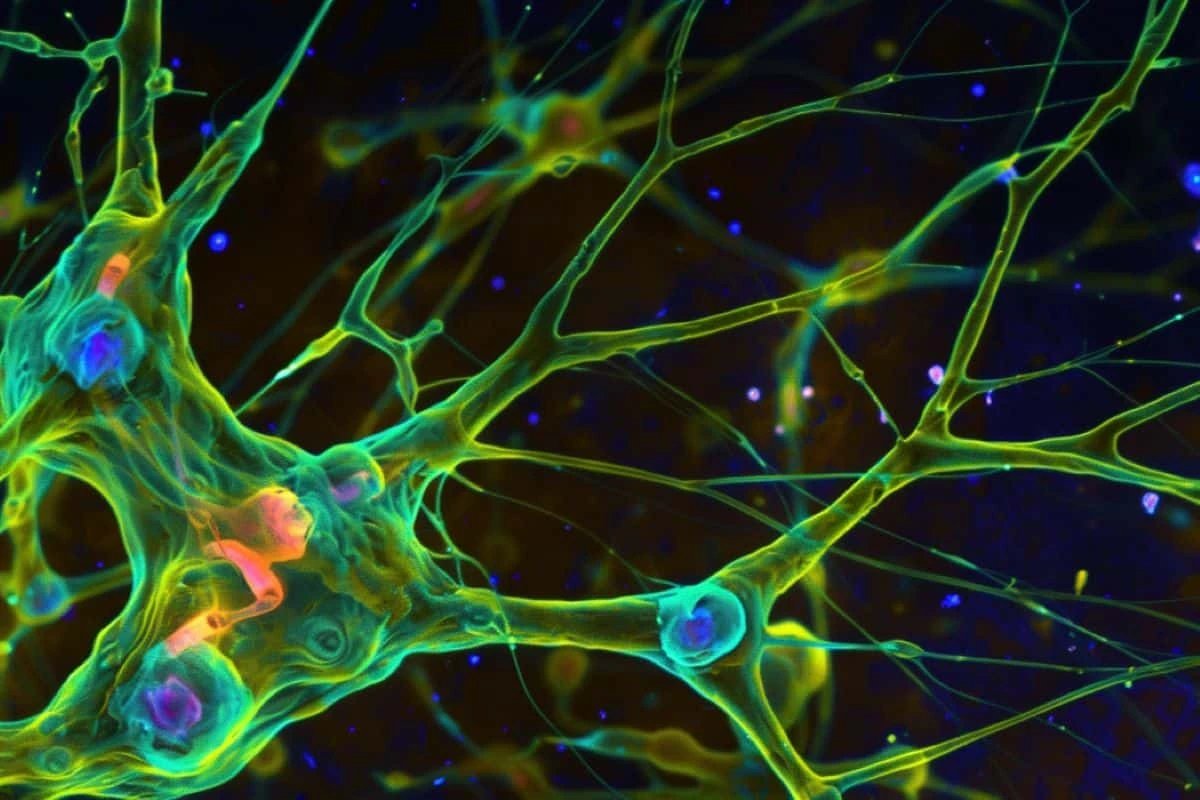
Integrative 3D epigenomic profiling of four glial cell types from the mid-gestation human cortex reveals cell-type-specific regulatory elements and chromatin interactions. The findings illuminate the roles of non-coding variants in neuropsychiatric disease and human-specific cortical evolution.
RNA Delivery
Synthetic virus-like protein architectures designed by artificial intelligence show superior ability to deliver RNA into cells, compared with their naturally occurring counterparts. The AI-designed assemblies overcome the evolutionary constraints limiting viral evolution.
Baryon Decay
Polarization and quantum entanglement measurements of baryon semileptonic decay greatly enhance single-event sensitivity. Combined with lattice quantum chromodynamics calculations, the measurements enable determination of the |Vus| element of the Cabibbo–Kobayashi–Maskawa matrix, providing an independent test of the standard model.
Aquatic Nutrition
Aquatic invertebrates are exceptionally nutrient dense, supplying the equivalent annual vitamin B12 and selenium requirements for over 5 billion people.
Electrode Dynamics
A new framework combining experimental and computational methods tracks ions and water present at an electrode interface. The approach allows the molecular structure and evolution of electrical double layers far from equilibrium to be discovered.
Monkeypox Replisome
During replisome assembly of monkeypox virus, the hexameric helicase–primase E5 undergoes large-scale conformational changes. These changes allow two of its primase domains to interact with the polymerase F8 thumb domain and A22 subunit, activating the helicase–primase.
Genetic Code Prototyping
A robotic, cell-free platform rapidly prototypes redesigned genetic codes. The platform enables the translation of proteins with reassigned codons and non-standard amino acids without altering living genomes.
Single-Cell Search
Malva enables ultrafast, reference-free searching of raw single-cell sequences across millions of cells. The tool transforms static transcriptomic atlases into dynamic resources for understanding the functions of sequences.
1 source
Time · lag behind first