
Guyana receives six Cuban and Afghan deportees from US under third-country deal
This digest was compiled by AI from multiple sources — links to the originals are below.
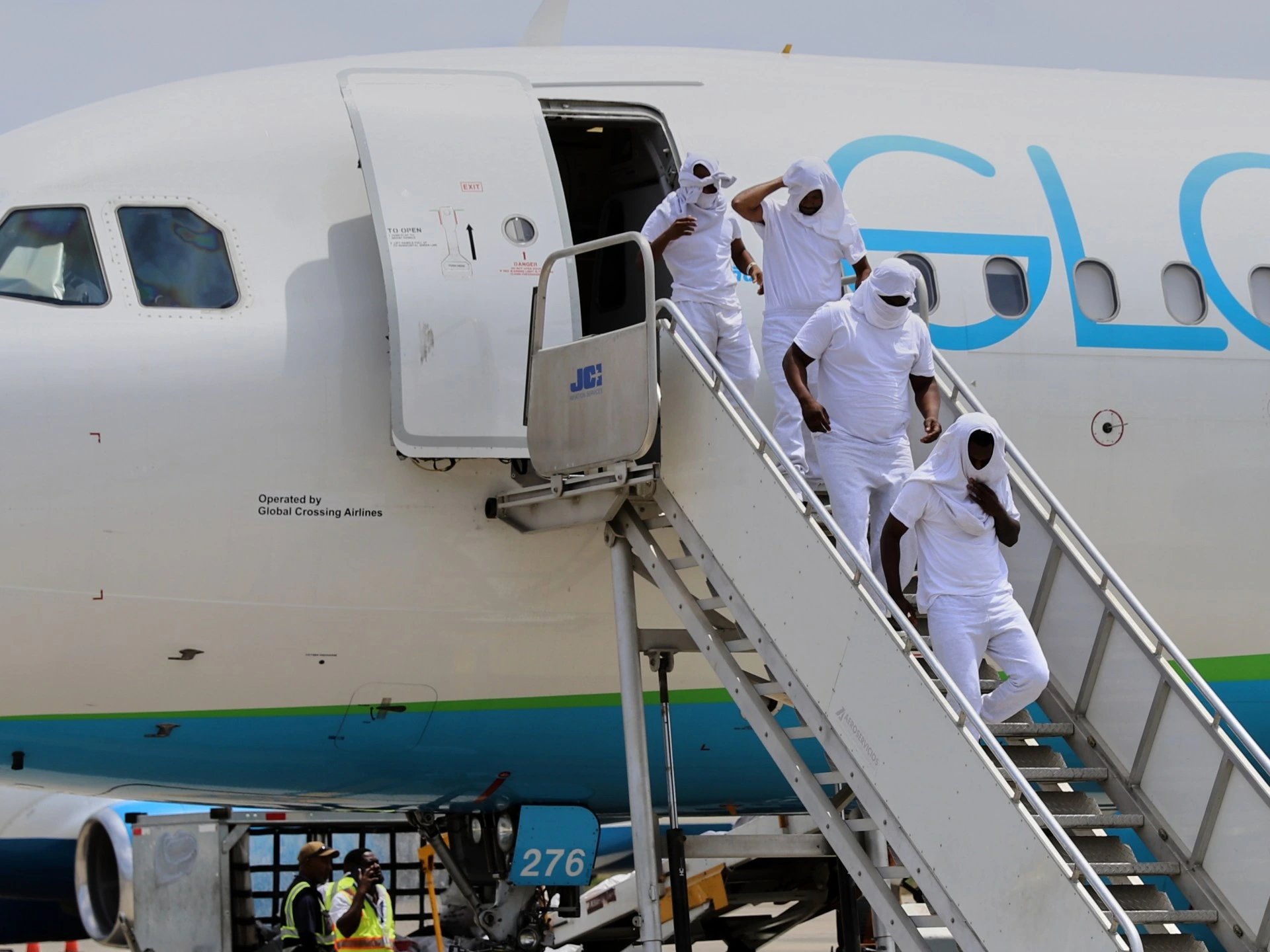
Guyana received six Cuban and Afghan nationals deported from the United States on Saturday. Foreign Secretary Robert Persaud said the group arrived after being deported due to immigration issues, and that the US has not made further requests for non-citizen deportations to Guyana at this time. The removals are part of the Trump administration's expanding third-country deportation campaign.
Key Facts
- Guyana's Foreign Secretary Robert Persaud announced the arrival of six Cuban and Afghan nationals on Saturday.
- The US has not made any further requests for non-citizen deportations to be sent to Guyana at this time, according to Persaud.
- None of the deportees had criminal backgrounds, Persaud told The Associated Press.
- The deal with Guyana will last for one year and does not constitute permanent resettlement.
- Amnesty International estimates that more than 30 countries have entered into third-country deportation agreements since Trump returned to office, including 15 in the Americas region.
Deportation Arrival
Guyana received six people deported from the United States, as the administration of President Donald Trump steps up so-called third-country deportations. Guyana's Foreign Secretary Robert Persaud announced that a group of Cuban and Afghan nationals had arrived in the South American nation on Saturday, after being deported due to immigration issues. Persaud told The Associated Press that the US has not made any further requests for non-citizen deportations to be sent to Guyana at this time. None of the deportees had criminal backgrounds, according to Persaud.
Third-Country Deportation Expansion
The removals are part of an ongoing campaign under Trump, who promised during his 2024 re-election bid to engineer the largest deportation programme of criminals in the history of America. Persaud said that Guyana reached an agreement with the US to receive deportees after months of negotiations. The human rights nonprofit Amnesty International estimates that more than 30 countries have entered into such agreements since Trump returned to office, including 15 in the Americas region. The deal with Guyana will last for one year and does not constitute permanent resettlement, Persaud said.
Concerns and Criticism
Third-country deportations involve sending foreign nationals to places outside of their country of origin, where deportees often have no familiarity and sometimes do not even speak the language. The Trump administration has sought to expand the use of third-country deportations, striking agreements with a range of countries around the world, including several as far afield as Africa. Some of the deals have involved multimillion-dollar payments. Trump officials have justified the effort by arguing that some countries, such as Cuba, refuse to accept deportees from the US. Rights groups have denounced the practice as an effort to punish migrants and pressure them into giving up their immigration claims in the US. The Transactional Records Access Clearinghouse (TRAC), a research organisation at Syracuse University, estimates that 70.6 percent of foreign nationals currently in US immigration detention have no criminal conviction.
1 source
Time · lag behind first