
Kazakhstan registers 54 new mineral deposits in two years
This digest was compiled by AI from multiple sources — links to the originals are below.
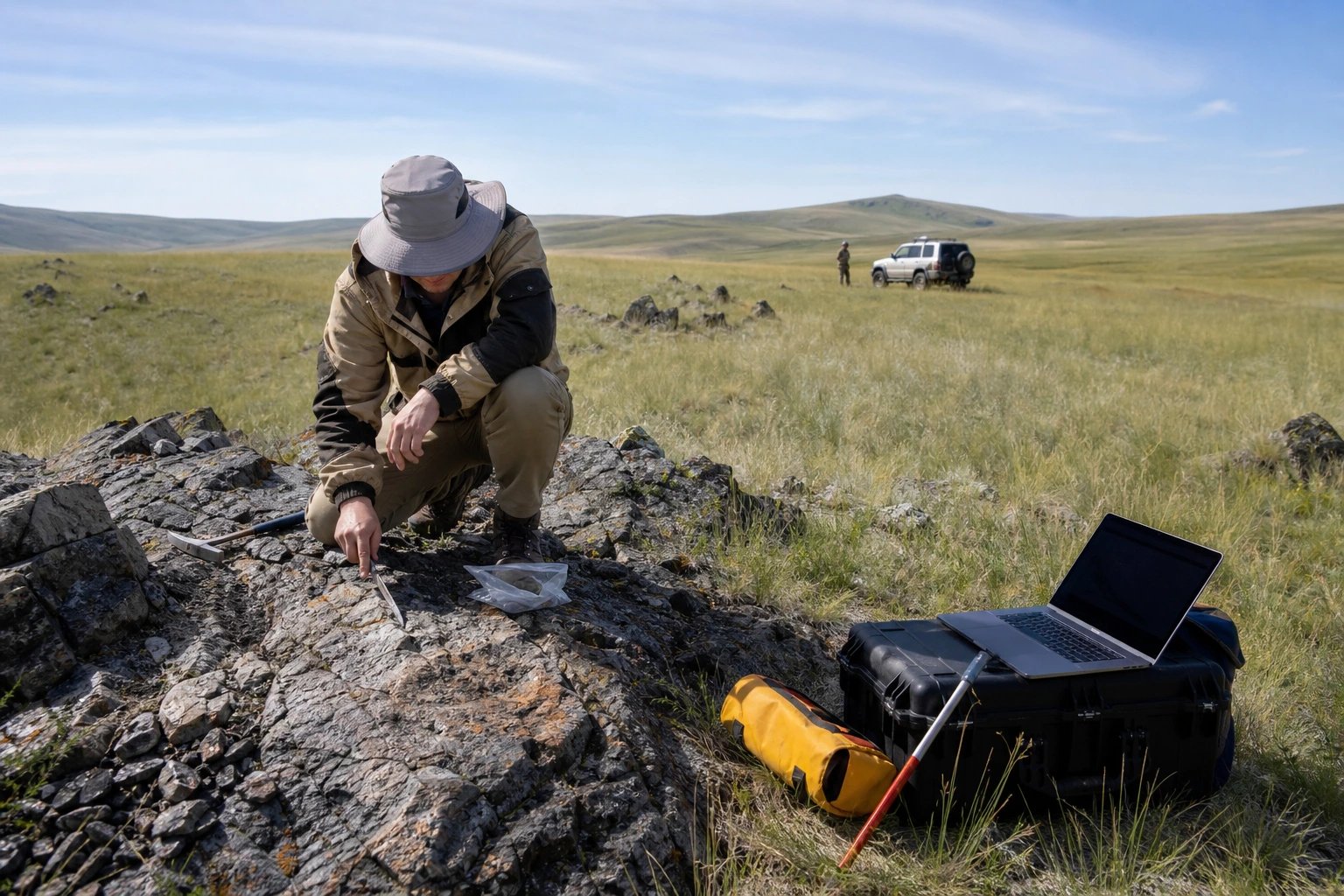
Kazakhstan registered 54 new mineral deposits in 2024–2025, the government reported. The country also identified 935,400 tonnes of rare-earth metal resources at 11 sites, including the promising Kuyrektykol area in Karaganda Region. The government is digitizing over 4.8 million geological records to support Big Data and AI analysis.
Key Facts
- In 2024–2025, Kazakhstan registered 54 new mineral deposits on the state balance.
- Exploration identified 935,400 tonnes of rare-earth metal resources at 11 sites, including Kuyrektykol in Karaganda Region.
- In 2026, Kazakhstan launched 20 detailed geological survey projects covering 100,000 km² of prospective territory.
- The Unified Subsoil Use Platform hosts 66,100 geological reports and 109,500 study outlines.
- Over the past three years, 96 solid mineral mining licences were issued, and seven projects moved from exploration to production.
Geological Survey Expansion
In 2025, Kazakhstan developed 20 geological survey projects at a scale of 1:50,000, with implementation starting in 2026. These surveys will cover 100,000 km² of areas with potential for gold, copper, polymetals, lithium, and rare-earth metals. The government is updating the subsoil use system under President Kassym-Jomart Tokayev's directives. Priorities include higher research detail, digitization of accumulated data, and use of Big Data and artificial intelligence.
Resource Base Growth
Geological exploration increased resources of gold, silver, copper, chromium, iron ore, phosphorite ores, and groundwater reserves. The state balance now holds about 10,000 deposits of various minerals. Research was completed at 11 sites, with Kuyrektykol in Karaganda Region identified as one of the most promising for rare-earth metals. In the oil and gas sector, eight fields moved to production stage in 2025–2026.
Digital Platform and Legislation
The Unified Subsoil Use Platform contains 66,100 geological reports and 109,500 study outlines. Over 4.8 million units of geological information have been digitized. The next stage is converting accumulated materials into machine-readable format for Big Data analytics and AI systems. Legislative changes establish the platform's status, expand electronic auctions, and add support measures for strategic investors.
1 source
Time · lag behind first