
Nepal families cremate effigies as flood missing exceed 4,900
This digest was compiled by AI from multiple sources — links to the originals are below.
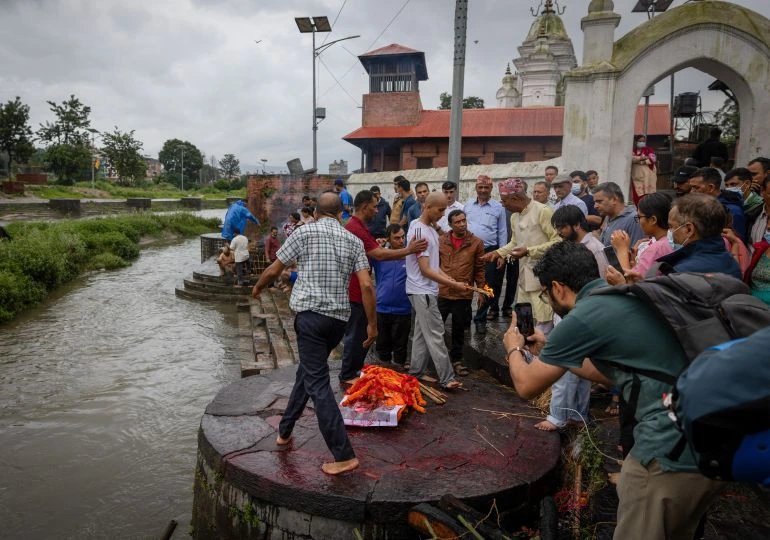
Families of Nepal's August 26 flood victims performed symbolic cremations with kusha grass effigies at Pashupatinath Temple on September 3. The disaster killed more than 1,200 people and left nearly 5,000 missing, overwhelming recovery efforts. Relatives gave DNA samples to police even as they held rites without bodies.
Key Facts
- Flash floods on August 26 killed more than 1,200 people in northern and central Nepal.
- Nearly 5,000 people remain missing nine days after the disaster.
- Families performed symbolic cremations with kusha grass effigies at Pashupatinath Temple on September 3.
- Nepal Police spokesman Abi Narayan Kafle said storing recovered bodies remains a major challenge.
Symbolic Cremations
Sujan Achhami, 23, carried an effigy of his father Dinesh to the Bagmati River bank next to Pashupatinath Temple on September 3. A priest directed him to wash the effigy and offer a clay lamp and flowers on the Brahmanal stone. Khim Bahadur Gharti Magar performed the same rites for his uncle Tham Bahadur Pun, 71, and aunt Chausara Pun, 64, who were on a pilgrimage when the flood hit. Magar said 17 buses were in the pilgrimage group, and searchers found four bodies from that group.
Search and Identification
Sher Bahadur Pun, son-in-law of the missing man and a senior Nepal government health official, said the family gave DNA samples to police. Dinesh Achhami, 41, a driver from Barabishe municipality, was in Rasuwa district when floodwaters surged down from Tibet. Maniram Tharu survived the flood at the Upper Trishuli 1 hydropower project, but his brother Dipendra, 30, and sister-in-law Phool Maya Tamang remain missing. Tharu said he cannot find their names on the list of those reported safe.
1 source
Time · lag behind first