
US House panel weighs Kazakhstan's role in critical minerals supply
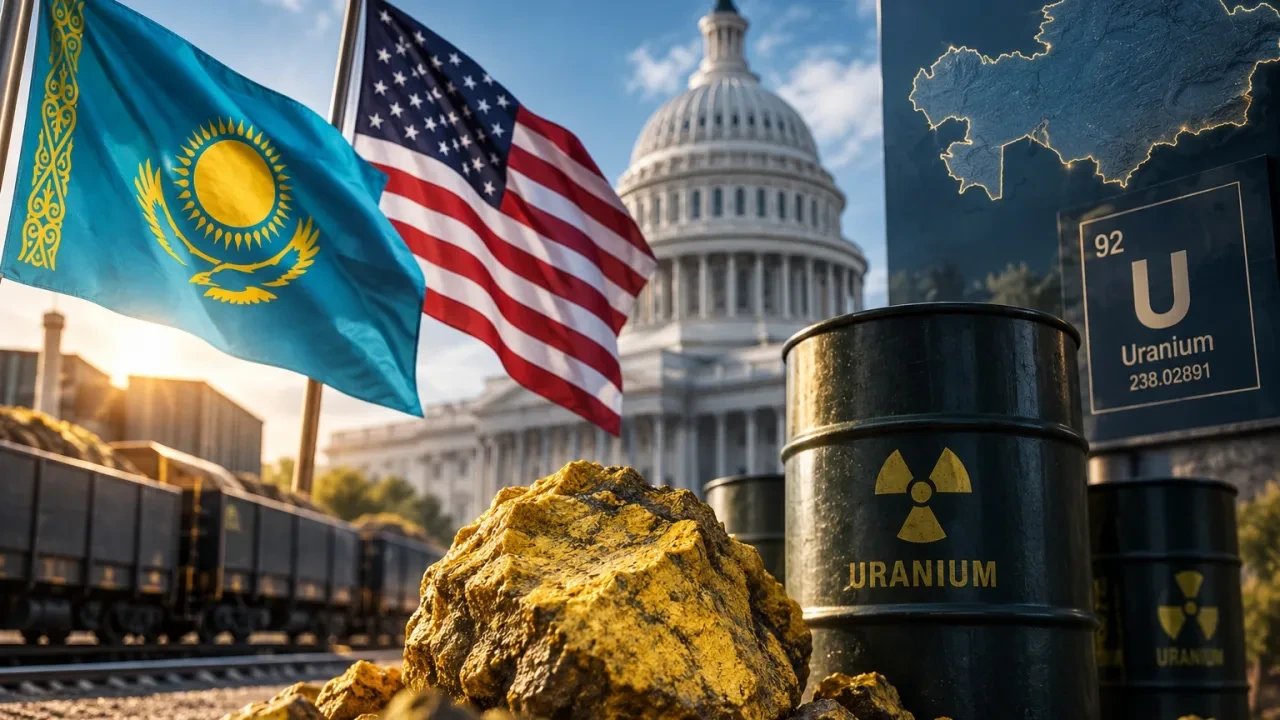
This digest was compiled by AI from multiple sources — links to the originals are below.
The US House Ways and Means Committee held a nearly four-hour hearing on September 2 focused on critical minerals supply chains, with Kazakhstan emerging as a key country example. Three of five invited experts backed lifting Jackson-Vanik restrictions for Kazakhstan and other eligible Central Asian states. The hearing followed a congressional delegation visit to Uzbekistan, Kazakhstan, and Mongolia led by Chairman Jason Smith.
Key Facts
- The hearing took place on September 2 before the US House Ways and Means Committee and lasted nearly four hours.
- Kazakhstan accounts for more than a quarter of US uranium imports, according to Committee Chairman Jason Smith.
- Former US Ambassador John Herbst described Kazakhstan as the world's largest uranium producer, with the second-largest manganese reserves and a leading titanium producer.
- The US currently accounts for only about 2.1% of mineral exports from Central Asia.
- Three of five invited experts supported lifting Jackson-Vanik restrictions for Kazakhstan and other eligible Central Asian states, with bipartisan backing.
Hearing Focus
The hearing, titled "Strategic Partnerships for Securing Critical Resources and Supply Chain Reliability," covered US mining development, processing capacity, cooperation with Africa, and trade policy. Kazakhstan was among the most frequently mentioned country examples during the discussion. The session followed a congressional delegation trip to Uzbekistan, Kazakhstan, and Mongolia led by Committee Chairman Jason Smith.
Kazakhstan's Mineral Role
Kazakhstan was presented as an already active and reliable participant in US supply chains. Chairman Jason Smith noted that Kazakhstan accounts for more than a quarter of all US uranium imports. Former US Ambassador John Herbst, senior director of the Atlantic Council's Eurasia Center, characterized Kazakhstan as the world's largest uranium producer, a country with the second-largest manganese reserves, and one of the leading titanium producers. Herbst also noted that the US currently accounts for only about 2.1% of mineral exports from Central Asia. He said this small share opens significant opportunities for expanding American companies' presence in a region actively seeking investment and technology while diversifying away from Russia and China.
Jackson-Vanik Amendment
For Kazakhstan, the key policy issue of the hearing was the Jackson-Vanik amendment. Three of five invited experts directly supported lifting Jackson-Vanik restrictions for Kazakhstan and other eligible Central Asian states, while another expert urged Congress to consider the possibility. The position was also supported by representatives of both parties. Jason Smith said his recent meetings in Central Asia showed that regional partners view this Soviet-era measure as an obstacle to deepening economic ties.
1 source
Time · lag behind first