
AfD projected to win Saxony-Anhalt election with over 40% of vote
This digest was compiled by AI from multiple sources — links to the originals are below.
The far-right Alternative for Germany (AfD) is projected to win over 40 percent of the vote in Saxony-Anhalt's state election on Sunday, putting it in contention to lead a German state government for the first time since World War II. The conservative CDU trails at just above 20 percent. Chancellor Friedrich Merz has ruled out cooperation with both the AfD and the Left Party.
Key Facts
- The AfD is projected to win more than 40 percent of the vote in Saxony-Anhalt, far ahead of the CDU at just above 20 percent.
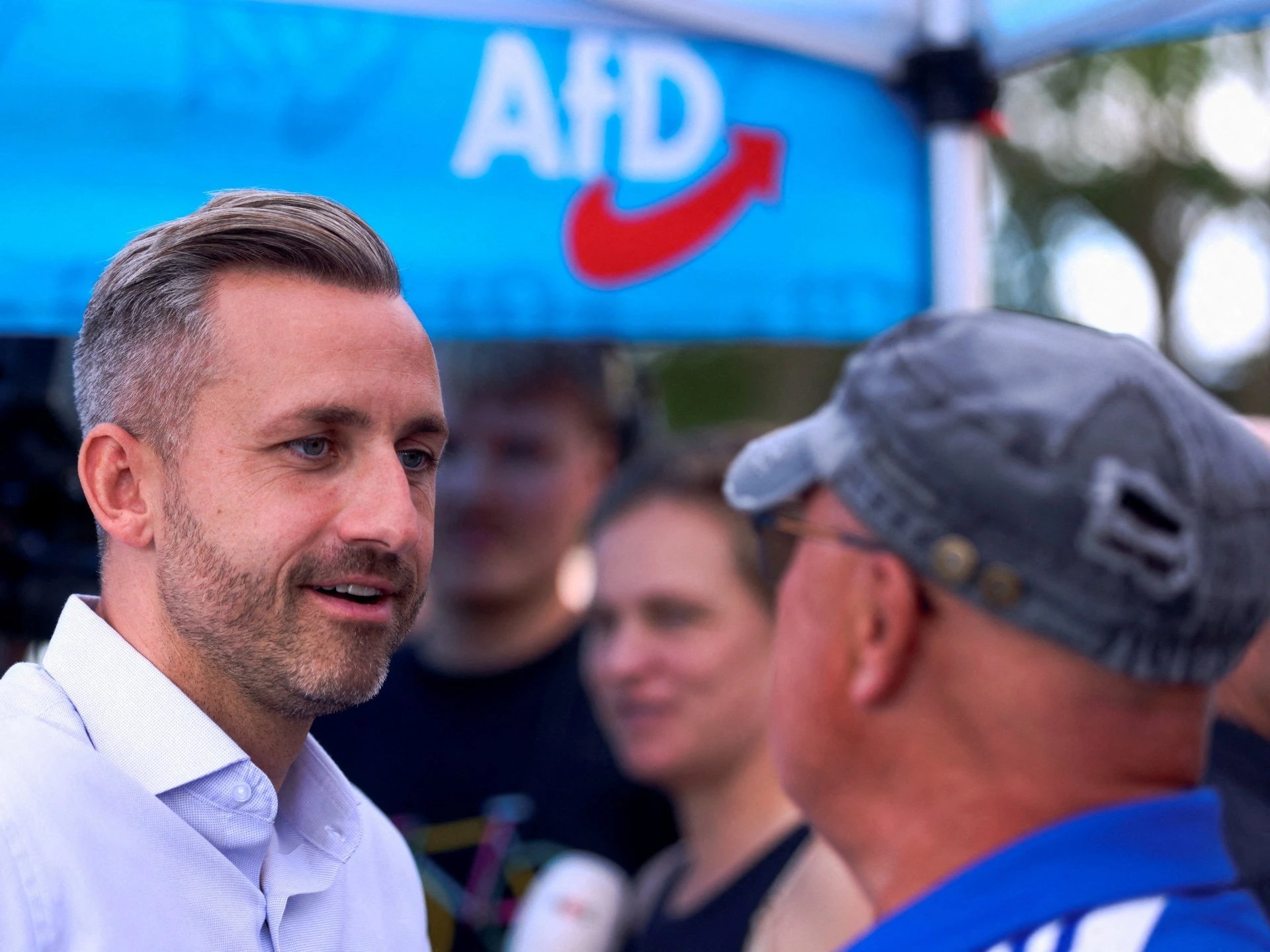
- AfD lead candidate Ulrich Siegmund was dubbed 'Germany's most dangerous man' by Der Spiegel.
- Germany's domestic intelligence service has classified the AfD as 'far-right extremist' in Saxony-Anhalt.
- Chancellor Friedrich Merz has ruled out cooperation with both the Left Party and the AfD.
- The AfD's election platform calls for abolishing the right to asylum and mass deportations.
Election Projections
The AfD is leading Saxony-Anhalt by a wide margin in the polls, expected to win more than 40 percent of the votes. The conservative CDU is far behind at just above 20 percent, followed by the Left Party at 12 percent, the Social Democrats at 7 percent and the Greens at 5 percent. Depending on which smaller parties clear the threshold to enter parliament, the other parties could potentially form a majority without the AfD. But German Chancellor Friedrich Merz (CDU) recently ruled out cooperation with both the Left Party and the AfD, a party whose officials have used Nazi slogans.
AfD Platform
In its election platform, titled 'The Country First', the AfD calls for the abolition of the right to asylum, the confiscation of cash and assets of asylum seekers and mass deportations. Anyone who insults German identity or the 'historical-cultural entity Germany' could face a prison sentence, according to the campaign. The party also seeks to ban the 'Antifa' movement, cancel public broadcasting and reverse the shift towards renewable energy. Founded in 2013 as a Eurosceptic party in the aftermath of the European Union financial crisis, it gained ground during Merkel's 2015 decision to admit about a million refugees, many of them Syrian.
2 sources
Time · lag behind first