
Canada's retaliatory tariffs on US toilet paper revive shortage fears
This digest was compiled by AI from multiple sources — links to the originals are below.
Canada unveiled retaliatory tariffs on nearly 900 US products, including a 25% duty on toilet paper and facial tissue, set to take effect Sept. 8. The move follows Washington's 50% tariff on roughly $20 billion of Canadian goods after trade talks broke down in late August. The paper goods duties revive memories of the 2020 toilet paper shortage, when US sales surged 734% in a single day.
Key Facts
- Canada's retaliatory tariffs on US toilet paper and facial tissue are set at 25%, while paper towels, napkins, and raw wood pulp face a 50% duty.
- The tariffs take effect on Sept. 8 and cover close to 900 American products.
- Washington imposed a 50% tariff on roughly $20 billion of Canadian goods under the Tariff Act of 1930 after trade talks broke down in late August.
- On March 12, 2020, US toilet paper sales surged 734% compared with the same day the year before, making it the top-selling grocery item that day.
- Roughly 70% of the world's grocery stores ran out of toilet paper at some point during the 2020 shortage.
Tariff Retaliation
Canadian Prime Minister Mark Carney vowed to match US tariffs "dollar for dollar" and unveiled retaliatory tariffs on close to 900 American products. Canada's retaliation puts a 25% duty on US toilet paper and facial tissue, and a 50% duty on paper towels, napkins, and raw wood pulp. Canada is also charging 50% on American dairy products except cheese, which gets 25%, and 25% on American fish and seafood, including frozen lobster. The tariffs are a response to US tariffs, including a 25% tariff on Canadian cars and auto parts, which President Trump is threatening to double to 50% if no deal is reached by Jan. 1, 2027.
2020 Shortage Echoes
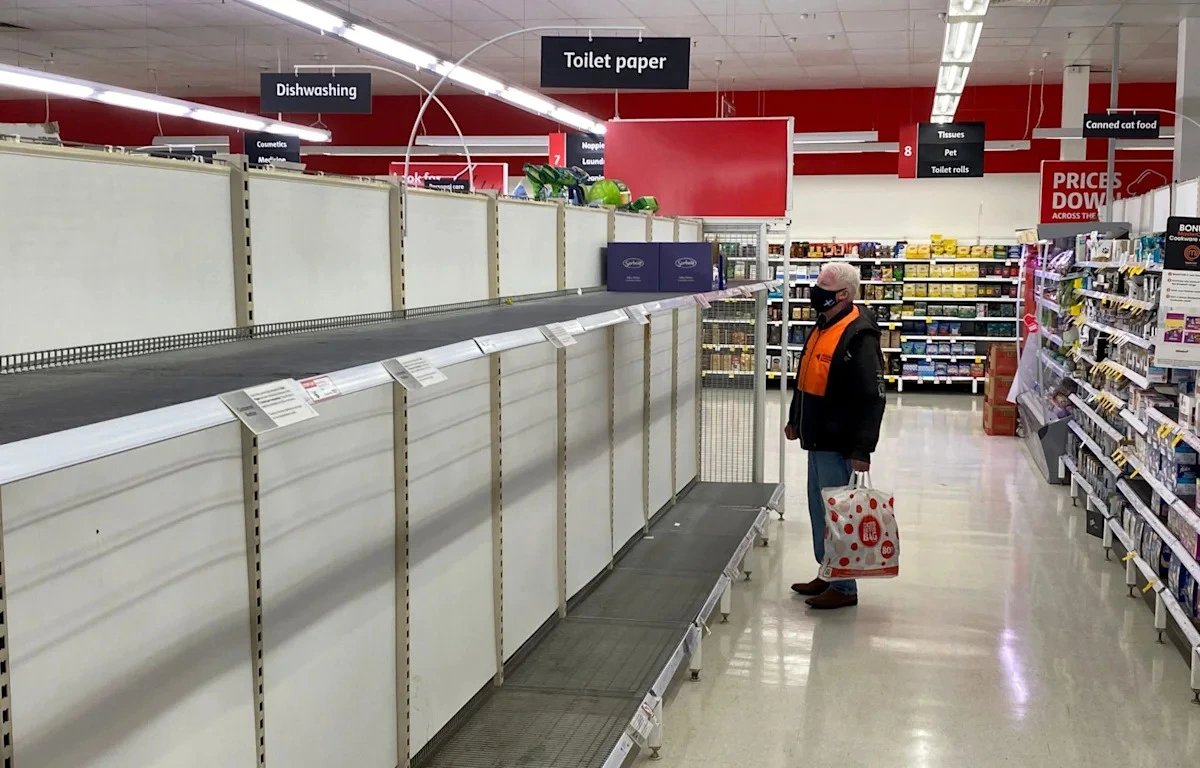
On March 12, 2020, US toilet paper sales surged 734% compared with the same day the year before, making it the top-selling grocery item that day. By the time the panic subsided, roughly 70% of the world's grocery stores had run out of toilet paper at some point. Shelves that normally held Charmin and Cottonelle sat bare for weeks as retailers imposed purchase limits, and bamboo-paper startups saw Amazon sales jump more than 5,000% month over month. Researchers who studied the episode afterward found no actual break in production; hoarding, not a supply failure, created nearly all of it.
2 sources
Time · lag behind first