
EU foreign ministers split on trade sanctions over Israeli settlements
This digest was compiled by AI from multiple sources — links to the originals are below.
EU foreign ministers ended an informal meeting in Wicklow, Ireland, without consensus on trade sanctions against illegal Israeli settlements. Ireland and Spain, backed by Belgium and the Netherlands, pushed for restrictions, while Germany, Austria, Czechia and Hungary opposed them. The bloc remains divided as settler violence in the occupied West Bank continues.
Key Facts
- Ireland and Spain, with support from Belgium and the Netherlands, led the call for EU-wide restrictions on goods from illegal Israeli settlements.
- Germany, Austria, Czechia and Hungary opposed any attempt to sanction illegal settlements, saying it would upset diplomatic channels with Israel.
- EU-Israel bilateral trade in goods reached nearly $50bn last year, with EU exports to Israel rising from nearly $30bn to about $32bn in 2025.
- Irish Foreign Minister Helen McEntee said the EU 'should be moving collectively' in upholding international law.
Divisions at Wicklow Meeting
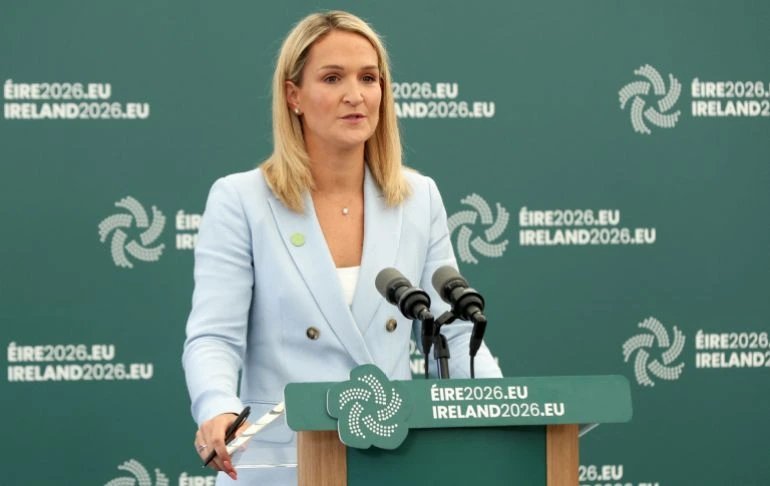
Ireland hosted the informal meeting of EU foreign ministers in Wicklow on Tuesday and Wednesday as holder of the EU council presidency. Ireland and Spain, supported by Belgium and the Netherlands, pushed for EU-wide restrictions on goods imported from illegal Israeli settlements. Germany, Austria, Czechia and Hungary made clear they would oppose any sanctions on illegal settlements, arguing such a move would disrupt diplomatic channels with Israel. Irish Foreign Minister Helen McEntee told reporters after the meeting: 'We should be moving collectively … It is not credible for us to say we should uphold international law in one form and not do it in the other.'
Trade and Legal Context
The EU is Israel's largest trading partner, with bilateral trade in goods reaching nearly $50bn last year. EU exports to Israel increased from nearly $30bn to about $32bn in 2025. Ireland was the first EU country to ban imported Israeli settlement goods and recognised a Palestinian state in 2024. Ireland has also pushed for a review of the EU-Israel Association Agreement, a cooperation deal signed in 2000 that forms the basis for trade ties with Israel.
1 source
Time · lag behind first