
Kazakh Manufacturing Share Tops Mining, but Structural Shift Unproven
This digest was compiled by AI from multiple sources — links to the originals are below.
Kazakhstan's manufacturing sector overtook mining in industrial output share for the first time in January-July 2026, reaching 46.7% versus 45.8%. The government attributes the shift to policies promoting domestic processing and higher-value industries. Analysts caution the figures do not yet confirm a completed structural transformation.
Key Facts
- Manufacturing accounted for 46.7% of industrial production in January-July 2026, compared with 45.8% for mining.
- Manufacturing output reached 18.8 trillion tenge (US$40.7 billion), up 9% year-on-year.
- Machine building grew 22% to 3.2 trillion tenge (US$6.92 billion) in the first seven months of 2026.
- Long-term agreements and offtake contracts with subsoil users and the quasi-public sector totalled 466 billion tenge (US$1.01 billion) in the first half of 2026.
- Samruk Kazyna's purchases from domestic manufacturers exceeded 2.1 trillion tenge (US$4.54 billion), more than double the previous level.
Manufacturing Growth
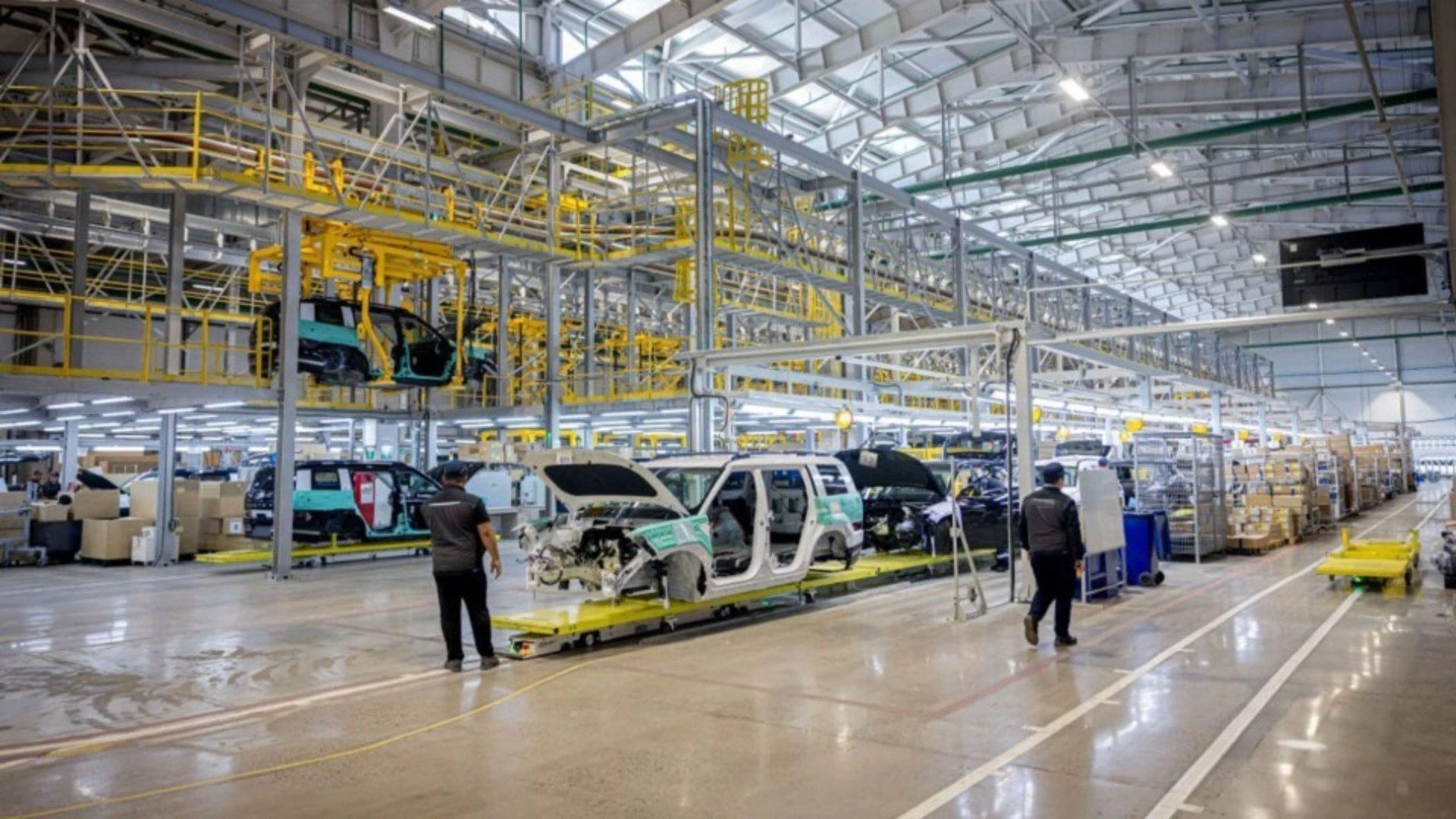
Machine building increased 22% in the first seven months of 2026, reaching 3.2 trillion tenge (US$6.92 billion). Metallurgy generated 8.1 trillion tenge (US$17.52 billion), while chemical production rose 26.9% to 1 trillion tenge (US$2.16 billion). Automotive manufacturing produced more than 96,000 vehicles during the period, with small-scale assembly accounting for 28.3%. New production facilities are creating demand for locally produced tyres, batteries, seats and multimedia systems.
State Support Mechanisms
Offtake contracts give manufacturers a guaranteed buyer for products that are yet to be produced. In the first half of 2026, long-term agreements and offtake contracts involving subsoil users and the quasi-public sector amounted to 466 billion tenge (US$1.01 billion). Samruk Kazyna's purchases from domestic manufacturers more than doubled and exceeded 2.1 trillion tenge (US$4.54 billion). Special economic zones host 577 projects across 18 zones, attracting 11.1 trillion tenge (US$24 billion) in investment and creating more than 39,000 jobs. Residents have generated 865.4 billion tenge (US$1.87 billion) in tax revenues, compared with 507.4 billion tenge (US$1.1 billion) in state spending on infrastructure.
Analyst Caution
Kazakh financial analyst Rassul Rysmambetov cautioned that the latest figures should not yet be interpreted as evidence of a completed structural transformation. Economists note rising demand for imported machinery, equipment and technology as Kazakhstan enters a major investment cycle.
1 source
Time · lag behind first