
GLP-1 drug semaglutide extends lifespan in older female mice by 12%
This digest was compiled by AI from multiple sources — links to the originals are below.
A study published in Nature on 2 September found that older female mice treated with the GLP-1 drug semaglutide lived 12% longer than untreated mice. The treated mice also showed slower progression of several biological changes associated with ageing. The findings add to growing evidence that GLP-1 medications may have anti-ageing properties, though human trials are still in early stages.
Key Facts
- The study was published in Nature on 2 September 2026.
- Treated mice had a median lifespan of 834 days, 12% longer than the 742 days in the control group.
- Mice taking semaglutide self-reduced their calorie intake by 24%.
- The study used 20-month-old healthy female mice, roughly equivalent in age to 60-year-old humans.
- Danica Chen, a biologist at the University of California, Berkeley, is a co-author of the study.
Study Design
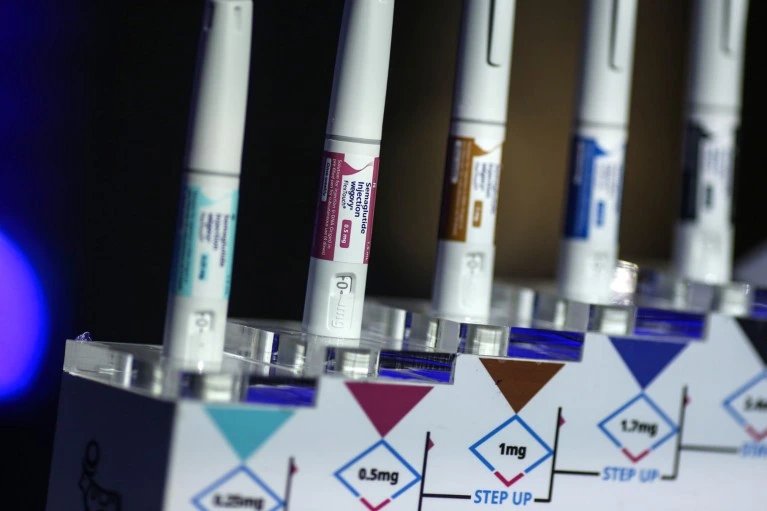
Researchers tested semaglutide in 20-month-old healthy female mice, an age roughly equivalent to 60-year-old humans. The treated group received semaglutide, marketed as Ozempic and Wegovy, while a control group did not. Mice taking semaglutide self-reduced their calorie intake by 24%. To isolate the drug's effect from calorie restriction, the authors added an untreated group of mice on a diet matching the calorie intake of the treated mice.
Ageing Markers
Treated mice performed better than control animals on tests of coordination, muscle function, and sugar processing. Researchers investigated cellular and molecular changes thought to drive ageing, including inflammation. The effects of these ageing drivers were dampened in treated mice compared with untreated mice.
Expert Reaction
Michael Corley, a scientist specializing in ageing at the University of California, San Diego, called GLP-1 drugs 'the most exciting candidates' for longevity therapies. Corley described the study as 'a very rigorous animal study that showed a positive signal'. He added that the findings are preliminary and it could take years to prove whether GLP-1 drugs can be prescribed for longevity.
1 source
Time · lag behind first