
Tesla reports 4.1x fewer collisions with supervised self-driving in five EU countries
This digest was compiled by AI from multiple sources — links to the originals are below.
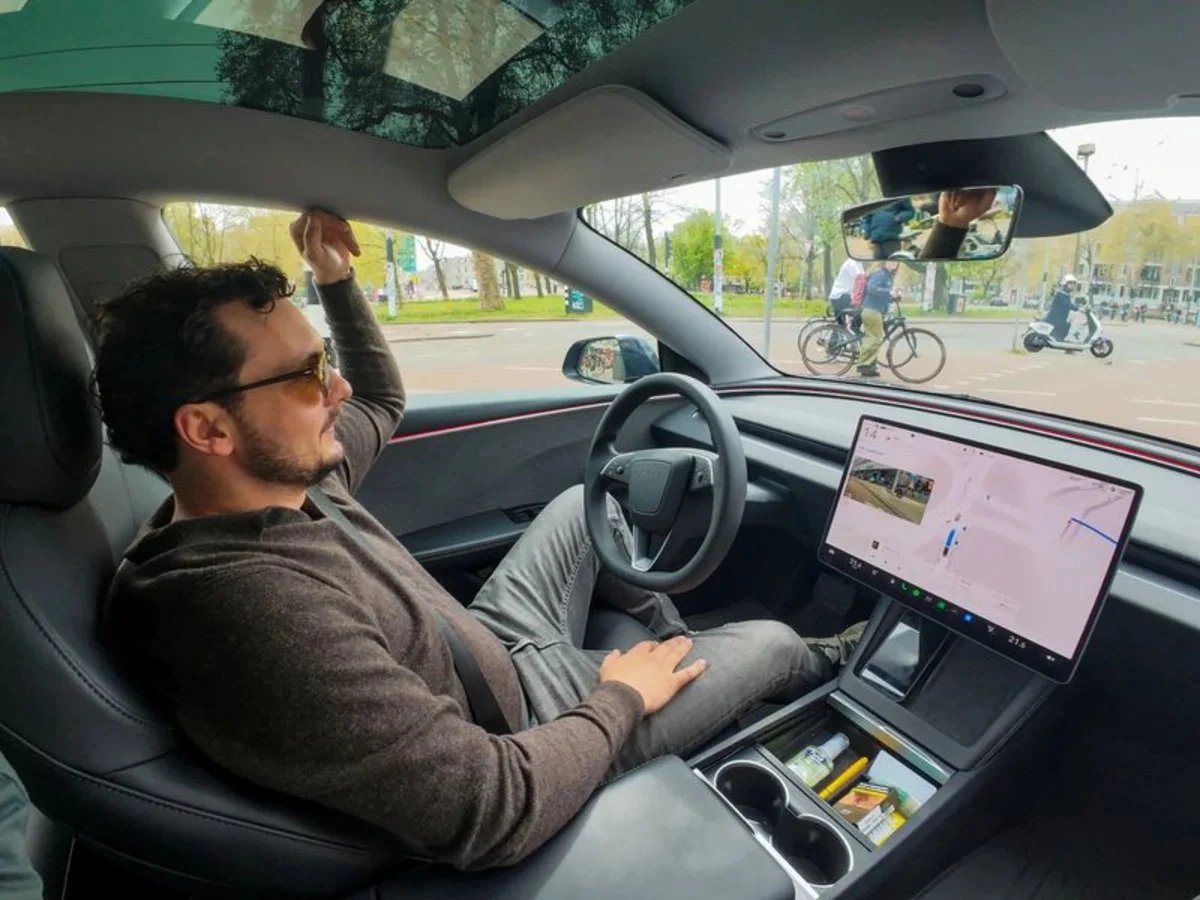
Tesla said its supervised self-driving technology recorded 4.1 times fewer collisions than manually driven Tesla cars in five European countries. The data covers more than 100 million km driven between April and August. The release comes ahead of a possible EU-wide approval vote as soon as October 6.
Key Facts
- Tesla recorded 4.1 times fewer collisions with supervised self-driving than with manual driving in five European countries.
- The data covers more than 100 million km driven between April and August in the Netherlands, Belgium, Denmark, Estonia and Lithuania.
- FSD-equipped cars were involved in three highway collisions and nine non-highway collisions, compared with 137 and 490 respectively for manually driven vehicles.
- Tesla posted an open-source safety dashboard on its website on Tuesday, shared with EU member state regulators in April.
- An EU-wide approval vote could happen as soon as October 6, requiring support from at least 15 of 27 member states representing 65% of the bloc's population.
Safety Data Release
Tesla said its supervised self-driving technology recorded 4.1 times fewer collisions than manually driven Tesla cars in the five European countries where it is permitted. The findings were based on more than 100 million km of driving data collected between April and August. FSD-equipped cars were involved in three collisions on highways and nine on non-highway roads, compared with 137 and 490 collisions respectively involving manually driven vehicles. Tesla posted an open-source safety dashboard on its website on Tuesday, which it said was shared with EU member state regulators in April.
EU Approval Process
The Netherlands in April became the first European country to grant provisional approval for Tesla's Full Self-Driving system, prompting Belgium, Denmark, Estonia and Lithuania to follow suit. Tesla has urged EU regulators to approve broader use of its FSD technology and says a vote could happen as soon as October 6. Approval would require support from at least 15 of the EU's 27 member states representing at least 65% of the bloc's population. The approval process has faced criticism over a lack of transparency after European regulators, including Dutch road authority RDW, declined to publish safety data underpinning the approval of FSD, saying it is commercially sensitive information.
1 source
Time · lag behind first